A solar array does more than reduce the electricity you buy from the grid. When your panels generate more power than your property is using, the excess can be exported. Solar export payments are the money you receive for that electricity, turning unused daytime production into an additional return from your system.
For many homes and businesses, export income is welcome but it should not be the only factor behind a solar decision. The greatest financial benefit usually comes from using your own solar electricity in the building, avoiding higher-priced imported power. A well-designed system balances self-consumption, battery storage and export so that every unit of generation has a useful job to do.
How solar export payments work in the UK
Most new solar customers receive export payments through the Smart Export Guarantee, usually called SEG. Under this scheme, larger electricity suppliers must offer at least one tariff that pays eligible small-scale generators for electricity exported to the grid.
Your export is measured by a compatible smart meter or export meter. The meter records the electricity leaving your property, and your chosen supplier pays for those measured units at its published rate. Payments are commonly made monthly or quarterly, depending on the tariff and supplier.
This is different from the former Feed-in Tariff scheme. Feed-in Tariff payments were based partly on the electricity generated, whether it was used on site or exported. That scheme is closed to new applicants. SEG payments are based on actual exported electricity, which means your system design and how you use energy will directly affect your income.
To qualify, a domestic solar installation will normally need to be installed and certified through the Microgeneration Certification Scheme, with the appropriate metering in place. The process can vary for larger commercial projects, but accurate export metering, connection arrangements and documentation remain essential.
What determines the value of your exported power?
There is no single rate for solar export payments. Suppliers set their own tariffs, so the amount can differ significantly. Some offer a fixed price per kilowatt-hour, while others provide variable rates that move with wholesale energy prices or reward export at particular times.
A headline rate is useful, but it is not the whole story. A tariff that pays more at certain hours may suit a property with a battery and a flexible electricity profile. A straightforward fixed tariff can be easier to understand and forecast, particularly for households that simply export surplus generation during sunny periods.
Your annual export volume matters too. A south-facing system with little daytime demand may export a substantial share of its summer production. A family home where someone works from home, runs appliances during the day or charges an electric vehicle may use more solar power directly and export less. Neither outcome is automatically better. It depends on the difference between the cost of electricity you avoid buying and the rate you receive for exporting it.
For example, if imported electricity costs considerably more per unit than the export tariff pays, using a solar unit in the property is usually more valuable than sending it to the grid. If your property has very low daytime demand, export payments still ensure that surplus generation is not wasted.
Fixed, variable and time-based tariffs
Fixed export tariffs pay the same rate for each exported unit over the relevant tariff period. They can make budgeting simpler and give a predictable view of income.
Variable tariffs can rise and fall, sometimes following wholesale prices. They may offer stronger returns at times when electricity is especially valuable to the grid, but they also introduce uncertainty. Time-based tariffs can be particularly relevant for battery owners, as a battery may allow you to retain solar energy for evening use or, where tariff terms permit, export at a more favourable time.
Before choosing a tariff, look beyond the advertised maximum rate. Check whether there are peak and off-peak periods, payment timings, meter requirements, contract conditions and whether the tariff can change. It is also sensible to consider the supplier’s approach to customer service, especially if you want clear statements and a simple process for resolving metering queries.
Use, store or export? The decision behind every solar unit
Solar panels produce most of their electricity around the middle of the day. Yet many households use more power in the morning and evening, while commercial demand can vary by sector, operating hours and equipment load. That mismatch is where careful system design makes a real difference.
The usual order of value is to power current demand first, then charge a battery if one is installed, and finally export surplus electricity. This approach can reduce grid imports and provide more control over when solar energy is used.
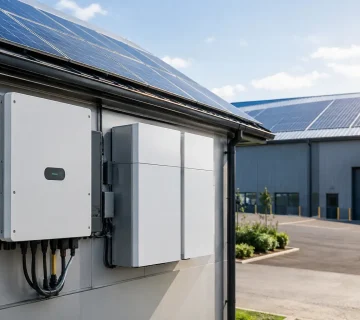
Battery storage is not automatically the right answer for every property. It adds upfront cost, has a finite capacity and loses a small amount of energy during charging and discharging. However, it can be highly effective where evening electricity use is high, where resilience matters, or where a tariff rewards shifting energy to different times of day.
For a London household, a battery may store enough midday solar production to cover cooking, lighting and entertainment later in the evening. For a retail site or hospitality business, the better option may be a larger solar array designed around daytime loads, with less need to store electricity. Food production, residential blocks and other sites with steady demand often have strong opportunities to consume generation directly.
The right balance comes from understanding half-hourly or hourly consumption, not just annual electricity bills. A property that uses 6,000 kilowatt-hours a year can need a very different system from another property with the same annual figure but a different daily pattern.
Designing a system with export in mind
Export income should be considered at the survey and design stage, alongside roof space, shading, electrical infrastructure, energy demand and future plans. If you expect to add an electric vehicle, heat pump, battery or new machinery, the system should be assessed with those changes in mind.
The grid connection is another practical consideration. Your Distribution Network Operator needs to know about generation connected to its network, and some installations require approval before work begins. Export limits can apply in certain locations where the local network has limited capacity. This does not necessarily stop a project, but it can influence inverter settings, battery strategy and the size of the system that is practical.
For commercial properties, export arrangements can be more involved. A larger array may deliver meaningful export income, but the strongest business case often comes from matching production with on-site consumption. Offices, shops, hotels and manufacturing sites should examine operational hours, seasonal demand and expansion plans before setting targets for export.
Professional monitoring is useful after commissioning. It shows how much electricity your panels generate, how much is used on site, how much is stored and how much is exported. Those figures help identify whether changes in energy use, tariff choice or battery settings could improve performance over time.
Getting paid without unnecessary delays
Once your installation is commissioned, keep the documents you receive in a safe place. Your chosen supplier is likely to ask for installation certificates, meter details, your export MPAN where applicable, and evidence of eligibility. Delays often arise from incomplete information or a mismatch between the meter details held by different parties.
It is worth checking your first few payment statements against monitoring data. The figures will not always match exactly, as monitoring platforms and revenue meters can record data differently, but they should be broadly consistent over a comparable period. If export readings appear unexpectedly low, investigate early. A meter configuration issue or incorrect registration can affect payments and should be addressed promptly.
Solar export payments are one part of a stronger energy plan
A good solar project is not built around chasing the highest possible export rate. It is built around giving your property cleaner power when it needs it, reducing reliance on expensive grid electricity and making sensible use of every surplus unit.
With the right design, solar export payments provide a useful additional income stream while your panels continue to lower day-to-day energy costs. A detailed property survey can show where that balance sits for your building, and help turn surplus sunshine into a practical long-term benefit.