
A business can have a well-run operation, efficient equipment and clear sustainability targets, yet still lose money through an electrical system that was designed for a different era. A distribution board with no spare capacity, ageing cabling, poorly planned lighting and limited monitoring can all restrict what a site can achieve. Commercial electrical upgrades address those constraints, creating a safer, more efficient foundation for lower energy costs and on-site generation.
For a retailer adding refrigeration, a hotel managing high evening demand or a manufacturer running energy-intensive machinery, electrical infrastructure is not simply a back-of-house concern. It affects operating costs, resilience, compliance and the ability to invest in solar PV, battery storage, EV charging or heat pumps. The right upgrade begins with the actual demands of the building, not a one-size-fits-all equipment list.
When commercial electrical upgrades make sense
Electrical upgrades are often prompted by a practical problem: circuits are tripping, equipment cannot be added without overloading a board, or an inspection has identified remedial work. Those are valid reasons to act, but businesses do not need to wait for a failure.
A rise in electricity bills can point to inefficient lighting, excessive out-of-hours consumption or equipment that is drawing more power than expected. Plans to extend trading hours, fit out additional units, install new kitchen equipment or electrify a vehicle fleet may also reveal that existing capacity is tight. In older commercial buildings, the electrical installation may have evolved in stages, leaving a patchwork of additions that is harder to maintain and less suited to modern loads.
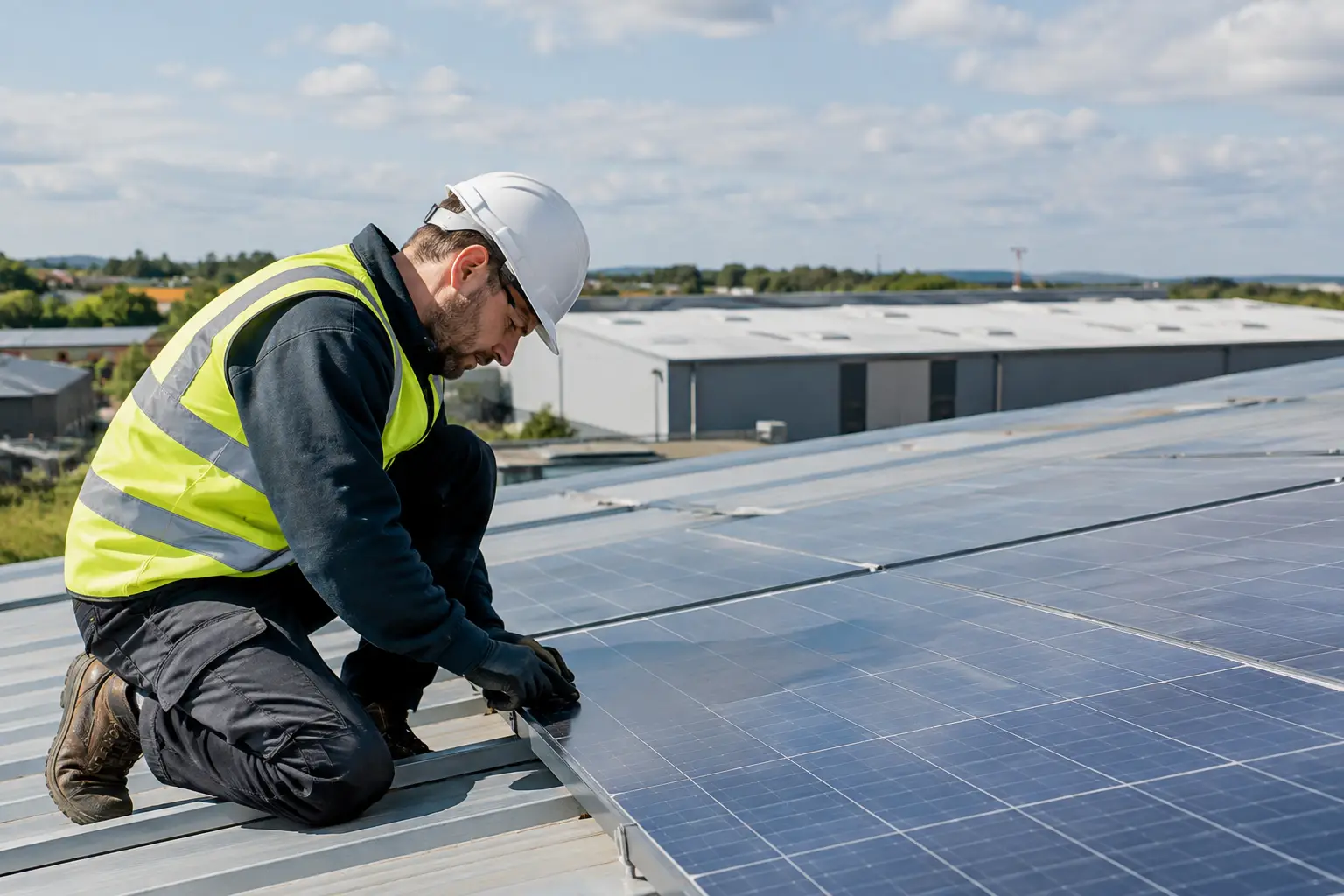
Solar is another common trigger. A PV system needs a properly assessed connection point, suitable protection and a distribution arrangement that can safely handle generated electricity. Battery storage adds further considerations around system design, control equipment and the way stored power will be used. Addressing these items early helps avoid redesigns, delays and unnecessary disruption once the renewable-energy project is under way.
Start with the building’s energy picture
The most useful electrical project starts with a site survey and a conversation about how the premises operates. This should consider the incoming supply, current and anticipated loads, the condition and capacity of distribution equipment, cable routes, earthing and protective devices. It should also identify where energy is being used and when demand peaks occur.
That timing matters. A site that uses most of its electricity during daylight hours may benefit greatly from solar generation, while a business with high evening demand may achieve more value by combining solar with battery storage. If a building has sharp demand peaks, smart controls and storage may reduce reliance on imported grid electricity at the most expensive times. The best approach depends on the tariff, operating hours, equipment profile and available space, rather than on a single technology.
Metering and monitoring are particularly valuable here. Main and sub-meter data can show whether a particular production line, kitchen, tenant area or HVAC system is responsible for a disproportionate share of consumption. Once that information is visible, a business can prioritise improvements based on evidence instead of assumptions.
Capacity is not the same as consumption
Many sites confuse the size of their electrical supply with their day-to-day energy use. Supply capacity is about how much power can be drawn safely at a given moment. Consumption is the amount of energy used over time. Both need attention, but they lead to different decisions.
For example, replacing lighting with LEDs may reduce consumption substantially without requiring a supply upgrade. Adding rapid EV chargers, industrial machinery or electric heating, however, may increase peak demand enough to require changes to the distribution system or a discussion with the network operator. A professional assessment separates these questions and plans the work around the building’s future, not only its current load.
The upgrades with the clearest business value
The scope of work should be shaped by survey findings, but several improvements regularly deliver practical benefits across commercial properties.
Modern distribution boards and circuit protection can improve safety, provide spare ways for future equipment and make faults easier to isolate. Clear labelling and a logical circuit layout also reduce the time needed to investigate an issue, particularly in multi-use buildings where downtime affects tenants or customers.
LED lighting and intelligent controls are often among the most straightforward efficiency measures. Occupancy sensors, daylight dimming and time controls can prevent unnecessary use in corridors, storerooms, car parks and rarely occupied areas. The right lighting design should still account for task visibility, customer experience and safety. Simply reducing wattage is not a substitute for getting the light levels and control zones right.
Sub-metering and energy monitoring turn electrical performance into something that can be managed. Monitoring can highlight overnight baseload, reveal equipment left running and verify whether an energy-saving measure is delivering the expected result. For landlords and facilities teams, it can also support clearer accountability across shared premises.
Power-factor correction and load management may be worth considering on sites with large motors, refrigeration or other inductive loads. They are not universal fixes, and savings vary by tariff and load profile. Where appropriate, they can improve the way a site uses electrical capacity and help manage demand more effectively.
Solar-ready electrical works can include a suitable connection point, upgraded protection, cable containment and space for inverter and battery equipment. Planning this alongside other electrical works is usually more economical and less disruptive than reopening finished areas later.
Designing for solar, batteries and electrification
Commercial solar works best when it is treated as part of the building’s electrical strategy. The panels may be on the roof, but their value is determined by what happens at the meter and distribution board.
A solar assessment should consider roof condition, shading, orientation, structural requirements and likely generation. The electrical design must then account for the existing supply, export arrangements, protection requirements and how generated power will be consumed on site. Businesses with strong daytime use, such as offices, retail premises and food production facilities, can often use a high proportion of generation directly. Others may benefit from batteries that retain surplus daytime electricity for later use.
Battery storage can improve self-consumption, support evening operations and provide more control when grid prices are high. It is not automatically the right choice for every commercial site. Battery size should be based on measured demand, solar production and the intended operating strategy. Oversizing adds cost without necessarily increasing useful savings, while undersizing can limit the benefit.
EV charging requires equally careful planning. A few workplace chargers may be manageable within existing capacity, but larger installations can change the site’s demand profile significantly. Smart charging can stagger loads, respond to available solar generation and protect the building from avoidable peaks. For growing fleets, allowing room in the design for future expansion is usually wiser than starting from scratch each time.
Safety, compliance and minimising disruption
Commercial electrical work must be designed, installed, tested and certified by competent professionals. Current standards, the condition of the existing installation and the building’s use all matter. Sites with public access, food preparation, tenant areas or critical operations may need carefully phased work, temporary supplies or out-of-hours scheduling.
A good contractor will explain what needs to be isolated, how long disruption is likely to last and which parts of the operation can remain live. In a retail setting, work may need to happen before opening or after closing. In manufacturing, an agreed shutdown window may be the safest and most cost-effective option. There is a trade-off: completing work quickly is valuable, but rushing assessment or testing creates greater risk later.
Testing, certification and clear handover information should be treated as part of the project, not paperwork added at the end. Accurate circuit schedules, system settings and monitoring access make future maintenance easier and give facilities teams confidence in the upgraded installation.
Build a phased plan rather than chasing quick fixes
Not every business needs to replace everything at once. A phased programme can make sense where budgets, leases or operational constraints limit immediate work. The key is to make each phase compatible with the next.
A sensible first phase may address safety issues, failing equipment and basic monitoring. The next could improve lighting and controls, followed by distribution changes that prepare the site for solar, batteries or EV charging. This approach can spread investment while avoiding the false economy of installing equipment that has to be removed when the wider system is upgraded.
The strongest projects bring electrical, energy-efficiency and renewable plans together from the beginning. Shard Solar can assess the practical route from existing infrastructure to an integrated solar, storage and electrical solution, with clear scope and support through installation and commissioning.
Your premises should not limit your energy ambitions. A considered electrical upgrade gives your business the capacity to use cleaner power well, control costs with greater confidence and adapt as the way you operate changes.