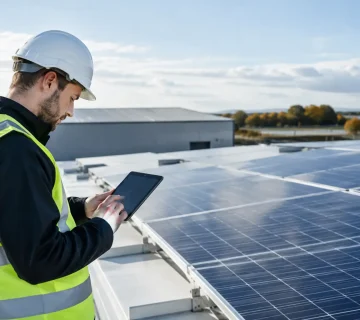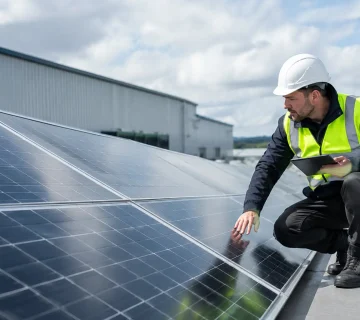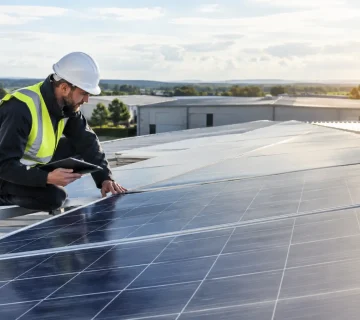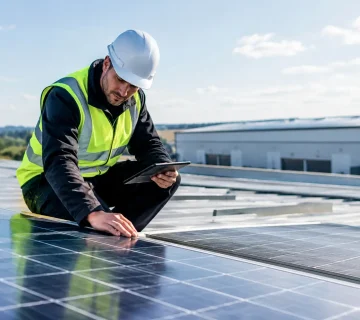
A solar system can look perfectly clean from the ground and still produce less electricity than expected. For homeowners and businesses, understanding why solar panels underperform starts with one useful distinction: a lower reading is not always a fault. Solar generation changes with daylight, weather, temperature and how your building uses electricity. The real concern is a sustained or unexpected gap between predicted and actual performance.
A well-designed system should make its output visible and give you a clear route to investigate when something changes. That matters whether solar is reducing daytime running costs at a retail site, supporting a busy household, or charging a battery for use after sunset.
Why solar panels underperform in real conditions
Solar panel estimates are based on sensible assumptions about roof orientation, shading, local weather patterns and system losses. They are not a promise that the same number of kilowatt-hours will be generated every month.
In the UK, winter output is naturally much lower than summer output because days are shorter and the sun sits lower in the sky. A string of overcast days can reduce generation further. Conversely, a bright, cool spring day can deliver excellent output because photovoltaic panels generally work more efficiently in cooler conditions than in intense heat.
Before assuming a problem, compare like with like. Compare this June with last June, or a similar sunny week with another sunny week, rather than comparing December with July. Your monitoring platform, electricity bills and inverter data can help establish whether the change is weather-related or a technical issue.
The system may be generating, but not benefiting the property as expected
Generation and savings are related, but they are not identical. A property may export a large share of its solar electricity while buying power back later in the evening. If electricity use has moved outside daylight hours – perhaps a business has changed operating hours or a household now charges an electric vehicle overnight – the financial result can feel disappointing even when the panels are performing normally.
Battery storage, timed appliance use and a review of tariff arrangements can improve self-consumption. A battery is not a cure for poor generation, but it can retain surplus daytime electricity for evening demand, subject to its usable capacity, charging settings and the property’s load profile.
Shade can have a bigger effect than expected
Shade is one of the most common reasons for lower solar output. It is not limited to a large tree directly in front of the roof. Chimneys, dormers, neighbouring buildings, aerials and even seasonal tree growth can cast moving shadows across part of an array.
The impact depends on the system design. Panels connected in a conventional string can be affected when one panel is shaded, although modern inverters and panel bypass diodes help reduce the loss. Optimisers or microinverters may be appropriate where shading is complex, but they add equipment and cost, so they should be selected as part of an informed design rather than treated as a universal upgrade.
Shade should be assessed throughout the year. A roof that is clear at midday in summer may be shaded in the morning, late afternoon or winter months. For commercial properties, new plant equipment, signage or adjacent development can also alter the shading picture after installation.
Dirt, debris and bird activity reduce available light
Solar panels need daylight, not perfection. Light rain often rinses away loose dust, and many domestic systems do not need frequent cleaning. However, persistent dirt can become a genuine performance issue in particular settings.
Pollen, leaves, bird droppings, construction dust and traffic pollution can build up unevenly. This is especially relevant for low-pitch arrays, buildings near busy roads, food-production sites, farms and properties beneath trees. A stubborn patch of soiling can shade individual cells and have a disproportionate effect on part of the panel.
Cleaning must be carried out safely and with the correct approach. Abrasive materials, unsuitable chemicals and pressure washing can damage panels, seals or roof components. If output has fallen and visible soiling is present, professional panel cleaning alongside a system health check is the sensible route.
Poor design or installation can limit output from day one
A solar system’s performance is largely decided before the first panel is fitted. Roof orientation, pitch, panel layout, inverter sizing, cable runs and likely shading all influence the result. A system designed around headline panel capacity alone may not match a building’s actual demand or physical constraints.
For example, an east-west array often produces less at the single midday peak than a south-facing array, but it can generate more evenly across the morning and afternoon. That may be a better fit for an office, hotel or household with broad daytime use. It is not automatically underperforming simply because its peak output is lower.
Inverter clipping is another design consideration. This happens when the DC power available from panels exceeds the inverter’s AC output limit. Some clipping on exceptional bright days can be an intentional and economical design choice. Frequent, substantial clipping may warrant review, particularly where the system was not sized around the building’s needs.
Quality installation also matters. Incorrectly connected strings, poor cable management, inadequate earthing or water ingress can create lower output and, more importantly, electrical safety concerns. Professional commissioning establishes a baseline and confirms that the system is operating as designed from the outset.
Inverter, wiring and connection faults need prompt attention
Panels have no moving parts, but the wider solar system includes equipment that requires attention over time. The inverter converts panel-generated DC electricity into usable AC electricity and is often the first place to investigate when generation suddenly drops to zero or becomes erratic.
A fault code, warning light or repeated inverter shutdown should not be ignored. Grid-voltage issues can also cause an inverter to disconnect temporarily, particularly in areas with high local solar generation. This does not always mean the inverter has failed, but it does need diagnosis by a qualified professional.
Other possible causes include damaged cabling, loose connectors, failed isolation switches, tripped protective devices or issues within a monitoring gateway. On larger systems, a fault affecting one string may leave the rest of the array generating, making the decline less obvious without performance reporting.
If you notice burning smells, damaged equipment, water around electrical components or a visible fault message, do not attempt a repair yourself. Arrange an inspection by a competent solar and electrical team.
Ageing panels are normal, sudden decline is not
Solar panels gradually lose a small amount of output as they age. This is known as degradation, and it is expected over a long operating life. Manufacturer warranties commonly reflect gradual output reduction, rather than unchanged production forever.
A sharp fall in generation is different. It may indicate a defective panel, damaged cells, failed bypass diodes, moisture ingress or another component issue. Physical damage can follow severe weather, roof works or accidental impact. In some cases, visual inspection reveals the problem; in others, testing is needed to identify a weaker panel or string.
A useful rule is simple: slow change over years can be normal, while an abrupt change over days or weeks deserves investigation.
Monitoring turns uncertainty into useful evidence
Monitoring is one of the best protections against unnoticed underperformance. It shows daily, monthly and yearly generation, and may reveal whether the inverter is operating, whether output is falling at a particular time of day, or whether one part of a larger array is behaving differently.
Check that the monitoring system itself is online before drawing conclusions. A lost Wi-Fi connection can make it appear that solar production has stopped when the system is still working. If the inverter display and the monitoring app disagree, the display may provide an immediate clue, but a technician can confirm the actual position.
For commercial properties, regular reporting is particularly valuable. A modest fault left unresolved across a large roof can result in meaningful lost generation and missed savings. Planned maintenance gives operators a clearer view of performance while helping to schedule inspections with minimal disruption.
What to do when output looks low
Start with the evidence you can safely gather: compare output with the same period last year, check weather conditions, look for error messages and note any recent changes around the property, such as tree growth, building works or altered energy use. Avoid climbing onto a roof or opening electrical equipment.
If the reduction continues, arrange a professional inspection. A proper visit can assess panel condition, shading, inverter operation, electrical connections, roof-mounted equipment and monitoring data. It can also identify whether cleaning, repair, system reconfiguration or a change to battery settings would offer the best value.
Shard Solar approaches performance as an ongoing part of owning a solar system, not a task that ends at installation. Clear commissioning information, accessible monitoring and responsive maintenance support help turn a concerning drop in output into a practical, evidence-led fix.
Your solar system should support greater control over energy costs, not leave you guessing. With the right design, visibility and aftercare, most performance issues can be identified early and addressed before they take a larger bite out of your generation.