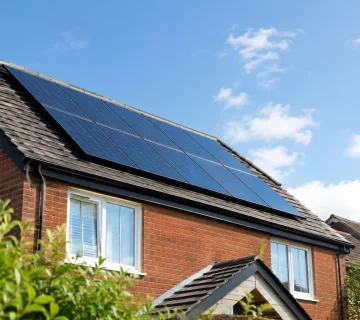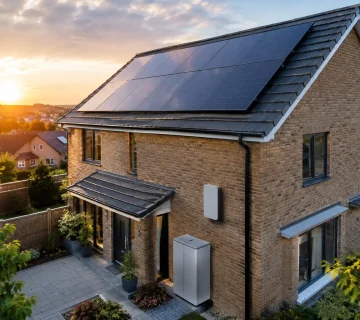
A household using most of its electricity after 6pm will see a very different return from solar than a business operating through the day. That is why the honest answer to “are solar panels worth it” is not a simple yes or no. For many UK properties, they can be a sound long-term investment, cutting purchased electricity, lowering carbon emissions and giving owners greater control over energy use. The result depends on the building, the energy profile and how the system is designed.
Solar works best when it is treated as part of the property’s wider energy plan, rather than as a product bought by panel count alone. A properly surveyed system can be sized around roof space, shading, electricity demand, future appliances and, where appropriate, battery storage.
Are solar panels worth it? Start with what you use
A solar PV system produces electricity during daylight hours. Every unit used directly in the property is one that does not need to be bought from the grid at the prevailing electricity rate. This is normally where the strongest financial value lies.
For a typical home, daytime generation may support appliances running in the background, refrigeration, cooking, home working and, with smart controls, charging a battery or electric vehicle. For commercial buildings, the case can be particularly compelling where demand is highest during working hours. Retail sites, hospitality venues, offices and manufacturers often have daytime loads that match solar production well.
The key figure is self-consumption: the proportion of solar electricity used on site. A property that can use more of what it generates will generally achieve better savings than one that exports most of its generation. Exported power can still earn income through an export tariff, but it is usually less valuable than avoiding the cost of importing electricity.
This does not mean solar is only worthwhile for people at home all day. It means the system should reflect real behaviour. Timers, smart energy controls and batteries can shift more consumption towards the hours when the panels are producing.
The factors that decide the return
Your roof and available space
A south-facing roof with little shading is often a strong starting point, but it is not the only suitable arrangement. East- and west-facing arrays can spread generation across the morning and afternoon, which may better suit a household with people leaving and returning at different times. Flat commercial roofs can also offer substantial capacity when the structure and layout allow.
Shading from trees, chimneys, neighbouring buildings or roof features needs careful assessment. Even partial shading can affect output, so it should be considered at survey stage rather than discovered after installation. Roof condition matters too. If major roof work is due soon, completing it before panels are fitted can avoid unnecessary removal and refitting later.
Electricity prices and consumption patterns
The value of each solar-generated unit rises when grid electricity is expensive and when that unit is used on site. A home with modest consumption may still benefit, but its payback is likely to differ from a property with an electric vehicle, heat pump or a large family’s energy demand.
For businesses, half-hourly data or detailed bills can reveal when energy is used, how demand varies by season and whether there are expensive peaks worth reducing. This information helps engineers recommend a system that supports the operation rather than simply maximises the number of panels.
Battery storage
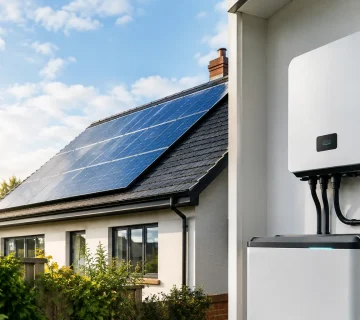
A battery does not make the sun shine at night, but it can store surplus solar electricity for use after generation falls. This can increase self-consumption, helping households use more of their own power for evening cooking, lighting and entertainment. It can also support a commercial site through later demand periods and may help make better use of time-of-use electricity tariffs.
However, a battery adds upfront cost, so it is not automatically right for every property. It tends to offer more value where there is regular surplus generation, significant evening use or a clear plan to integrate an EV charger, heat pump or tariff-based charging. Battery capacity should be selected carefully: larger is not always better if it will rarely be fully used.
Export payments and incentives
The Smart Export Guarantee allows eligible generators to receive payment for electricity exported to the grid, subject to a supplier’s tariff and terms. It provides a useful additional income stream, but export rates and arrangements vary. They should be treated as one part of the financial picture, not the sole reason to install solar.
Available tax treatment, grants and local schemes can also change over time. A current quotation should set out the assumptions used, including estimated generation, expected self-consumption and any export income, so the decision is based on realistic figures rather than a headline saving.
Costs matter, but quality matters more
The cheapest quote is not always the best-value system. Solar is a long-term asset fitted to your roof and connected to your electrical supply. The design must account for structural considerations, cable routes, inverter location, grid requirements, safety equipment and future maintenance access.
A lower initial price can become expensive if the system is poorly designed, incorrectly sized or difficult to support after commissioning. Equally, the most expensive specification is not automatically appropriate. The aim is a dependable system that delivers useful generation for the property’s actual needs.
Ask for clarity on the equipment proposed, expected annual generation, workmanship warranty, product warranties, monitoring and what happens if a fault develops. Installation should include the necessary design, permissions, testing and commissioning, with clear handover information once the system is live.
When solar may be less worthwhile
There are situations where waiting or changing the plan makes sense. A heavily shaded roof, a roof nearing replacement, very low annual electricity use or an unsuitable lease arrangement can weaken the case. Listed buildings, conservation-area requirements and complex shared ownership structures may require additional planning or legal work.
For landlords and residential-block operators, the question is also about who pays the energy bills and who receives the benefit. A communal system may be valuable where it serves landlord-controlled loads such as lighting, lifts or plant equipment. Supplying individual flats can be more complex and should be planned around the building’s metering and electrical infrastructure.
Commercial decision-makers should consider operational continuity as well as payback. Roof access, working hours, health and safety requirements, planned expansion and future machinery can all influence the right design. A survey that examines these details can prevent disruption and protect the value of the investment.
A better way to assess whether solar is worth it
Rather than starting with a package price, begin with your energy use. Collect at least 12 months of electricity bills, or interval data where available, and identify likely changes over the next few years. An EV, heat pump, extension, new production line or changed occupancy pattern can alter the ideal system size.
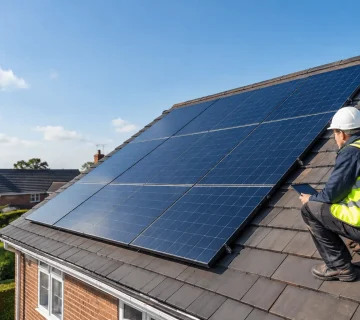
Then assess the property itself. A professional survey should consider orientation, shading, roof construction, usable area, electrical infrastructure and the best position for inverters and batteries. From there, a detailed quotation can show projected generation and explain how much electricity is likely to be used, stored and exported.
At Shard Solar, this process begins with a free property survey and a detailed quotation within 48 hours, helping owners make a decision with practical information rather than guesswork. The same principle applies whether the project is a London home, a retail roof or a larger multi-site commercial estate: good data leads to a better system.
Solar is a long-term property decision
Solar panels will not remove every electricity bill. Winter production is lower, periods of poor weather reduce output and most properties will still import power from the grid. Yet a well-designed system can reduce exposure to electricity price rises, create useful on-site generation for decades and make a measurable contribution to lower-carbon operation.
For properties with a suitable roof and meaningful electricity demand, the question is rarely whether solar has value. It is whether the proposed design will capture that value effectively. Start with an accurate survey, look beyond the upfront cost and choose a system that fits how the building uses energy now and where it is heading next.