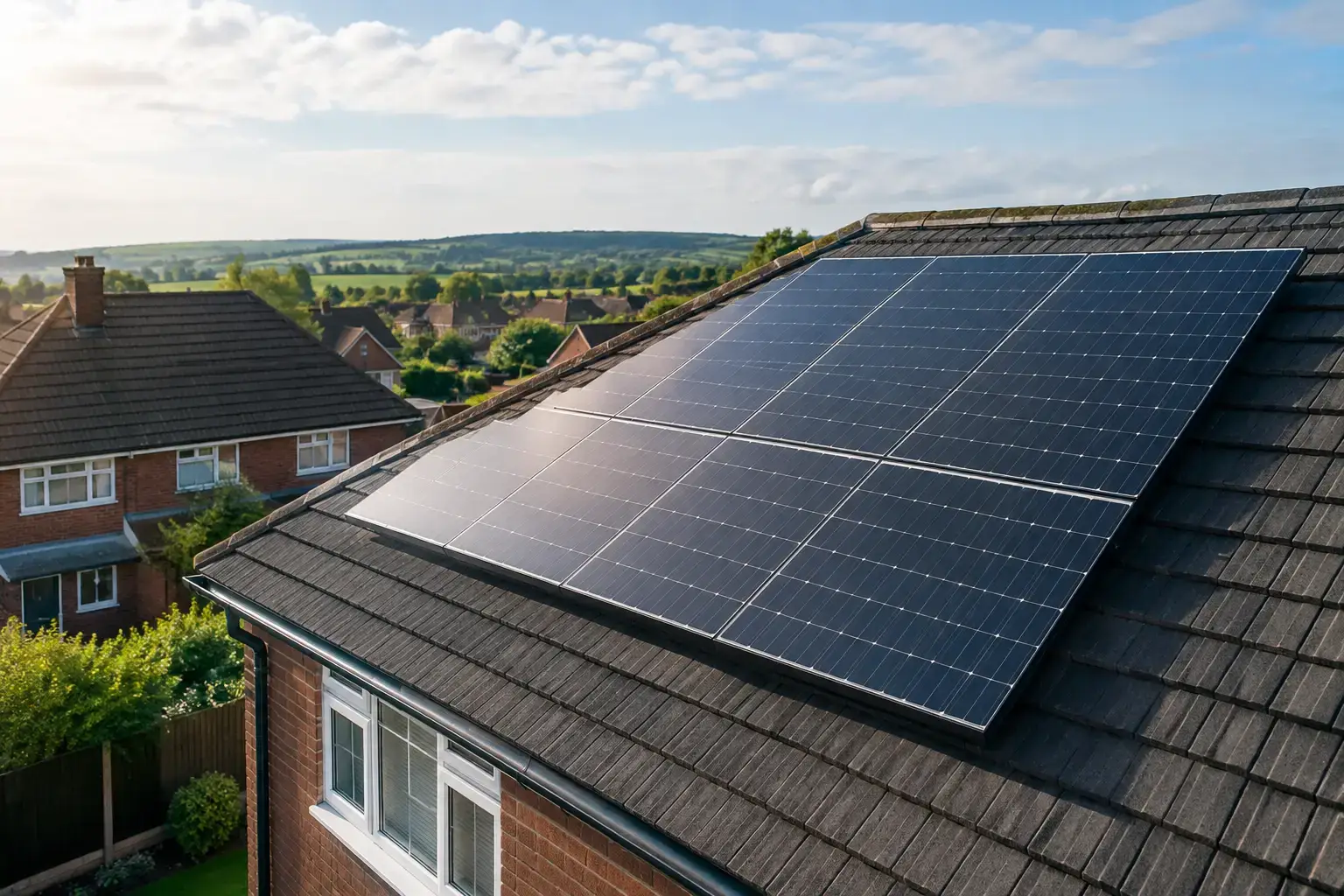
A food factory cannot simply switch off while electrical work takes place. Refrigeration, processing lines, extraction, compressed air and cold storage all depend on a stable supply. That is what makes a food factory solar case study useful: it shows that the value of solar is not just the number of panels on a roof, but how carefully the system is designed around production, safety and continuity.
For food manufacturers, electricity is a major operating cost and often a difficult one to predict. Solar PV gives a business the opportunity to generate more of its own power during the working day, when demand from equipment and facilities is often at its highest. Done properly, it can reduce imported electricity, support carbon-reduction commitments and give management a clearer view of site energy use.
The challenge: high demand with no room for disruption
A typical food production site has an energy profile that differs from a standard warehouse or office. Demand can begin early, remain high through processing shifts and continue overnight because chilled or frozen stock must be protected. Roof space may be extensive, but that does not automatically make it suitable for solar.
The first task is to understand how the building uses electricity. Half-hourly consumption data helps identify the base load, daytime peaks and periods when solar generation is most likely to be used on site. This matters because a system should be sized for useful self-consumption, rather than simply filling every available square metre of roof.
The site survey also needs to consider roof condition, orientation, shading from plant or neighbouring buildings, access routes, fire safety, electrical infrastructure and future expansion. A roof with large refrigeration condensers, vents and maintenance walkways may still be a strong candidate for PV, but the array layout must preserve safe access and comply with the relevant design requirements.
Food factory solar case study: designing around the operation
In a food factory project, the practical questions are often as important as the solar calculations. When can installers access the roof? Which areas must remain clear for maintenance? Is there a planned shutdown when connection work can be completed? Can deliveries and staff movements continue safely while installation is under way?
A well-managed project starts with a detailed survey and a clear electrical design. The proposed system should set out the expected annual generation, anticipated on-site use, inverter locations, cable routes and any required upgrades to the distribution equipment. It should also explain the assumptions behind the forecast. Solar production changes with weather, shading, panel orientation and the way the factory operates, so projected savings should be presented as an informed estimate, not a guarantee.
For a factory with significant daytime consumption, solar electricity can be used immediately by refrigeration systems, conveyors, mixers, packaging lines, lighting and general building loads. This is usually the strongest financial case: every kilowatt-hour generated and used on site reduces the amount bought from the grid at the prevailing business tariff.
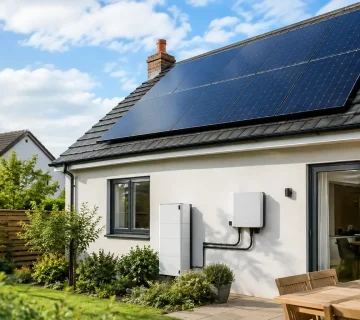
Battery storage may be worth assessing too. It is particularly relevant where a site has late-afternoon demand, high peak charges, export constraints or a desire to retain more daytime solar power for use after production slows. However, a battery is not automatically the right answer. Its value depends on load patterns, tariff structure, available connection capacity and the specific resilience requirement. A battery designed for energy shifting is not necessarily sized to keep an entire factory running during a power cut.
Installation planning that respects food safety
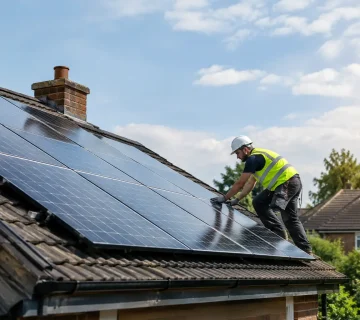
Food manufacturing environments require disciplined site management. Installation work must be separated from hygiene-controlled areas, and roof works need careful coordination with the factory team. Before work begins, the project plan should cover access, lifting operations, exclusion zones, dust and debris control, emergency procedures, contractor inductions and daily communication.
Much of the PV installation can be completed on the roof with limited effect on production below. The points that require the closest planning are usually electrical containment routes, inverter installation and the final connection to the building supply. By scheduling these activities around shift patterns or planned maintenance windows, disruption can be kept to a minimum.
This is where an end-to-end delivery model makes a real difference. Rather than leaving the client to coordinate designers, electricians, installers and maintenance providers, one project team can manage the design, permits, installation, commissioning and handover. At Shard Solar, this approach also means the people responsible for delivering the system remain available after commissioning.
What commissioning should prove
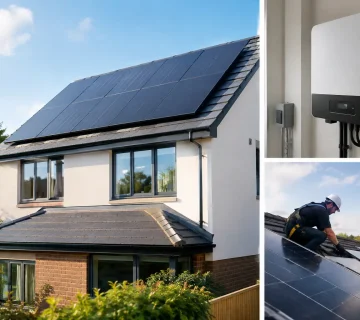
Commissioning is more than turning a system on. It confirms that the panels, inverters, protection equipment and monitoring platform are operating safely and as designed. For a commercial food site, it should include checks on generation, electrical protection, isolation procedures, system labelling and communication with the monitoring portal.
The facilities or engineering team should receive practical handover information, including how to view live and historic generation, what normal performance looks like and who to contact if an alert appears. This is particularly useful for sites where energy management is shared between on-site staff, finance teams and external facilities providers.
Monitoring turns solar from a capital project into a managed asset. It can show whether generation is broadly tracking expectations, highlight faults early and support performance reporting for sustainability targets. It may also reveal wider opportunities. If daytime demand remains unexpectedly high, the data can help identify inefficient equipment, poorly timed loads or areas where energy-efficiency improvements could complement the solar installation.
The commercial case: savings, certainty and carbon reduction
The return from food factory solar depends on several variables: the electricity tariff, annual consumption, proportion of solar used on site, roof capacity, system cost and financing method. A factory that consumes most of its solar generation during operating hours will normally see better value than a building that is empty when the sun is shining.
There are trade-offs. A larger array may produce more electricity overall but could export more power at a lower value. A smaller system may achieve a higher self-consumption rate but leave worthwhile roof capacity unused. The right decision is based on the site’s objectives, not a one-size-fits-all panel count.
Environmental performance is equally relevant. On-site solar reduces reliance on grid electricity and helps manufacturers demonstrate practical progress against carbon commitments. For businesses supplying retailers, hospitality groups or larger organisations with sustainability expectations, credible energy data can become part of the wider commercial conversation.
Questions to answer before approving a system
A food manufacturer considering solar should be able to get clear answers to four areas. First, how much electricity does the site use during daylight hours, and how does that change by season? Second, is the roof structurally and practically ready for a long-term installation? Third, what electrical and grid constraints apply? Finally, how will installation and future maintenance be managed without affecting production?
A thorough survey should answer these questions before a quotation is finalised. It should also identify whether panel cleaning, inspections, repairs or performance monitoring will be needed as part of the ongoing care plan. Food factories are busy sites, and the system should remain easy to maintain without creating unnecessary operational risk.
The most effective solar project is one that fits the factory as it operates now while leaving room for the business it intends to become. With accurate energy data, careful engineering and an installation programme built around production, on-site generation can become a dependable part of a food manufacturer’s long-term energy strategy.