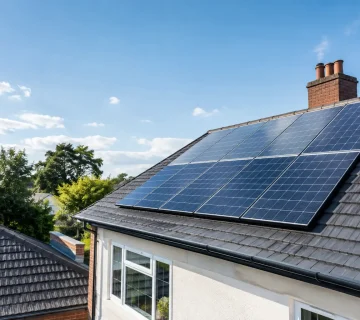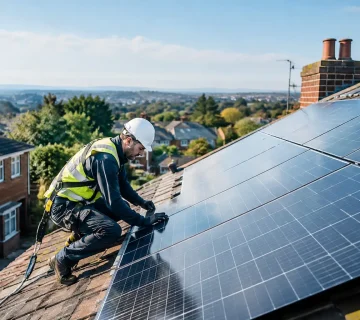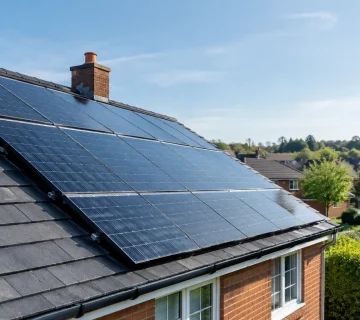
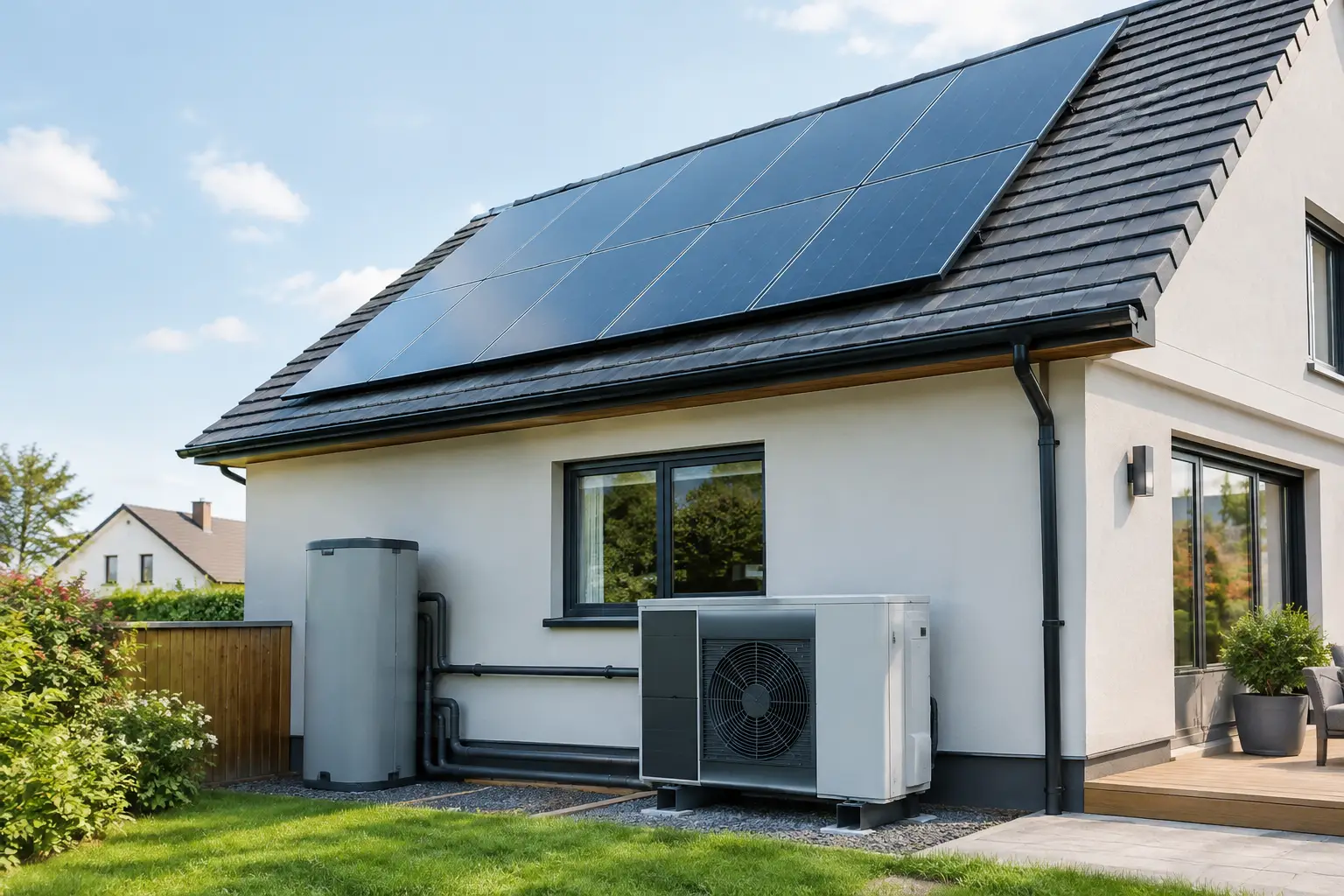
A heat pump can be one of the largest electrical loads in a property, particularly through the colder months. Solar heat pump integration gives that demand a cleaner, lower-cost source of power by coordinating solar generation, heating controls and, where suitable, battery storage. The result is not free heating on every winter day, but a better use of the electricity your building produces.
For homeowners, landlords and commercial property managers, the opportunity is increasingly practical. A well-designed system can reduce imported electricity, make daytime solar production work harder and support a move away from fossil-fuel heating. The key is to design the full energy system around how the building actually uses heat and power.
What solar heat pump integration means
Solar photovoltaic panels generate electricity. An air source or ground source heat pump uses electricity to move heat from the air or ground into a building’s heating and hot-water system. Integrating the two means using controls and system design to prioritise available solar electricity when the heat pump needs to run.
This is different from solar thermal panels, which directly heat water using the sun. Solar PV and a heat pump are often the more flexible pairing because the electricity can also supply lighting, appliances, EV charging, battery storage and other building loads.
The strongest integrations are planned rather than added as an afterthought. Panel capacity, roof orientation, heat-pump output, hot-water cylinder size, insulation standards and daily occupancy all affect the outcome. A home occupied during the day will use solar differently from a family property that is empty until late afternoon. A hotel, retail site or food manufacturer may have a more predictable daytime load, creating a different and sometimes stronger case for on-site generation.
Why timing matters more than panel numbers
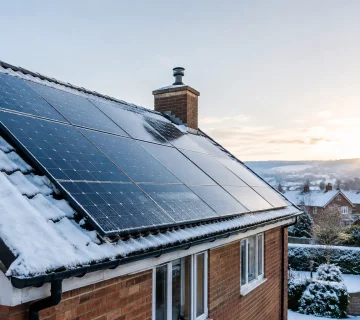
Solar panels produce most power in daylight hours and most during spring and summer. Heat pumps work hardest when outdoor temperatures are lower, which often coincides with shorter, darker winter days. That seasonal mismatch is the central trade-off in solar heat pump integration.
It does not make the combination less worthwhile. Instead, it means expectations must be realistic. Solar can make a meaningful contribution to heat-pump electricity use across the year, particularly for hot water and shoulder-season heating, while the grid remains an important source of electricity during winter peaks.
A heat pump is also more efficient than direct electric heating. Its efficiency is commonly described by its coefficient of performance, or COP. A COP of three means that, in the right conditions, one unit of electricity can deliver roughly three units of heat. The actual figure varies with outdoor temperature, heating-flow temperature and the system design. Lower-temperature heating systems, such as correctly sized radiators or underfloor heating, generally allow the heat pump to work more efficiently.
That efficiency is why every solar-generated kilowatt-hour sent to a heat pump can go further than one used by a conventional electric heater.
Use a hot-water cylinder as thermal storage
A battery is useful, but it is not the only way to store solar value. A hot-water cylinder can act as a simple form of thermal storage. When solar production is high, controls can schedule the heat pump to heat water to a suitable set temperature, ready for later use.
This approach can be particularly effective in late spring and summer, when solar output is stronger and space-heating demand is lower. Rather than exporting all surplus electricity, a property can use some of it to prepare hot water for showers, kitchens or commercial washrooms.
There are limits. Heating water beyond sensible temperatures simply to absorb excess generation can reduce heat-pump efficiency and increase heat losses from the cylinder. The controls should respect required hygiene cycles and the heat pump manufacturer’s operating guidance. The objective is useful storage, not heating for its own sake.
For larger buildings, buffer tanks and carefully designed hot-water systems may provide more flexibility. These need engineering attention, especially where multiple heat pumps, circulation pumps, variable occupancy and existing plant rooms are involved.
Battery storage: valuable, but not always the first answer
Battery storage can capture daytime solar electricity for use after sunset, including during the early-evening period when households often need hot water, cooking and heating. It can also support wider energy independence and improve the value of a solar installation where export payments are modest.
However, batteries should be sized around the property’s overall load profile, not just the heat pump. A battery large enough to cover substantial overnight heating demand can become expensive quickly. In many properties, it makes better financial sense to first improve insulation, reduce heat loss, optimise heat-pump controls and use thermal storage through the cylinder.
For a commercial site, the calculation may be different. If the building has regular high daytime consumption, solar electricity may be used immediately without requiring a large battery. If evening operations, peak tariffs or resilience needs are significant, storage can play a stronger role. Half-hourly consumption data is far more useful than assumptions when making that decision.
Controls make the system work as one
The most successful systems use intelligent controls to respond to generation, tariffs and the building’s heating needs. Depending on the equipment selected, a controller may increase hot-water production when there is surplus solar, pre-heat the building slightly during low-cost or solar-rich periods, or pause non-essential loads when demand is high.
Pre-heating needs care. A well-insulated home or building can retain heat for longer, making it a useful strategy. A poorly insulated property may lose that heat before it is needed, reducing the benefit. Comfort must also come first. Occupants should not have to manage complicated settings or accept unreliable hot water to save energy.
Weather compensation is another valuable feature. It adjusts the heat pump’s flow temperature according to outdoor conditions, helping the system maintain comfort efficiently rather than cycling at unnecessarily high temperatures. Combined with sensible solar priorities, it can reduce wasted electricity without making the system difficult to live with.
Start with the building, not the equipment
Before specifying panels, batteries or a heat pump, assess the building fabric. Loft insulation, draught reduction, glazing, ventilation and radiator capacity affect how much heat is needed and how efficiently a heat pump can provide it.
This is especially relevant for older London homes, converted flats and mixed-use buildings, where heat loss and electrical infrastructure can vary widely. A property may need upgraded radiators, a larger hot-water cylinder, three-phase electrical work or distribution-board improvements before the integration can perform as intended.
The solar design also deserves a proper survey. Roof area, shading, structural condition, orientation and existing electrical arrangements determine how much generation is realistic. A south-facing roof is helpful, but east-west arrays can provide a broader production curve that better matches morning and afternoon demand.
Questions to settle during design
A professional assessment should establish the property’s annual electricity use, heating demand and current fuel costs, along with when those loads occur. It should also identify available roof space, likely solar generation, heat-pump specification, hot-water requirements and any electrical upgrades required.
For businesses, include operating hours, refrigeration or process loads, future EV charging and plans for expansion. For landlords and developers, consider how tenants will access controls, how energy use will be metered and who will receive performance information after commissioning.
A practical route to lower running costs
There is no single savings figure that applies to every property. Savings depend on the heat source being replaced, electricity tariff, solar output, insulation level, heat-pump efficiency and how well the controls are used. Replacing direct electric heating can produce a very different result from replacing a modern gas boiler.
The most reliable route is to reduce demand first, fit a correctly sized heat pump, then design solar around the available roof and electrical profile. Battery storage and smart controls can be added where they improve the economics and the daily experience of using energy.
Monitoring matters after installation. Generation, import, export, battery behaviour and heat-pump consumption should be visible, so that settings can be adjusted and performance can be checked over time. This is particularly valuable in the first full year, when seasonal patterns become clear.
Shard Solar approaches solar as part of a wider energy system, with survey, design, electrical work, installation and ongoing support considered together. That joined-up approach helps prevent a common mistake: installing capable equipment that is never properly configured to work together.
A well-planned solar and heat-pump system will still draw from the grid at times. Its value is in reducing how much electricity must be bought, using more clean power on site and giving the property greater control over future energy costs. Start with a clear survey of the building and its energy habits, then let the design follow the evidence.