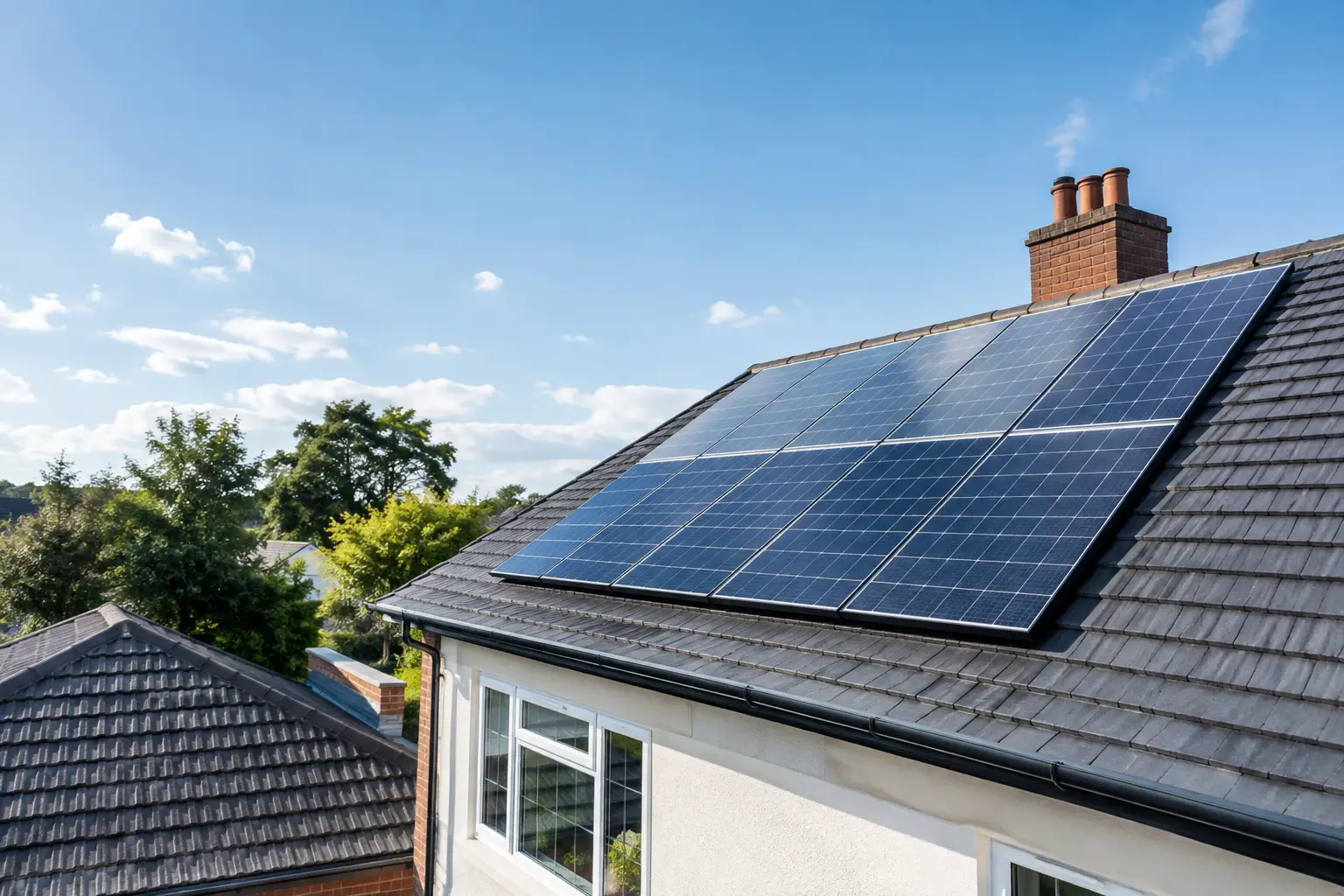
A hotel’s electricity bill does not pause when occupancy drops. Reception, kitchens, laundry, ventilation, lifts, refrigeration and back-of-house equipment all create a sizeable daytime load, while guest expectations make unreliable power unthinkable. The best solar panels for hotels are therefore not simply the highest-wattage modules available. They are the panels and supporting equipment that suit the building, operating hours and long-term energy plan.
For hotel owners and operators, solar is an opportunity to produce more of the electricity the property already needs, reduce exposure to rising energy costs and make sustainability progress that guests, corporate clients and staff can see. The right decision starts with the system design, not a catalogue.
What makes solar a good fit for hotels?
Hotels often use significant electricity during daylight hours, which is when a photovoltaic system generates most effectively. Breakfast service, housekeeping, laundry, kitchen preparation and cooling loads can all coincide with solar production. That direct use of on-site electricity is usually the strongest foundation for a financially sensible project.
The picture varies by property. A city hotel with limited roof space may have a high electricity demand but less generation capacity. A country hotel, resort or venue with several low-rise buildings may have more usable roof area but a more varied load profile. Hotels with spas, pools, commercial kitchens or electric vehicle charging will also consume energy differently from a small boutique property.
That is why a proper survey should assess the roof, shading, electrical infrastructure and half-hourly consumption data where available. Annual consumption matters, but the timing of consumption matters just as much. A system that produces electricity when the hotel needs it can deliver more value than a larger system designed without regard for demand.
Best solar panels for hotels: what to prioritise
For most hotel projects, high-efficiency monocrystalline panels are the starting point. Modern n-type panels are often attractive for commercial roofs because they offer strong efficiency from a limited area and generally come with long-term product and performance warranties. High efficiency can be particularly valuable where roof space is constrained, as is common in central London and other built-up locations.
However, the best panel on paper is not automatically the best choice for the site. A hotel should balance panel output with proven manufacturing quality, warranty terms, compatibility with the mounting system and inverter design, and the installer’s ability to support the system after commissioning.
Efficiency matters where roof space is tight
Panel efficiency describes how much sunlight a module converts into electricity within a given area. On a small or heavily obstructed roof, choosing a more efficient panel may increase the usable system capacity without expanding the footprint.
There is a cost trade-off. Premium, high-efficiency panels can cost more per module than standard commercial options. If a hotel has a large, unobstructed roof, a slightly lower-efficiency panel may deliver better value per installed kilowatt. The correct choice depends on the space available and the energy the hotel can use on site.
Durability and warranties deserve close attention
A hotel solar system is a long-term asset, so product quality should be assessed beyond the headline power rating. Look for credible product warranties, performance warranties that explain expected output over time, and modules designed for the local weather conditions and roof environment.
For coastal properties, areas with higher wind exposure, or roofs close to plant equipment, the mounting design and corrosion resistance are as significant as the panels themselves. A professionally engineered system accounts for wind loading, roof condition, drainage routes, access requirements and fire safety from the outset.
Bifacial panels are site-specific
Bifacial panels can generate electricity from both sides of the module by using reflected light from the surface below. They can be useful on certain flat roofs, ground-mounted arrays and canopies where there is enough clearance and a reflective surface.
On many hotel roofs, the additional yield may be modest if the rear of the panel is shaded by the roof or mounting arrangement. They should be considered where the design supports them, rather than specified as a default upgrade.
Panels are only one part of the hotel energy system
A reliable commercial solar installation depends on how every component works together. Inverters convert the panels’ direct current into usable electricity. Their size, location and configuration affect generation, monitoring and future expansion options. The mounting system protects the roof and must be appropriate for its construction, while electrical works must safely integrate solar with the hotel’s existing distribution equipment.
For complex roofs, designers may divide the array into separate sections or use equipment that manages panels exposed to different shading conditions. A chimney, lift overrun, neighbouring building or rooftop plant can affect output at certain times of day. Modelling these losses before installation is far preferable to discovering them after the system is live.
Monitoring is equally valuable for a hotel operator. Clear performance reporting makes it easier to see how much electricity the system is producing, how much the building is using, and whether a fault requires attention. This turns solar from a rooftop asset into an active part of energy management.
Should hotels add battery storage?
Battery storage can help a hotel use more of its own solar generation after the sun has gone down. This may suit properties with strong evening demand, such as hotels with busy restaurants, bars, events spaces or late check-ins. Batteries can also reduce demand at expensive periods, depending on the electricity tariff and the site’s consumption pattern.
But storage is not essential for every project. If a hotel already uses most solar electricity as it is generated, adding a battery may offer limited additional benefit. Conversely, a property with lower daytime use and substantial evening consumption may see a stronger case for storage.
The decision should be based on measured demand data, tariff structure, available space, fire safety requirements and operational priorities. Battery systems need correct sizing and a clear control strategy. Oversizing a battery simply because more capacity seems better can extend the payback period unnecessarily.
It is also worth being clear about resilience. A standard grid-connected solar system does not automatically keep a hotel powered during a power cut. Backup capability requires dedicated equipment, careful electrical design and agreement on which essential circuits should be supported. For some hotels, protecting reception, emergency communications, selected lighting, refrigeration or IT equipment may be more practical than attempting to back up the entire building.
Designing around hotel operations
The installation process needs to respect the guest experience. Noise, scaffolding, roof access, deliveries and any planned electrical shutdowns should be organised around occupancy, events and service schedules. A hotel cannot simply close its kitchen or reception desk because an energy project is underway.
A full-service contractor can reduce this pressure by managing the survey, design, permissions, grid connection requirements, installation, commissioning and handover as one coordinated process. Before work begins, the operator should know what access is required, where equipment will be located, how disruption will be controlled and who to contact throughout the project.
For listed buildings, conservation areas or properties with particular planning constraints, early assessment is especially useful. Planning permission may not always be needed, but it should never be assumed. Roof structure and leasehold arrangements may also require review before the design is finalised.
How to compare solar proposals for a hotel
A useful solar proposal should do more than state a panel quantity and a headline saving. It should show the proposed system size, expected annual generation, key assumptions, panel and inverter specifications, roof layout, warranty information and the likely proportion of solar electricity used on site.
Ask how shading has been assessed, whether the roof has been reviewed structurally, and how the design addresses maintenance access. It is also sensible to understand the assumptions behind financial forecasts. Electricity prices, export arrangements, future occupancy and weather all influence results, so projections should be realistic rather than optimistic.
Aftercare should form part of the comparison. Panels are low-maintenance, but periodic inspections, monitoring, cleaning where genuinely needed and prompt repairs protect long-term performance. Hotels benefit from knowing that technical support is available without having to coordinate multiple suppliers.
Shard Solar approaches commercial projects as an energy system rather than a panel purchase, combining detailed surveys, engineered design, professional installation and continuing support. For a busy hotel, that joined-up approach helps keep the project focused on savings, reliability and everyday operation.
The most effective next step is to examine the hotel’s real energy use alongside its roof potential. With the right evidence, solar becomes a practical investment that can lower daytime electricity costs while supporting the more sustainable stay modern guests increasingly expect.