
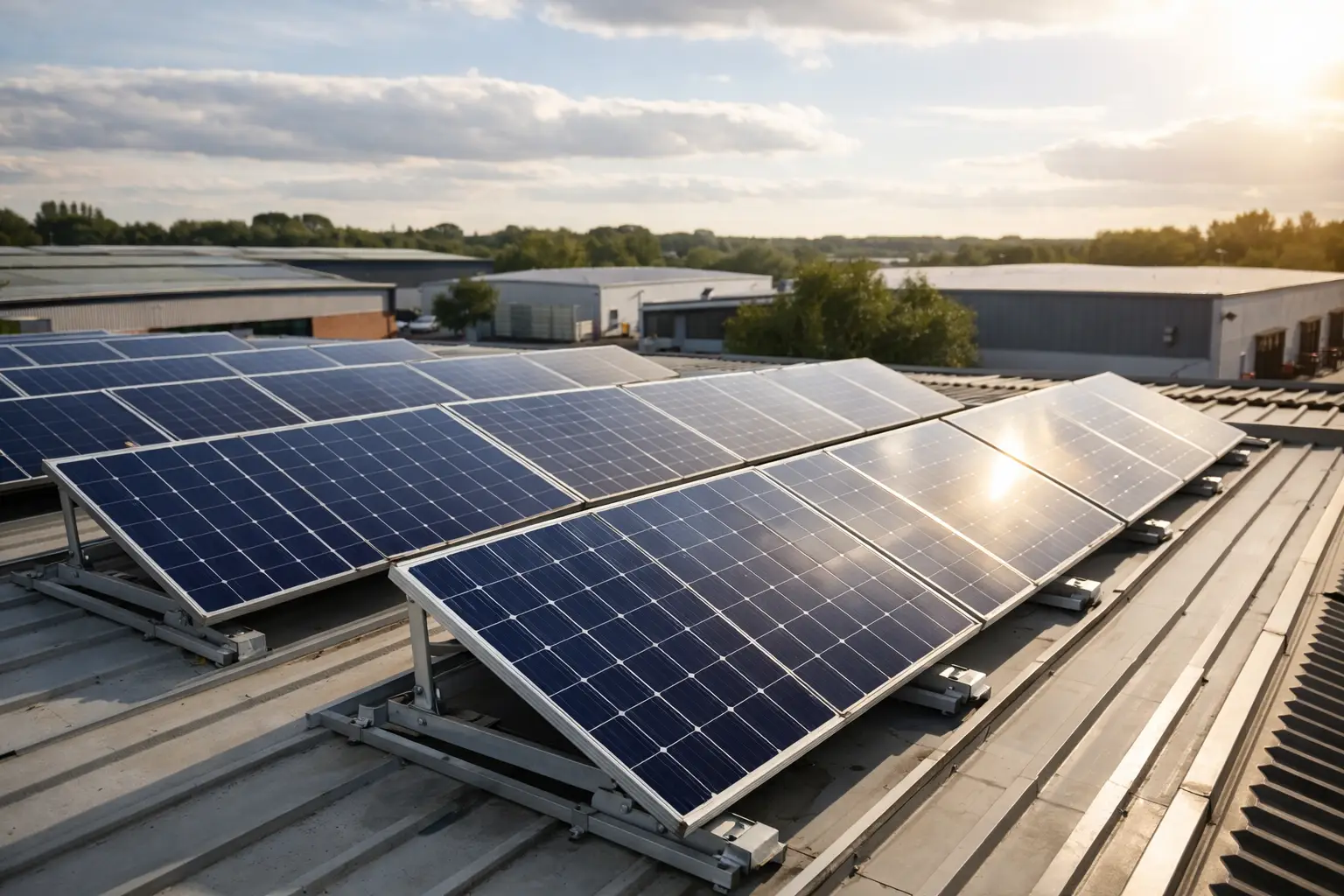
A solar array can generate plenty of electricity, yet the value you receive from it depends on when that electricity is used, stored or exported. Solar tariffs are the rates and rules that determine what you pay to import power from the grid and what you receive for surplus electricity sent back to it. For homes and businesses, understanding them can make the difference between a good solar design and a system that works harder for your daily energy habits.
The right tariff will not create more sunshine, but it can make every kilowatt-hour more useful. That is particularly relevant where electricity demand continues after solar production falls, such as family homes in the evening, hotels, shops and food-production sites with long operating hours.
What are solar tariffs?
In the UK, the term can refer to several connected arrangements. The most familiar are import tariffs, which set the price of electricity bought from the grid, and export tariffs, which pay for eligible electricity you do not use on site. Time-of-use tariffs add another layer by charging different import prices at different times of day.
For a solar owner, these rates affect three decisions: whether it is best to use electricity immediately, save it in a battery, or export it. A well-designed system and tariff should support the same aim: reducing the amount of high-priced grid electricity you need to buy.
It is worth separating today’s export arrangements from the older Feed-in Tariff scheme. Some households and organisations still receive legacy Feed-in Tariff payments, but new installations generally use the Smart Export Guarantee, often shortened to SEG. Under SEG, participating suppliers offer payments for exported renewable electricity. Rates, terms and eligibility vary, so it pays to check the detail rather than assuming every export payment is the same.
The value of using your own solar power
Self-consumption means using the electricity your panels generate within the property. It is usually the first source of value from solar because every unit used on site can avoid buying a unit from the grid at your import rate.
Imagine a system produces electricity at midday while the property is occupied. Appliances, office equipment, refrigeration, ventilation, heat-pump use and EV charging may be able to use that generation directly. If the import rate is significantly higher than the export rate, using power on site is normally more valuable than exporting it.
That does not mean export payments are unhelpful. They provide an income for generation that would otherwise go unused and can improve the overall return from a well-sized system. The key is to size the array around the building’s annual consumption, daytime demand profile, roof space and future plans, not simply to install as many panels as possible.
Why demand patterns matter
A household where everyone is out during the day will use solar differently from a home with regular daytime occupancy. Likewise, a retail site with daytime cooling loads may naturally consume a high share of generation, while a residential block may have more complex common-area and tenant-demand patterns.
For commercial properties, half-hourly data can reveal when electricity is actually used. That information helps an installer engineer a system around the site’s load rather than making assumptions from annual bills alone. It can also identify whether battery storage, energy-efficiency improvements or changes to operating schedules would add value.
Export tariffs and the Smart Export Guarantee
An export tariff pays you for electricity measured as leaving your property and entering the network. To receive accurate metered export payments, an eligible smart meter is commonly required. Your supplier will confirm its metering and application requirements.
SEG rates may be fixed, variable or linked to certain times of day, depending on the supplier and tariff. A higher headline export rate can be attractive, but it should not be considered in isolation. Check whether the rate applies at all times, whether it requires you to take your import supply from the same company, and whether any conditions limit flexibility later.
Export tariffs can be especially useful in summer, when a well-performing array may produce more than a property can consume. They are also valuable for organisations that cannot easily shift demand into sunny hours. However, they should not be used as the sole justification for oversized generation. The financial case remains strongest when the system is matched carefully to the building and its energy use.
Time-of-use tariffs and battery storage
Time-of-use tariffs charge different prices at different times. Electricity may cost less overnight or at periods of lower network demand, then more during busy evening hours. Exact pricing structures vary by supplier and can change, so compare the full tariff rather than focusing on a single low-rate window.
Battery storage gives a solar system more choice. It can hold surplus daytime solar generation for use after sunset, helping a household avoid evening imports. For businesses, it may help cover a portion of late-day demand or support site operations when solar output falls.
Some batteries can also be configured to charge from the grid when a lower tariff applies, then supply the property when rates are higher. This can be useful, but it is not automatically right for every customer. Battery capacity, efficiency losses, tariff conditions, cycle limits and the property’s actual load all matter. A battery should be specified as part of a complete energy strategy, not added simply because it is available.
A simple way to compare your options
Consider the value of one surplus unit of solar electricity. You could use it straight away and avoid the current import price. You could store it, accepting a small loss through charging and discharging, then avoid a later import at a potentially higher rate. Or you could export it and receive the export payment.
The best route changes through the day. In bright midday conditions with a full battery and modest demand, export may be sensible. In late afternoon, storing solar for evening cooking, lighting or business demand may be more valuable. Smart monitoring and appropriately configured controls can manage much of this automatically, but the underlying tariff still shapes the outcome.
Choosing a tariff after installation
Do not treat the tariff as an afterthought once panels are on the roof. Review it during the design process and again after the system has been operating for a few months. Actual generation and consumption data often reveal opportunities that an estimate cannot fully predict.
When comparing solar tariffs, look beyond the advertised rate. Consider your standing charge, peak and off-peak import prices, export payment, contract terms, metering requirements and how easily the tariff works with a battery or EV charger. For a business, also consider the supply contract structure, half-hourly charges and whether changes in use are expected.
A tariff with very cheap overnight electricity might suit a battery-equipped property with significant evening demand. A straightforward fixed import tariff and competitive SEG payment may be better for a building that uses most of its solar power during working hours. There is no universal winner because the right answer depends on the site.
Design first, then optimise
Tariffs change over time, while a quality solar installation is expected to support the property for many years. That is why the foundation should be sound design, safe electrical work, reliable components and clear visibility of system performance. Tariff optimisation works best when it sits on top of a system built around real energy use.
Monitoring is particularly valuable after commissioning. It can show generation, import, export and battery behaviour, helping owners spot when a setting, schedule or tariff is no longer serving them well. A change in occupancy, a new electric vehicle, extended opening hours or a heat pump can all alter the best strategy.
For London homes and commercial premises, where electricity costs and demand can be substantial, a property survey should consider more than panel numbers. Shard Solar assesses how the building consumes power, then designs and maintains systems intended to generate clean electricity, increase self-reliance and support practical long-term savings.
The most useful tariff is the one that fits the way your property actually lives or works. Start with accurate consumption data, build the solar and battery system around it, then keep reviewing the numbers as your energy needs evolve.