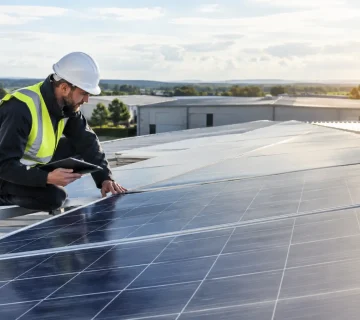
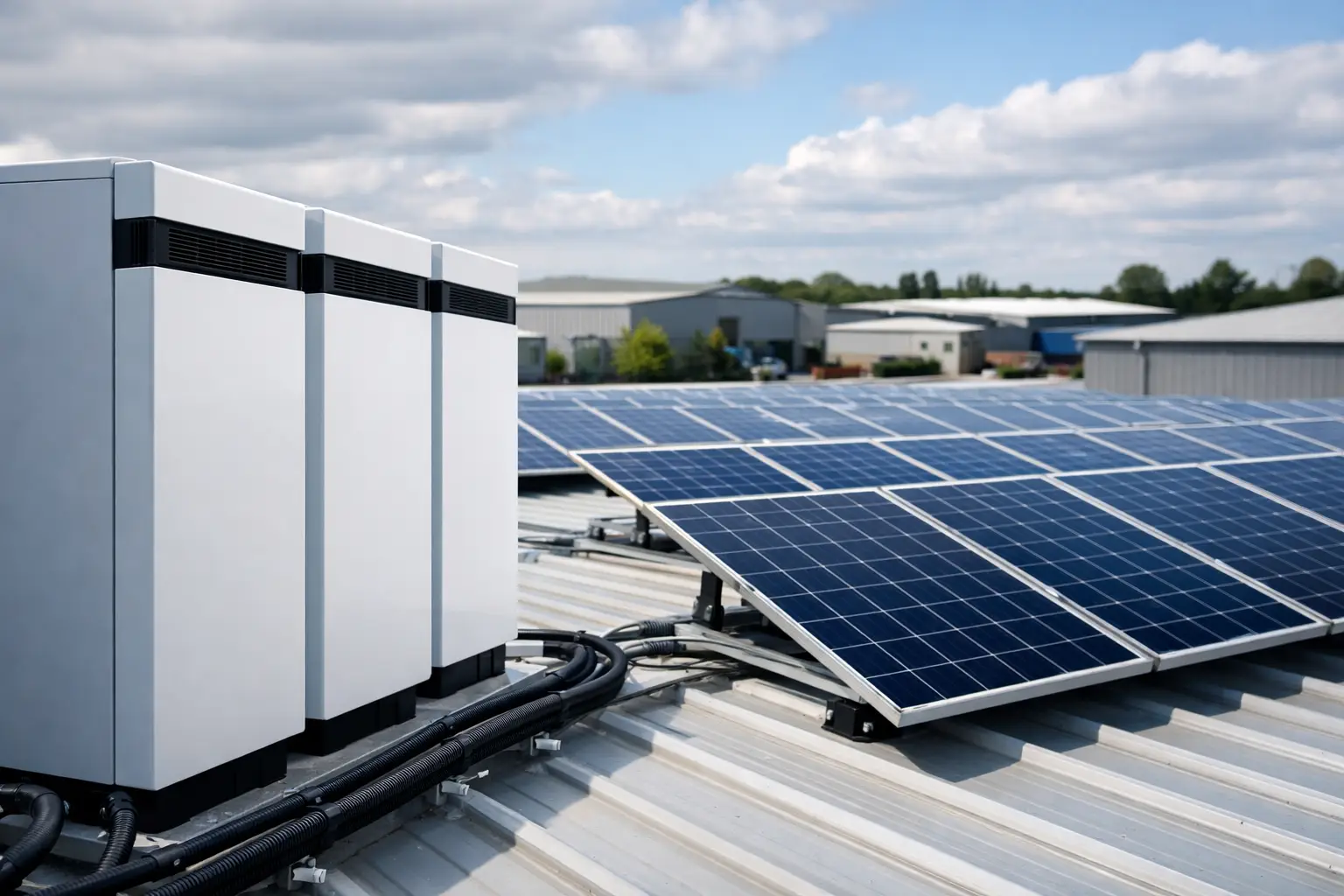
A solar array may produce its strongest output around midday, just as many homes are empty and many businesses have a changing demand profile. Solar batteries bridge that gap. They retain surplus electricity generated on site, so it can be used later in the day rather than exported straight to the grid.
For a homeowner, that could mean running appliances, cooking dinner or charging an EV with power generated from the roof. For a business, it can mean covering evening demand, reducing purchases at higher-cost times and gaining more control over a valuable on-site energy asset. The right system is not simply the largest battery available. It is one designed around how the building uses electricity.
What solar batteries do
A battery storage system works alongside solar panels and an inverter. During daylight hours, the solar panels supply active electricity demand first. When production exceeds demand, the remaining electricity can charge the battery. When panel output drops, stored energy is discharged to support the property before electricity is imported from the grid.
This increases solar self-consumption: the proportion of generated electricity that is used where it is produced. Without storage, a household that is out during the day may export a considerable share of its generation and then buy electricity back in the evening. A battery can change that pattern, although the result depends on household routines, system size, tariff and season.
Battery storage can also charge from the grid where a suitable time-of-use tariff makes that worthwhile. Some customers use lower-cost overnight electricity to charge the battery, then use it during more expensive periods. This should be considered carefully alongside solar production, tariff terms and expected usage. It is not a replacement for good system design.
The two battery figures that matter
Battery specifications can look technical, but two figures shape most decisions: usable capacity and power output.
Usable capacity is measured in kilowatt-hours, or kWh. It indicates how much energy a battery can hold. A 10 kWh battery does not necessarily provide 10 kWh of usable energy in every situation, as manufacturers specify operating limits to protect battery life. The usable figure is the one that matters when estimating how much evening or overnight demand the battery could cover.
Power output is measured in kilowatts, or kW. It shows how much electricity the battery can supply at one time. A battery might hold enough energy for several hours, but if its output is too low, it may not comfortably support several high-demand appliances operating together.
This distinction is particularly relevant for properties with heat pumps, electric showers, induction hobs, EV charging or commercial equipment. Capacity determines duration; power determines what the battery can handle at a given moment. A professionally engineered design considers both, along with the solar array, inverter, electrical supply and future plans for the property.
A simple example
Consider a home that uses 8 kWh between late afternoon and bedtime. A battery with around that amount of usable storage may cover much of that period on a sunny day, provided it has charged sufficiently and can meet the home’s peak demand. In winter, shorter days and lower solar generation mean the same battery will often charge less from solar. It can still support a time-of-use strategy, but expectations should remain realistic.
For a business, the calculation is more detailed. A retail site with steady daytime refrigeration may benefit most from solar generation used directly. A hospitality venue with a strong evening load may see greater value from storing daytime surplus. Interval data, operating hours and equipment load all influence the best approach.
When battery storage makes most sense
Solar batteries tend to be particularly useful where there is regular solar surplus and meaningful electricity use after panels stop generating. They can also suit properties where energy tariffs vary by time, where resilience is a priority, or where an EV and other electrical upgrades are planned.
However, storage is not automatically essential for every solar installation. A property with substantial daytime consumption may already use a high proportion of its solar electricity directly. In that case, panels may deliver the immediate priority, with battery storage added later if usage changes or export becomes more significant.
Similarly, a very large battery is not always the best investment. If it rarely fills, capacity is sitting unused for much of the year. If it is too small, it may fill early and leave surplus generation to export, while offering limited support after sunset. The aim is a balanced system that works well across typical days, not one designed only for the sunniest week of summer.
Backup power is possible, but it is not automatic
One of the most common assumptions is that a solar battery will keep a whole property powered during a grid outage. Some systems can provide backup capability, but this depends on the battery, inverter, wiring design and the circuits selected for support.
Standard solar systems usually shut down during a power cut for safety reasons. A backup-ready installation requires equipment that can safely isolate the property from the grid and form its own local supply. The available output also matters. High-load equipment may need to be managed, and many properties choose to back up essential circuits such as lighting, refrigeration, broadband, alarms and selected sockets rather than every appliance.
For commercial sites, backup requirements should be defined early. Critical loads may include security systems, IT equipment, refrigeration, emergency lighting or operational controls. A clear brief helps ensure the system supports the loads that matter rather than creating an unrealistic expectation of unlimited off-grid power.
Designing solar batteries around real consumption
A good design starts with electricity data, not a generic battery recommendation. Reviewing annual consumption gives a useful baseline, while half-hourly data for commercial properties can reveal when demand rises, falls and peaks. For homes, smart meter information and a discussion about routines can provide valuable insight.
Future changes matter too. An incoming EV, heat pump, extension, new machinery or increased occupancy can alter the energy profile quickly. Designing with these plans in mind can avoid an installation that feels undersized soon after commissioning. Equally, it may be sensible to select a modular battery system that can be expanded if future demand justifies it.
At Shard Solar, this process begins with a property survey and a detailed proposal that considers the wider electrical system as well as the panels and storage. Roof space, shading, consumer unit capacity, inverter location, cable routes and installation access all affect what can be delivered safely and efficiently.
Installation, monitoring and long-term performance
Battery installation involves more than placing a unit on a wall. The equipment must be located in an appropriate environment, connected to the solar and electrical system correctly, and commissioned so that charging behaviour, export settings and monitoring operate as intended. Fire safety guidance, manufacturer requirements and access for future service should all be part of the design.
Once installed, monitoring gives owners visibility of solar production, battery charge level, household or site demand, imports and exports. This is useful beyond simple reassurance. It can show whether the system is behaving as expected, highlight changing consumption patterns and help identify opportunities to move flexible loads into lower-cost periods.
Like most energy equipment, batteries require sensible care rather than constant attention. Modern systems are largely automated, but software updates, inspections and responsive support remain valuable. Warranties should be read carefully, particularly the terms relating to capacity retention, throughput, duration and any conditions for registration or monitoring.
Questions to ask before choosing a battery
Before committing, ask how much solar electricity the property currently exports, when electricity is normally used, and whether the priority is savings, backup capability or greater energy independence. It is also worth asking whether the proposed battery capacity and power output are based on measured demand rather than a rule of thumb.
For grid-charging strategies, check the tariff assumptions used in any savings estimate. Tariffs can change, and the best arrangement for one household may not suit another. Commercial decision-makers should also consider demand charges, operational continuity and whether storage can support wider sustainability reporting.
A solar battery is most valuable when it is part of a considered energy plan. With the right survey, design and aftercare, stored solar power can make the electricity generated on your roof work harder long after the daylight fades.