Your roof may receive enough sunlight to produce a meaningful share of your electricity, but the value of that opportunity depends on far more than the panels themselves. A well-planned solar panel installation considers how your property uses power, when it uses it, the condition and orientation of the roof, and whether battery storage could help you use more of the energy you generate.
For homeowners, landlords and businesses, solar is a practical way to reduce reliance on grid electricity and make long-term energy costs easier to manage. The right system should fit the building and its daily demand, not simply fill every available section of roof.
What happens before solar panel installation
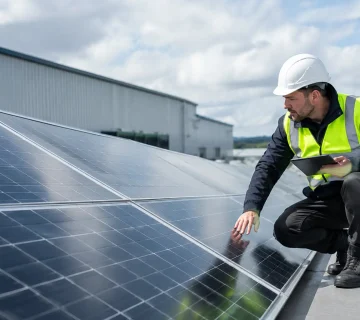
The process starts with a property survey. This is where an experienced installer assesses the roof structure, available space, shading from nearby buildings or trees, cable routes, and the position of your existing electrical equipment. On a commercial site, the survey should also consider operational hours, larger electrical loads and how work can be completed with minimal disruption.
Roof orientation matters, but it is not the only factor. South-facing roofs often achieve strong production across the day, while east- and west-facing arrays can be particularly useful for properties that need electricity in the morning and late afternoon. A roof that is partly shaded may still be suitable, although the design may need to account for the source and timing of that shade.
Your electricity use is equally important. A household that is empty for much of the day has different priorities from a home where someone works remotely, charges an electric vehicle or runs a heat pump. Likewise, a hotel, retailer or food manufacturer may have substantial daytime demand that makes on-site solar generation especially valuable. Reviewing bills and consumption patterns helps determine the system size, expected self-use and potential role of a battery.
Following the survey, you should receive a clear quotation and proposed design. At Shard Solar, a detailed quotation is provided within 48 hours of a free property survey, giving customers a defined starting point for decisions on system capacity, battery storage and associated electrical work.
Designing a system around your energy use
Solar panels generate direct current electricity. An inverter converts this into alternating current electricity that your building can use. During daylight hours, the system supplies available solar power to appliances and equipment first. If production exceeds demand, the surplus can be exported to the grid or stored in a battery, depending on the system configuration.
The most useful design is not always the largest possible array. A larger system may generate more electricity overall, but its financial return depends on how much power you use on site, the export arrangement available to you, roof constraints and future plans for the property. If you expect to add an electric vehicle charger, heat pump or additional electrical equipment, it can be sensible to design with that future demand in mind.
Battery storage changes the way solar energy can be used. Rather than exporting all unused daytime production, a battery can hold some energy for the evening, when household consumption commonly rises and solar generation falls. For businesses, storage can also support more consistent use of on-site energy during periods of higher demand. Battery capacity should be matched to both solar production and consumption habits. An oversized battery can add cost without delivering proportional benefit, while a smaller battery may be sufficient for a property with modest overnight use.
A good proposal should explain the expected generation, how assumptions have been calculated, what equipment is included and what performance may look like across the year. Solar output is seasonal, so a system will typically produce much more in bright summer months than it does during winter. This does not make solar less worthwhile. It simply means expectations should be based on annual performance rather than a single sunny day.
Permissions, grid connection and safety
Many domestic solar installations can proceed without a full planning application, but this is not universal. Listed buildings, conservation areas, unusual roof designs and ground-mounted systems may require additional consideration. Commercial properties can also have planning, landlord, leasehold or structural approval requirements.
The grid connection must be handled correctly as well. Your installer should assess the proposed system, follow the relevant distribution network process and submit the necessary notifications or applications. Requirements can vary with the size and technical specification of the system, particularly where battery storage or larger commercial generation is involved.
Electrical safety is central to the project. The inverter, generation meter, isolators, protective devices and cabling must all be selected and installed for the property. Older consumer units or limited electrical capacity may need attention before the solar system is commissioned. This is not an unnecessary extra – it is how the installation is made safe, compliant and ready to perform as designed.
Installation day: what to expect
Once the design, approvals and schedule are confirmed, installation can begin. A typical domestic project is often completed over one or two days, although larger arrays, battery systems, roof access requirements and electrical upgrades can extend the programme. Commercial projects require a more detailed work plan, particularly where the building must remain open or operational.
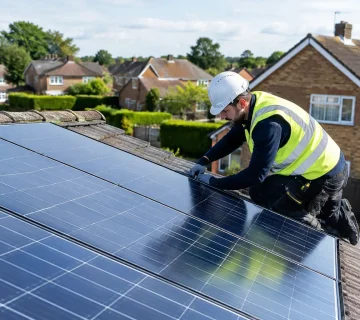
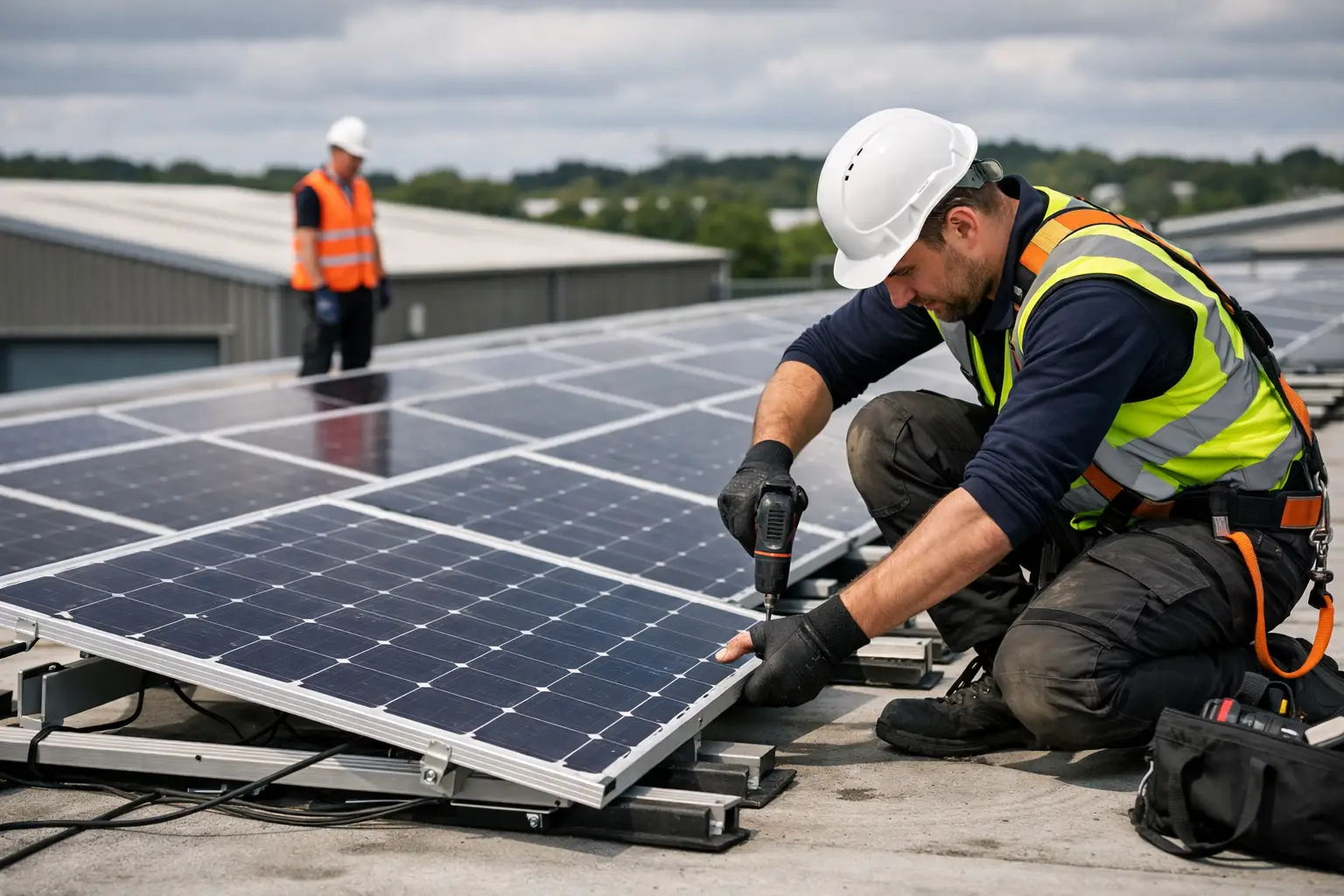
The installation team fixes mounting rails securely to the roof structure, positions and connects the panels, then installs the inverter and, where specified, the battery. Cable routes are planned to be as tidy and discreet as practical while remaining accessible and compliant. If scaffolding is needed, it is arranged before the roof work starts and removed once it is safe to do so.
There will usually be a short interruption to electricity while final electrical connections are made. Your installer should advise you in advance and coordinate the work around your needs wherever possible. For businesses, this may mean scheduling particular tasks outside trading hours or around critical operations.
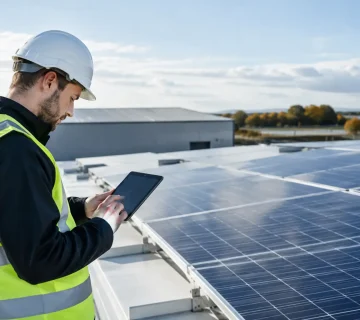
The work is not complete when the final panel is in place. Commissioning confirms that the system is operating correctly, communicates with its monitoring platform and meets the required electrical standards. You should be shown how to check production, understand the app or portal, and recognise when it is worth contacting your installer for support.
Getting more from your solar generation
Solar rewards thoughtful energy use. Running appliances such as washing machines, dishwashers and electric vehicle charging during brighter parts of the day can increase the amount of generation you use directly. Smart controls can help automate this, though they are not essential for every property.
For commercial buildings, the opportunity may lie in aligning predictable loads with generation. Refrigeration, ventilation, production equipment and daytime office use can all affect the value derived from solar. Energy-efficiency improvements also matter. Reducing unnecessary demand means more of your solar electricity can cover the loads that remain.
Monitoring provides the evidence. It lets you see generation patterns, compare output over time and identify unusual changes that may need investigation. A sudden reduction in output could be related to shading, dirt, a connectivity issue or a technical fault. Regular performance reporting and responsive maintenance help protect the return on your investment.
Panel cleaning is sometimes useful, particularly where there is visible soiling, bird activity, nearby construction or industrial dust. However, it is not automatically required on every roof. Rain often removes ordinary surface dirt, so the sensible approach is to inspect performance and condition rather than clean panels to a fixed schedule without a reason.
Questions worth asking before you proceed
Before choosing an installer, ask who is responsible for each stage of the project. Design, structural considerations, permissions, electrical work, grid paperwork, commissioning and aftercare should not be left unclear. A single managed process reduces the risk of delays and makes it easier to know who to contact if a question arises.
You should also ask what warranty information, monitoring access and maintenance support will be provided after commissioning. Solar is designed to be low maintenance, but low maintenance does not mean no support. Clear handover documents and direct access to a knowledgeable team provide reassurance long after installation day.
A solar system is a long-term addition to your property. Start with an accurate survey, make decisions based on your real energy use, and choose a design that gives you practical control over the power you generate.