
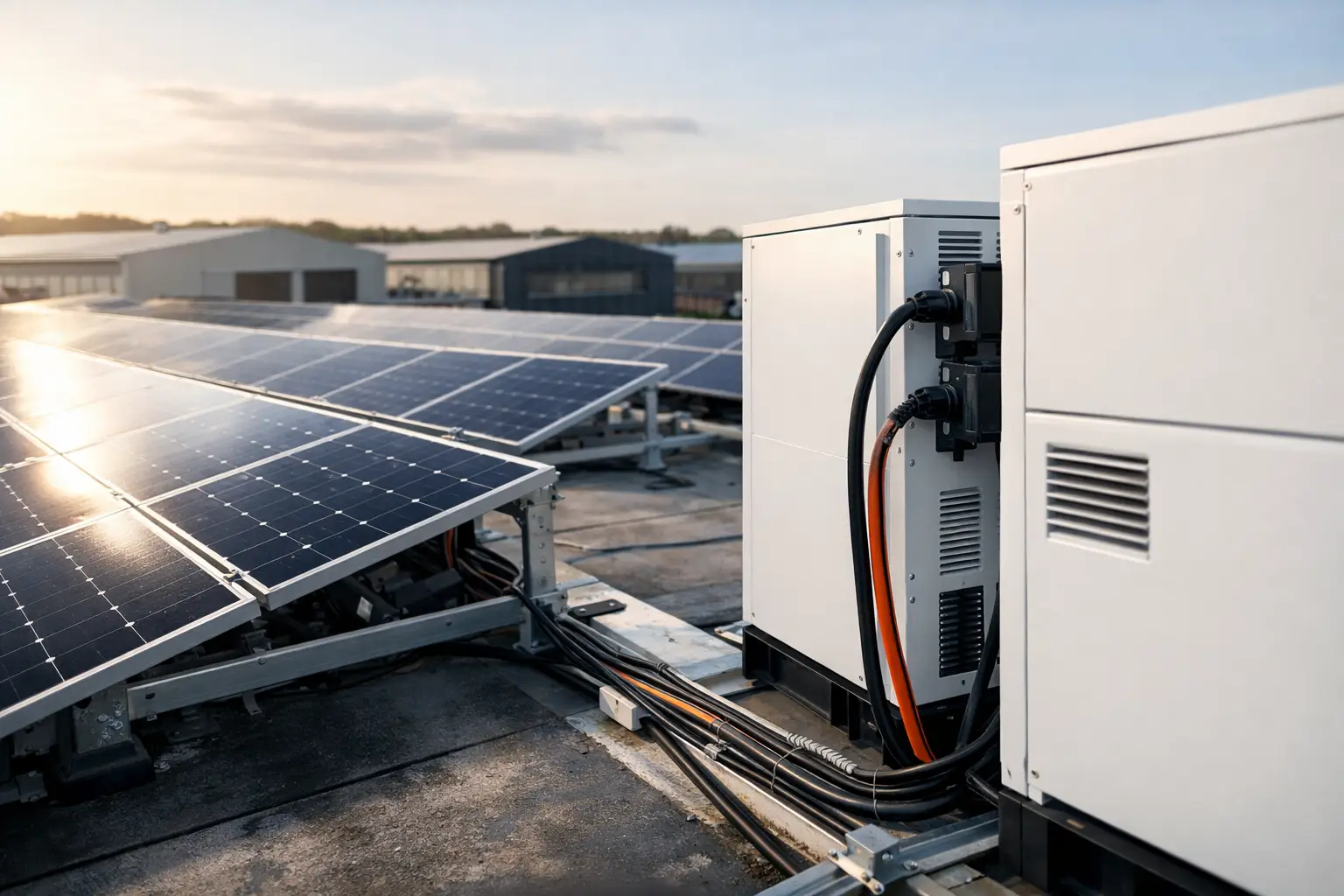
A battery can make solar power useful long after the sun has gone down, but it is not a fit-and-forget component. Solar battery lifespan depends on the battery chemistry, how deeply and often it is used, where it is installed and whether the wider system has been designed around the property’s real energy demand. For a homeowner or business, the aim is not simply to buy the largest battery available. It is to install storage that delivers dependable savings and retains useful capacity for years to come.
Most modern domestic and commercial solar batteries are designed for long service. However, the number printed on a warranty document is only part of the picture. Knowing what that number means helps you compare quotations properly and make sensible decisions about charging, usage and aftercare.
How long does a solar battery last?
A quality lithium-ion solar battery will commonly provide around 10 to 15 years of useful service. Some can continue operating beyond that point, although they will store less energy than when new. Older lead-acid batteries generally have a shorter working life and need more careful maintenance, which is why lithium-based storage is now the more usual choice for new solar installations.
Battery lifespan is measured in two related ways: calendar years and charge cycles. A cycle is broadly the process of using stored energy and charging the battery again. It does not have to mean draining the battery completely in one go. Two 50% discharges, followed by recharging, are roughly equivalent to one full cycle.
Manufacturers often state a cycle figure, sometimes several thousand cycles, alongside a time-based warranty. The warranty may also specify a minimum retained capacity at the end of the term, such as 60% or 70%, and may include a throughput limit. Throughput is the total amount of electricity that can pass through the battery during its covered life. These details matter more than a headline years figure alone.
A battery does not suddenly stop working at ten years
Like a mobile phone battery, a solar battery gradually loses capacity. A 10 kWh battery may no longer deliver 10 kWh of usable energy after years of regular operation. That does not automatically mean it has failed. It may still be valuable for storing surplus daytime generation, reducing evening grid imports or supporting selected circuits during an outage, depending on the system design.
The right replacement point depends on its remaining capacity, electricity prices, your consumption pattern and the condition of the rest of the system. Monitoring data gives a clearer answer than age alone.
What has the biggest effect on solar battery lifespan?
Depth of discharge
Depth of discharge describes how much of the battery’s stored energy is used before it recharges. Repeatedly running a battery very close to empty places more strain on it than shallower, controlled cycling.
This does not mean you should avoid using your battery. It means the system should reserve an appropriate minimum state of charge. Many products manage this automatically, keeping some energy unavailable to protect the cells. If backup power is important, the reserve can also be set higher, although that reduces the energy available for daily bill savings. It is a practical trade-off between resilience and maximum self-consumption.
Charging and discharging rate
Batteries prefer measured, controlled operation. A system that must charge or discharge at very high power, particularly on a frequent basis, can experience greater wear than one operating within a more comfortable range.
This is one reason battery size should be matched to the building. A battery that is too small for a large evening load may be pushed hard every day. A well-designed system considers the solar array, inverter capacity, typical consumption, export arrangements and major loads such as EV charging, heat pumps, refrigeration or commercial equipment.
Temperature and installation location
Heat is one of the most significant long-term threats to battery health. Very low temperatures can also reduce performance and limit charging. In the UK, a battery installed in a suitable garage, utility room or protected external enclosure can often operate in a favourable environment, but the exact location still needs proper assessment.
Avoid assuming that any spare cupboard or sunny wall is suitable. The equipment needs adequate ventilation, safe clearances and a location within the manufacturer’s operating guidance. For commercial sites, this assessment is particularly important where plant rooms, manufacturing areas or service spaces may have fluctuating temperatures.
The battery chemistry and build quality
Not all batteries age in the same way. Lithium iron phosphate, often called LFP or LiFePO4, is widely used in modern energy storage because it offers strong cycle life and thermal stability. Other lithium-ion chemistries can offer different benefits, including energy density, but specifications should be compared in the context of the proposed system rather than by chemistry name alone.
The battery management system is equally important. This built-in control equipment monitors cell temperature, voltage and charging behaviour, helping to keep operation within safe limits. A lower initial price is not always better value if it comes with weaker warranty support, limited monitoring or a design poorly suited to the property.
How the battery is used
A battery that cycles once most days will age differently from one used only occasionally for backup. Neither approach is automatically wrong. The best operating strategy depends on your objectives.
For example, a household with strong daytime solar generation may use stored energy each evening and see regular cycling as part of the return on its investment. A business with costly peak-time electricity may prioritise discharging during specific periods of high demand. A property that values power continuity may preserve a larger reserve for outages. Each use case calls for sensible settings, not a one-size-fits-all approach.
How to help your battery last longer
Good battery care begins before installation. A property survey should establish how much electricity the building uses, when it is used and how much solar generation is likely across the year. This prevents a system from being specified solely around panel output or a single high-consumption day.
Once installed, the following practices support long-term performance:
- Keep the battery within its recommended operating temperature range and do not block ventilation around associated equipment.
- Use manufacturer-approved equipment and ensure any future additions, such as an EV charger or extra battery modules, are assessed for compatibility.
- Check monitoring regularly for unusual charging patterns, communication faults or an unexpected drop in available capacity.
- Arrange professional inspection and maintenance where recommended, particularly for commercial systems or installations with complex electrical infrastructure.
There is usually no benefit in manually chasing every possible kilowatt-hour from the battery. Automated controls are designed to manage charging limits and protection settings. If your usage changes significantly, such as adding an electric vehicle, converting a loft or extending business operating hours, review the system settings and capacity with a qualified installer.
Warranty length is not the same as expected life
A warranty is valuable protection, but it should be read as a performance commitment with conditions rather than a promise that the battery will remain at full capacity until the final day. Check the warranty period, warranted capacity retention, permitted throughput, exclusions and whether labour is included if a claim is accepted.
It is also worth asking how warranty support is handled. A battery is part of a connected energy system that includes panels, inverter, isolators, cabling and monitoring. Clear commissioning records, direct access to the installation team and structured aftercare make faults easier to diagnose and resolve.
For landlords, developers and commercial operators, keep system documentation with other building records. If responsibility for the property changes hands, a clear record of commissioning, settings and servicing supports future maintenance and warranty discussions.
When should you consider replacing a solar battery?
Replacement is worth considering when capacity has fallen far enough to limit the savings or resilience you expect from the system, when monitoring identifies a persistent fault, or when a newer battery would allow a worthwhile expansion. It may also make sense when an ageing inverter or wider electrical upgrade creates an opportunity to improve the whole system.
Do not judge this only by the battery’s age. A ten-year-old unit that still covers a useful share of evening demand may remain economically sensible. Conversely, a younger battery that is undersized for a changed property may be holding the system back.
A professional review can compare generation, imported electricity, exported electricity and stored energy over time. That turns a replacement decision from a guess into an evidence-based plan.
The most useful way to protect your investment is to treat battery storage as part of a complete energy system. With the right size, a suitable installation environment and ongoing visibility of performance, your battery can continue turning daytime solar generation into practical power when your property needs it most.