
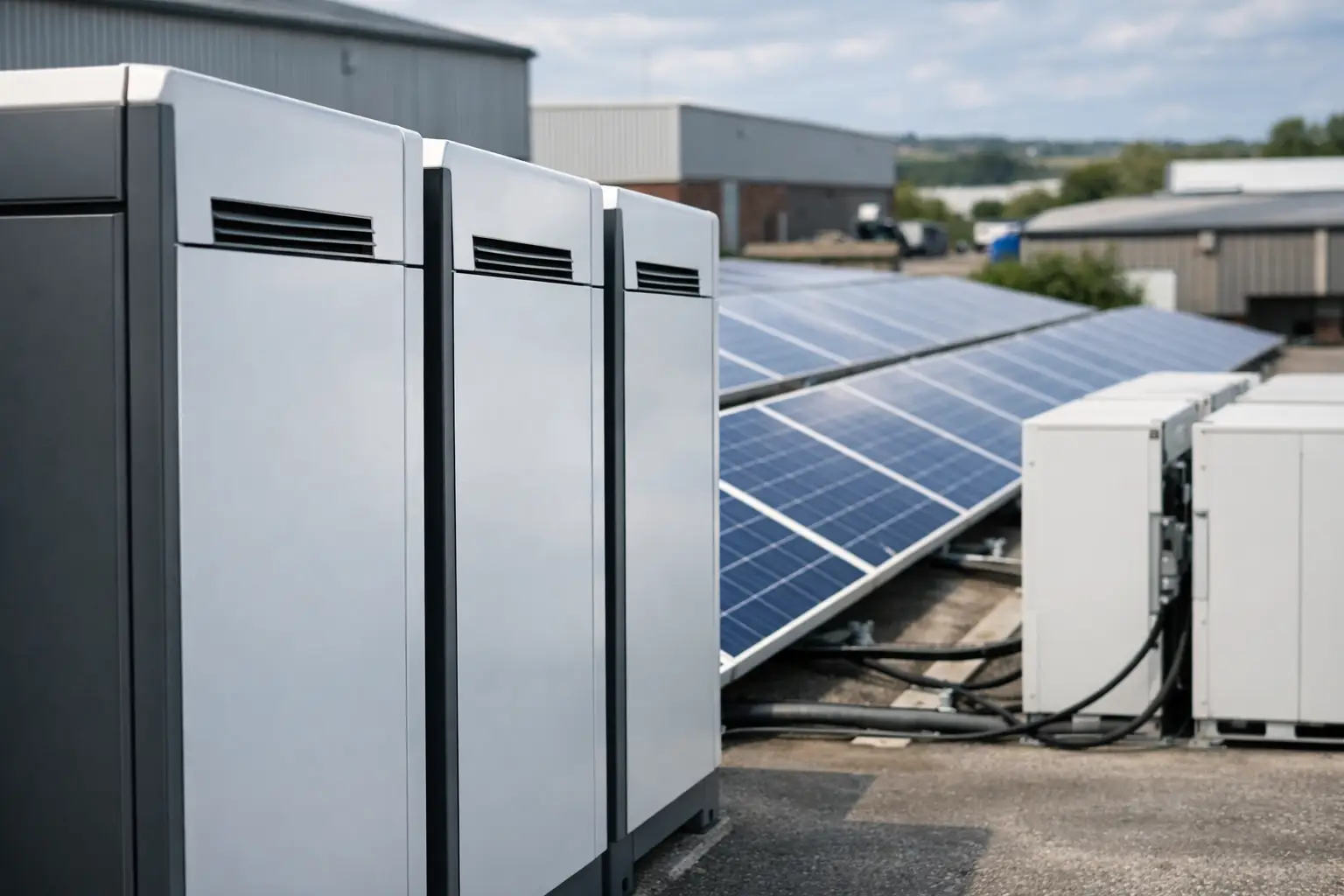
A battery that is too small can be full by lunchtime and empty before the evening meal. One that is too large may leave useful capacity sitting unused for much of the year. Knowing how to size solar battery storage means matching the system to the way your property actually uses and generates electricity, rather than choosing a figure based on headline capacity alone.
For most UK homes and businesses, the right battery is the one that captures a worthwhile share of surplus solar generation, reduces costly grid imports at the times that matter, and fits the budget without creating unnecessary overspend. The answer is rarely the same from one property to the next.
Start with your electricity use, not your panel count
Your electricity bills provide the first useful benchmark. Look at annual consumption in kilowatt-hours (kWh), then consider how that use is spread throughout the day. A household using 4,000 kWh per year consumes roughly 11 kWh per day on average, but averages can hide the detail that determines battery size.
A home that is empty during the day may export much of its solar production and use most of its electricity between 5pm and 10pm. This profile is well suited to battery storage. By contrast, a home office, shop or food production site with high daytime demand may already use a large proportion of its solar power as it is generated. A battery may still offer value, but its role and capacity could be different.
Half-hourly smart meter data is especially helpful. It shows when electricity is being imported from the grid, identifies the evening peak, and reveals whether demand changes between weekdays and weekends. For commercial sites, interval data can also expose short periods of high demand that affect operating costs.
A practical starting point is to calculate the electricity used after solar output begins to fall. That is often the portion a battery can cover on a typical day. If a property imports 6 kWh most evenings, a battery with around 5 to 8 kWh of usable capacity may be worth assessing. It does not necessarily need to supply every unit of overnight electricity.
How to size solar battery storage around real priorities
Battery sizing comes down to three connected questions: how much surplus solar electricity is available to store, when the property needs that electricity, and what outcome matters most.
Store the surplus you can realistically generate
A solar battery cannot store energy your panels have not produced. On bright spring and summer days, a photovoltaic system may create more electricity than the property can use immediately. A battery captures some of that surplus for later use. In winter, however, solar generation is lower and daylight hours are shorter, so the same battery may not fill fully.
This seasonal difference is one reason why choosing a battery to absorb every possible summer surplus is not always the best investment. A sensibly sized system should deliver useful savings across the year, not only perform well on a handful of exceptionally sunny days.
System monitoring and a production forecast help establish how much surplus is likely to be available. Orientation, roof angle, shading and panel capacity all affect the result. A south-facing system typically produces a strong midday peak, while east-west arrays spread production more evenly across the morning and afternoon. Neither approach is automatically better for storage – it depends on the property’s demand profile.
Decide how much evening use you want to cover
For many households, the aim is to power the evening routine with solar electricity generated earlier in the day: cooking, lighting, entertainment, appliances and possibly an EV charge. A battery sized to cover this period can make a noticeable difference to grid imports without the expense of pursuing complete self-sufficiency.
For a commercial building, the priority could be different. A retailer may want to reduce imports during late trading hours. A residential block may need to support communal loads. A hotel may have demand throughout the day and night, making careful load analysis essential. The right capacity should reflect the most valuable hours to avoid importing electricity.
Be clear about backup power expectations
Battery storage and backup power are related, but they are not identical. Not every battery system automatically supplies electricity during a power cut. Backup capability depends on the battery, inverter, electrical design and the circuits selected for protection.
If resilience is a priority, first identify the essential loads. That may include lighting, refrigeration, internet equipment, alarms, selected sockets or critical business systems. Designing backup for these circuits is often more cost-effective than attempting to run the entire property as normal during an outage.
The desired duration matters too. Supporting 1 kW of essential load for eight hours requires roughly 8 kWh of usable stored energy before allowing for system losses and operating limits. Higher-demand equipment, such as electric showers, ovens, heat pumps and rapid EV charging, can quickly increase the required battery and inverter capacity.
Capacity and power rating are not the same thing
Battery capacity is measured in kWh. It tells you how much energy the battery can hold. Battery power is measured in kilowatts (kW). It tells you how quickly the battery can charge or discharge.
This distinction matters. A 10 kWh battery with a modest discharge rate may store plenty of energy but struggle to support several high-load appliances running at once. Equally, a battery with a high power rating but limited capacity may handle a sharp evening peak but run out sooner than expected.
Consider a household that normally uses 2 kW during the evening but occasionally reaches 5 kW when cooking, using a kettle and running other appliances. The system should be designed around typical use and realistic peaks, not just total daily consumption. For commercial properties, professional load assessment is even more valuable because machinery, refrigeration and three-phase equipment can create much higher and more complex demand.
Also check the usable capacity, rather than relying on the nominal figure alone. Batteries retain a small reserve to protect their cells and support long-term performance. Round-trip efficiency means a little energy is lost during charging and discharging. These factors are normal, but they should be included in the design calculation.
Factor in tariffs, EVs and future changes
A solar battery can also charge from the grid when electricity is cheaper, depending on the tariff and system settings. Time-of-use tariffs may make this an attractive option, particularly during darker months when solar generation is limited. The economics depend on the difference between off-peak and peak rates, export payments, household consumption and battery efficiency.
An electric vehicle can change the picture significantly. If it is charged at home during the day, it may use solar energy that would otherwise fill the battery. If it charges overnight on a low-cost tariff, the battery may be better reserved for the evening peak or configured around the wider tariff strategy.
Future additions should be discussed before installation. A planned heat pump, EV, extension, new business equipment or growing occupancy can increase electricity use. Choosing an expandable battery system can be a sensible route where demand is likely to rise, although expansion options, compatible equipment and site constraints need to be confirmed from the outset.
Avoid the two common sizing mistakes
The first mistake is sizing purely from annual consumption. Two properties with the same yearly electricity use can need very different batteries because one consumes power in daylight and the other mainly after sunset.
The second is treating the battery as a route to complete energy independence. Solar and storage can reduce reliance on the grid substantially, but UK winter production, consecutive cloudy days and high electric heating loads mean that full independence is rarely the most economical design target. A well-engineered system focuses on the energy that can be stored and used profitably.
A property survey brings these details together. Panel generation estimates, consumption patterns, roof conditions, electrical capacity, tariff options and backup requirements should all inform the final proposal. For London homes, flats, landlords and commercial premises, the available space for equipment and the building’s existing electrical layout can also influence the design.
At Shard Solar, the design process begins with understanding how the property operates, not simply selecting a standard battery size. That allows the system to be engineered around practical savings, reliable performance and the owner’s future plans.
The most useful battery is not necessarily the biggest one. It is the one that gives your solar generation somewhere valuable to go when you need it most – after the sun has gone down, when grid electricity costs more, or when dependable backup matters.