
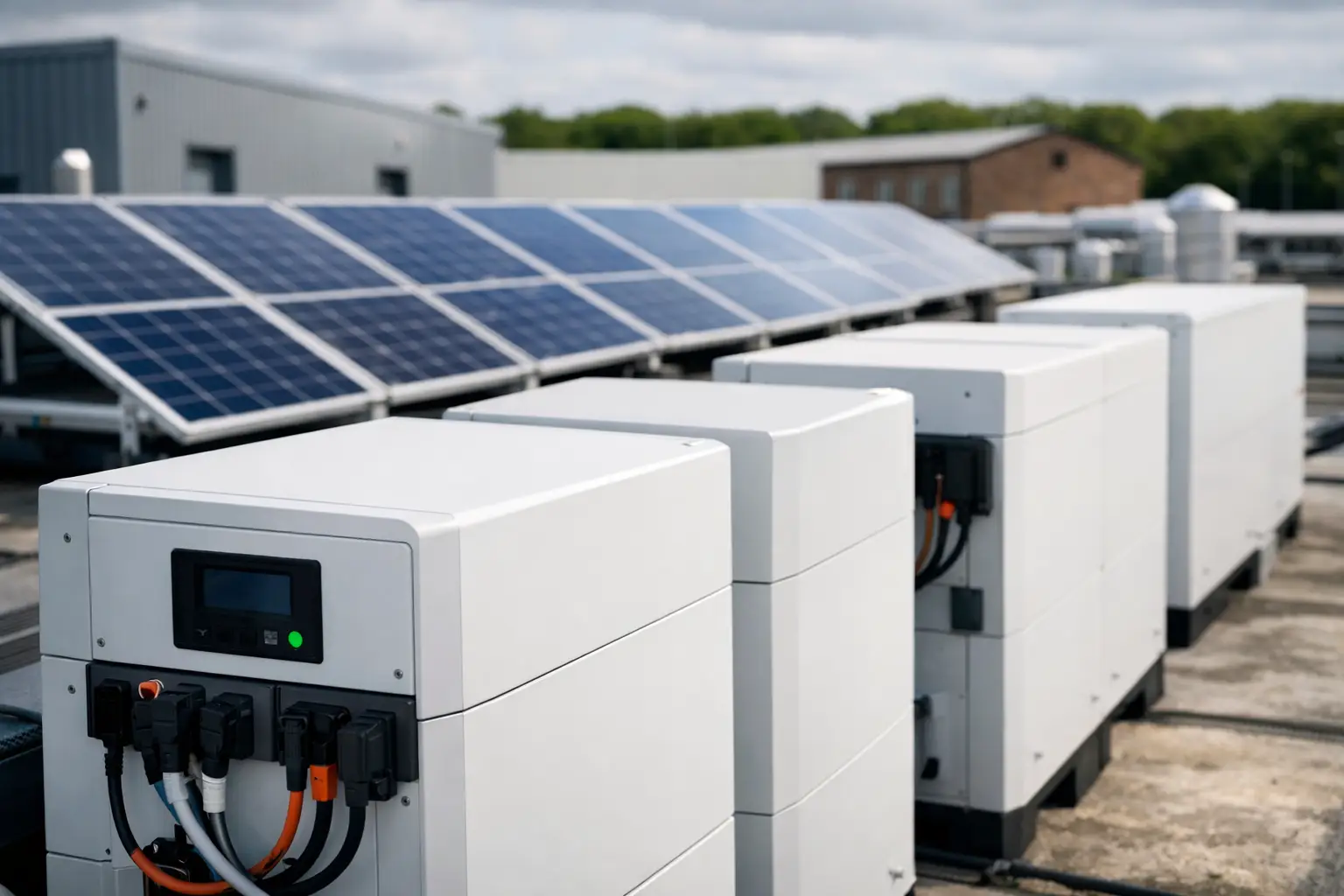
A battery can make a solar system feel far more useful after the sun goes down, but battery storage reviews often mix genuine experience with assumptions about savings, backup power and system size. The most helpful reviews do not simply say that a battery is “good” or “bad”. They explain the property, electricity use, solar generation and installation behind the result.
For homeowners, landlords and businesses, the right battery is the one that works with the way a building uses energy. A household that is empty through the day has different priorities from a restaurant with daytime refrigeration, or a residential block with shared electricity demand. Reading reviews with those differences in mind can help turn a crowded market into a practical shortlist.
What battery storage reviews can tell you
Reviews are valuable because product specifications cannot show every part of daily ownership. A manufacturer may state a battery’s capacity, warranty and charging rate, but customers can reveal how well the monitoring app works, whether the system responds as expected during an outage, and how the installation process was managed.
Look for detail rather than star ratings alone. A useful review might describe how much solar energy was stored on a typical sunny day, whether the household now buys less electricity during the evening peak, or how quickly an installer resolved a question after commissioning. A short review that only says “great battery” may be encouraging, but it does not provide enough information to guide a substantial investment.
For commercial properties, the most relevant feedback often concerns system design and project delivery. Was the battery installed with minimal disruption? Did the contractor clearly explain shutdown requirements, monitoring and handover? Has the system performed in line with the expected load profile? These are signs of a well-managed project, not just a well-known battery brand.
Start with your energy use, not the highest rating
A larger battery is not automatically a better purchase. Capacity is measured in kilowatt-hours, or kWh, and indicates how much energy a battery can hold. The suitable figure depends on how much surplus solar electricity your system produces and how much electricity you use later in the day.
For example, a home that produces plenty of solar power at midday but uses most electricity between 5pm and 10pm may benefit from a battery sized to cover a meaningful share of that evening demand. A very large battery may remain partly empty for much of the year, particularly in winter when solar generation is lower. That can lengthen the time it takes for the system to deliver value.
Power rating matters too. Measured in kilowatts, it affects how quickly the battery can charge and discharge. A battery with generous capacity but limited output may not comfortably support several high-demand appliances at once. For businesses, this point is especially important where equipment, refrigeration, kitchen loads or machinery can create sharp peaks in demand.
When reading an owner’s experience, compare their usage pattern to your own. A positive result from a small, energy-efficient home may not translate directly to a larger property with an electric vehicle, heat pump or electric cooking. Equally, a battery that seems modest on paper may be an excellent fit for a property with predictable evening consumption.
Usable capacity is the figure to compare
Some reviews quote a battery’s headline capacity without explaining how much of it is available for everyday use. Batteries retain a protected reserve to support long-term health, so usable capacity is usually the more meaningful number. Ask for this figure in a quotation and consider it alongside your expected daily surplus generation.
It is also worth checking whether a system can be expanded later. Modular batteries can suit customers who want to begin with a sensible size and add storage after reviewing a full year of generation and consumption data. Expansion is not always possible, however, and compatibility rules may apply, so it should be confirmed before installation rather than assumed.
Do not confuse storage with whole-home backup
One of the most common sources of disappointment in battery storage reviews is the expectation that every battery will keep an entire property powered during a grid outage. Many installations are designed primarily to store solar energy and reduce electricity imports. They may safely shut down when the grid fails unless backup equipment and a suitable electrical design are included.
A backup-capable system can be extremely useful, but the level of protection varies. Some systems supply a dedicated essential-load circuit for items such as lighting, broadband, refrigeration and selected sockets. Others can support more of the property, subject to battery output, inverter capability and the starting demand of appliances. Whole-building backup may be possible in some cases, but it requires careful assessment.
A review mentioning successful backup power is only relevant if it states what was backed up. Check whether the owner could run a few essentials for a short period, or whether the system supplied most circuits. For a commercial site, define the loads that need continuity before choosing the equipment. Protecting communications, security, refrigeration or critical controls can be more practical and cost-effective than attempting to support every load.
Read warranty comments with the small print in mind
A long warranty is reassuring, but battery warranties are not identical. They can include a time period, a minimum retained capacity, an energy-throughput limit, or a combination of these. The terms should be reviewed alongside the expected use of the system.
A battery used for one charge and discharge cycle on most days will experience different wear from one that is frequently charged from the grid to respond to variable tariffs. Reviews can highlight whether a manufacturer or installer has handled warranty queries well, but the written cover remains essential.
Also pay attention to feedback on monitoring. Clear production, consumption, import and battery data can help you understand whether the system is working as designed. Monitoring is not just a useful extra. It allows a property owner or facilities team to spot unusual behaviour, assess savings and make better decisions about electricity use.
Installation quality shapes the result
The battery itself is only one part of the system. Correct cable sizing, safe isolators, inverter configuration, consumer-unit work, network connection requirements and commissioning all influence performance and safety. A carefully designed solar and battery system should account for the property’s existing electrical installation, roof generation, future loads and the location of the equipment.
In London and other built-up areas, practical considerations can be particularly significant. Space may be limited, access may need planning, and the best equipment location must balance ventilation, safety, cable routes and convenience. For landlords and developers, responsibility for shared supplies and tenant disruption also needs to be considered early.
The strongest reviews often mention communication as well as technical work. Customers should know what will happen on installation day, how long the work is likely to take, what power interruptions are needed and how to use the system afterwards. They should also receive clear commissioning information, warranty details and a direct route for aftercare.
At Shard Solar, this starts with a property survey and system design rather than a one-size-fits-all battery recommendation. Understanding generation, demand and site constraints helps ensure that the quoted system is built around real use rather than an attractive headline figure.
Questions worth asking after reading reviews
Before relying on a review to make your choice, bring the discussion back to your own property. Ask how much usable storage is proposed, what output it can deliver and whether the design includes backup power. Confirm which circuits would operate during an outage, if that matters to you.
Ask how the battery will work with your solar inverter, or whether an additional inverter is required. Find out how the system is monitored, what maintenance is expected and who will provide support if performance does not match the agreed design. For commercial projects, request an explanation of how the battery may reduce peak imports and how this has been calculated.
Finally, treat savings claims with healthy realism. A battery can increase the proportion of solar electricity used on site and reduce reliance on imported power at higher-cost times. The financial outcome will still depend on solar output, electricity tariffs, seasonal weather, consumption habits and the way the battery is configured.
The best next step is not to chase the most enthusiastic review. It is to pair real customer feedback with a professional assessment of your building, your energy goals and the level of independence you want from your system.