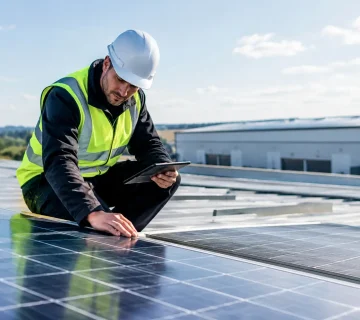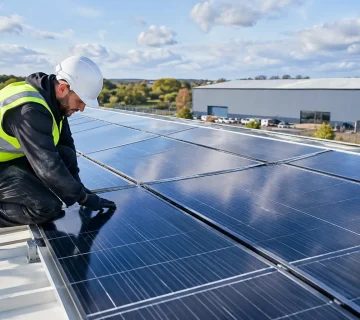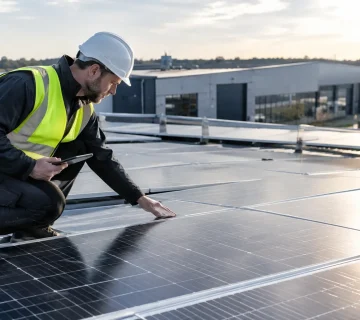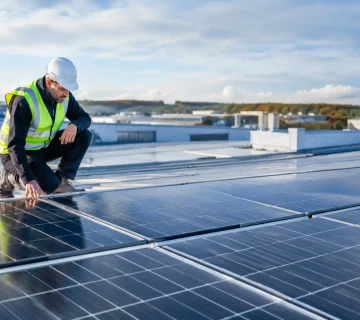
A solar PV system can produce plenty of electricity on a bright spring morning, then considerably less on a grey December afternoon. That is normal. Understanding what affects solar panel output helps homeowners and businesses set realistic expectations, identify opportunities to improve performance, and make smarter decisions about battery storage and energy use.
Panel output is not determined by the panels alone. Your roof, local surroundings, system design, electricity demand and maintenance all play a part. A well-designed system accounts for these factors before installation, rather than treating every property as though it receives sunlight in exactly the same way.
Sunlight is the starting point
Solar panels generate electricity from daylight, not just direct sunshine. Even under cloud cover, they can continue producing power. However, output is highest when strong light reaches the panel surface without obstruction.
In the UK, generation naturally changes with the seasons. Longer days and a higher sun position mean a solar system will usually produce much more electricity from late spring through summer than it does in winter. Shorter days, low sun angles and frequent cloud can all reduce winter production.
This does not make solar unsuitable for British properties. It means annual generation, rather than a single day’s result, is the figure that matters most. A professional design uses local irradiance data and the characteristics of the building to estimate likely yearly performance.
Direction and tilt of the roof
A south-facing roof generally receives the greatest total sunlight across a year in the UK. East- and west-facing arrays can also be very effective, particularly where electricity is used in the morning and late afternoon. For many households, an east-west arrangement provides a more even production pattern across the day, which may increase the amount of solar electricity used on site.
Roof angle matters too, but it is rarely a reason to rule out solar. A pitch around 30 to 40 degrees is often favourable for annual production, yet panels can perform well outside that range. Flat roofs can use mounting systems to set a suitable tilt, while steeper roofs may still offer an excellent return where there is good exposure.
The best layout depends on the building and its usage. A commercial site with daytime demand may prioritise maximum midday generation. A home where occupants return from work later may benefit from panels that keep producing further into the afternoon, paired with battery storage.
Shade can have a bigger effect than expected
Shade is one of the most significant factors affecting solar panel output. Nearby trees, chimneys, dormers, satellite dishes and neighbouring buildings can cast shadows that move throughout the day and year. A roof that looks clear at midday may be shaded in the morning, late afternoon or during the lower winter sun.
Partial shade does not necessarily stop a system from working, but it needs careful assessment. Traditional panel strings are connected in series, so reduced performance in one area can affect the output of other panels in that string. Modern system designs can limit this impact through appropriate string layouts, optimisers or microinverters, depending on the project.
There are trade-offs. Additional equipment can improve performance on complex or intermittently shaded roofs, but it also adds cost and should be specified only where it makes practical sense. A detailed property survey is the right time to identify shading risks and plan around them.
Temperature, weather and panel condition
Bright sunshine is useful, but extreme heat is not always a solar panel’s friend. PV modules become less electrically efficient as their temperature rises. A cool, clear day can therefore produce surprisingly strong output, while a very hot still day may reduce efficiency slightly despite intense sunlight.
Rain does not usually harm solar panels. It can help rinse away loose dust and pollen, although it will not remove every form of soiling. Wind may cool panels and support performance, but severe weather can bring practical risks from debris, damage or loose roof fixtures. Quality mounting, electrical protection and professional installation are as important as the panel itself.
Snow is typically short-lived in much of the UK, but heavy coverage blocks daylight until it melts or clears. Panels installed at an angle often shed snow more readily than flat-mounted systems. It is generally safer to allow snow to clear naturally than to climb onto a roof or use tools that could damage the glass.
Dirt and debris reduce available light
Anything sitting on the panel surface can reduce the light reaching the cells. Dust, pollution, bird droppings, leaves, moss and construction debris can all affect generation. The impact varies considerably: light, even dust across an array may have a modest effect, while a concentrated patch of bird droppings can create a more noticeable local loss.
Properties in urban areas, near trees, close to agricultural land or beside busy roads may need more regular visual checks. The same applies to commercial roofs, where vents, extraction systems or neighbouring works can create more airborne residue.
Cleaning is not a universal monthly requirement. Over-cleaning can be unnecessary, and unsuitable equipment may scratch modules or create safety risks. Instead, check monitoring data for an unexpected decline in output and arrange a professional inspection or clean when there is evidence that soiling is affecting performance.
System design determines how much potential is captured
The rated capacity of a solar array, measured in kilowatts peak (kWp), is an important starting point. More panel capacity can generate more electricity, but only if the roof space, structural condition, electrical infrastructure and energy needs support it.
Panel efficiency also matters, particularly where roof area is limited. Higher-efficiency panels can provide more capacity within the same footprint, though the most efficient option is not automatically the best value. For a large commercial roof with ample space, a different panel choice may deliver stronger overall economics.
The inverter is equally important. It converts the panels’ direct current electricity into the alternating current used by a property. An incorrectly sized inverter can constrain production at certain times, while ageing or faulty inverter equipment may reduce output. String configuration, cable sizing, electrical protection and the compatibility of all components should be engineered as one system.
A survey should also assess the roof’s condition and likely lifespan. Installing panels on a roof that soon needs major repair can lead to avoidable disruption and expense. Addressing roofing or electrical issues first protects the investment and supports dependable long-term generation.
What affects solar panel output after installation?
Once a system is commissioned, monitoring becomes valuable. Good monitoring does more than show an attractive daily generation figure. It helps reveal whether output follows the expected seasonal pattern, whether an inverter has reported a fault, and whether a sudden drop may point to shading, dirt or equipment issues.
A reduction from one year to the next is not always a fault. Weather varies, and solar panels also degrade gradually over time. Quality modules are designed to retain a high proportion of their original performance for many years, but their output will not remain perfectly flat forever. The key is to distinguish gradual, expected change from an abrupt or unexplained loss.
Occasional inspections are worthwhile as well. A qualified professional can check panel condition, mounting hardware, cabling, inverter operation and electrical safety. For landlords, managing agents and commercial operators, planned maintenance can be particularly useful for keeping records, protecting uptime and addressing small issues before they affect a larger part of the system.
Generation is not the same as savings
A solar system may be producing well while the property is not using as much of that electricity as it could. This is where consumption patterns matter. Electricity used directly as it is generated usually delivers the greatest value, because it reduces the need to buy power from the grid at the point of use.
For a household, running appliances such as washing machines, dishwashers or immersion heaters during daylight hours can improve self-consumption where practical. For a business, aligning flexible loads with solar generation may involve scheduling equipment, refrigeration cycles, EV charging or other operations more carefully.
Battery storage can retain surplus daytime generation for use later in the evening or during periods of higher demand. It does not increase the amount of electricity the panels produce, but it can increase the share that is used on site. Battery capacity, charging settings and the property’s load profile all influence the result, so storage should be sized around real consumption rather than added as a one-size-fits-all extra.
A realistic design delivers better performance
The strongest solar projects begin with an honest assessment of the property. The goal is not simply to fit the maximum possible number of panels. It is to create a safe, well-engineered system that suits the roof, captures available sunlight, works with the building’s electricity demand and remains easy to maintain.
For homes and commercial properties across London and the wider UK, that can mean very different solutions. A shaded townhouse, a block of flats, a hotel and a food manufacturing site have different roof constraints and different patterns of energy use. Thoughtful design turns those differences into practical decisions about layout, inverter technology, storage and ongoing care.
If your monitoring data looks unusual or you are considering solar for the first time, begin with a proper site survey. Clear information about shade, roof condition and how your property uses power gives you the confidence to invest in cleaner electricity that works hard for years to come.