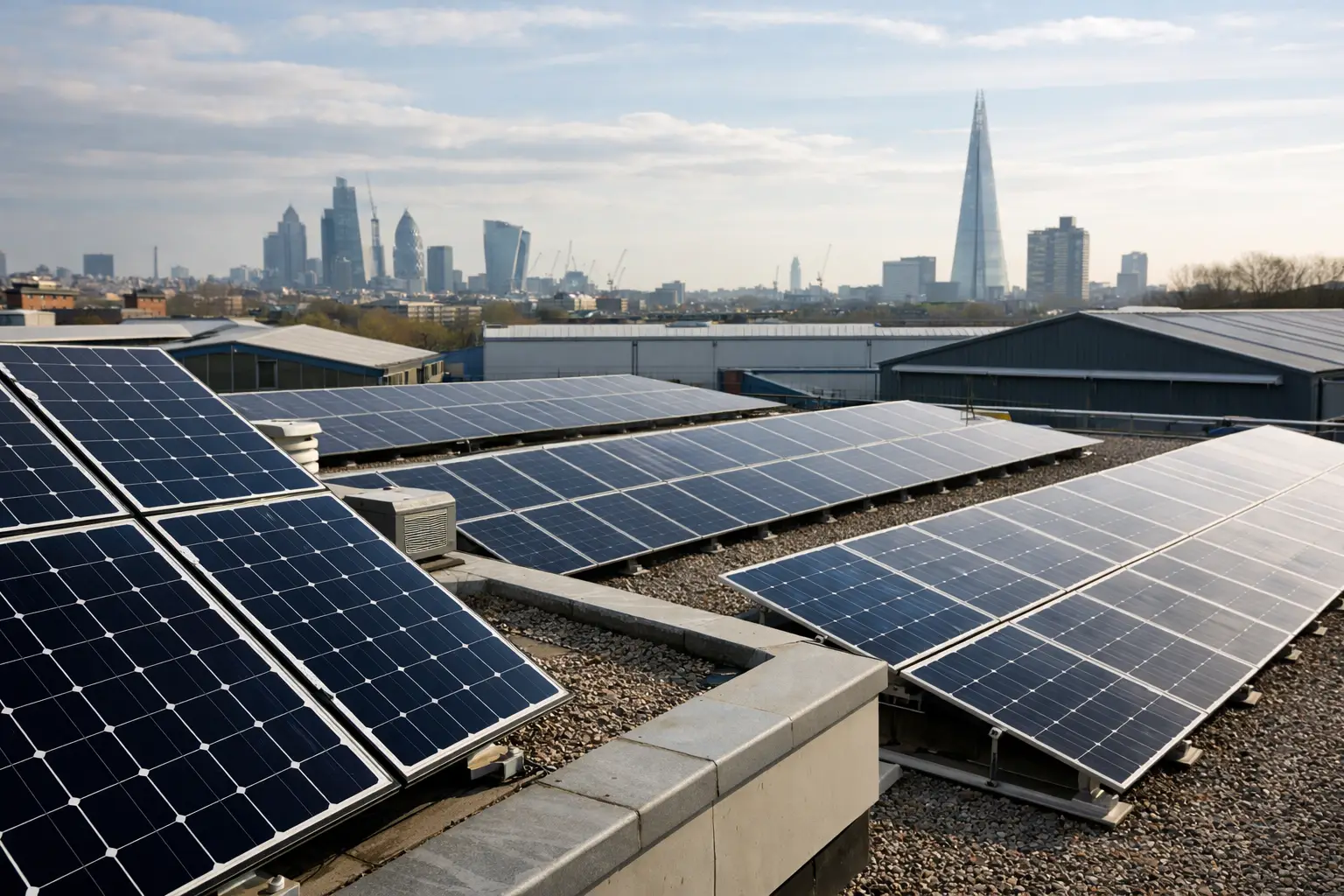
A London solar survey is where a solar project becomes specific. Rather than working from a broad estimate of roof space or an electricity bill alone, it establishes what your building can realistically generate, store and use. For a home, that may mean more of your daytime solar production available after work. For a business, it may mean reducing costly grid imports while protecting day-to-day operations.
A good survey is not a sales visit with a tape measure. It is the foundation for a safe, properly sized photovoltaic system that reflects your roof, electrical supply, consumption pattern and plans for the property. Getting these details right early helps avoid undersized systems, unrealistic savings expectations and late changes to the installation.
What happens during a London solar survey?
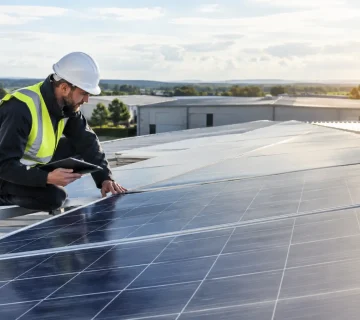
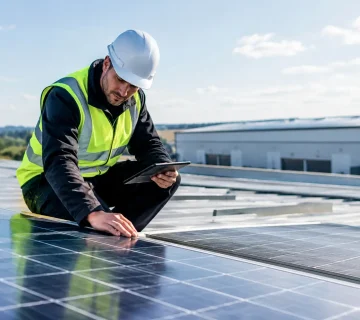
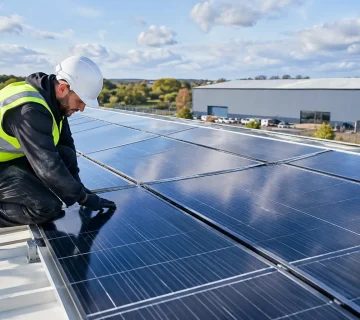
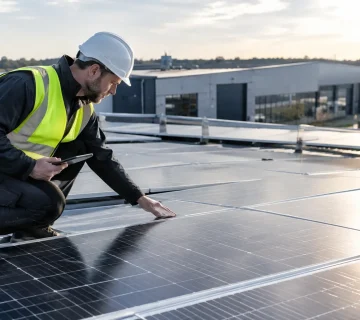
The survey begins with the building itself. An installer assesses usable roof areas, orientation, pitch, shading and access. South-facing roofs often offer strong annual generation, but east- and west-facing roofs can also be valuable, particularly where electricity use is spread across the morning and late afternoon. A larger roof is not automatically a better candidate if nearby buildings, chimneys, trees or roof structures cast significant shade.
In London, the surrounding built environment makes this assessment especially important. Terraced homes, tall neighbouring properties and roof-mounted plant can affect solar access at different times of year. A detailed shade assessment considers the path of the sun, not simply the shadows visible on the day of the visit.
The surveyor should also inspect the roof condition and likely mounting approach. Panels are designed to remain in place for many years, so it makes sense to address ageing tiles, damaged coverings or planned roof works before installation. Flat roofs need particular consideration for ballast, wind loading, spacing between rows and access for maintenance. Pitched roofs require checks on the covering, structure and safe access.
Your electricity use matters as much as the roof
Solar panels generate power when daylight is available. The value of that power depends partly on how much your property can use as it is generated. This is why electricity bills, half-hourly data for commercial sites, and a conversation about daily routines are central to system design.
For instance, a family working from home may use a useful share of generation during the day. A household that is empty until evening may benefit more from battery storage, smart control of appliances or EV charging. A retailer, hotel or food production site with substantial daytime demand may have a strong case for a larger system because solar output aligns with operational use.
The survey should look beyond current bills where relevant. An incoming electric vehicle, heat pump, extension, new machinery or changes in occupancy can all alter demand. Designing solely for last year’s consumption can leave a system poorly matched to the building’s next chapter.
The practical checks that shape system design
A survey is also an electrical and logistical assessment. The team needs to understand where the consumer unit, meter and incoming supply are located; whether there is capacity for the proposed equipment; and how cables can be routed neatly and safely. Battery location, inverter position, fire safety considerations and ventilation are discussed before a design is finalised.
Commercial properties can involve additional questions. Roof access may require coordination with building management, while installation dates must account for customers, staff, deliveries and sensitive operations. On multi-occupancy buildings, the ownership of the roof and the way electricity is metered can determine what type of system is practical.
A thorough survey will normally consider:
- roof condition, dimensions, orientation, pitch and structural suitability;
- shading from buildings, trees, chimneys, rooflights and plant equipment;
- consumption data, tariffs and expected changes in electricity demand;
- the existing electrical installation, meter arrangement and connection requirements; and
- access, scaffolding, working hours, planning factors and installation logistics.
These findings allow the proposed panel layout, inverter capacity and battery size to be based on evidence rather than assumptions.
Planning, permissions and grid connection
Many domestic solar installations can proceed under permitted development rights, but this is not universal. Listed buildings, conservation areas, unusual building forms and certain commercial sites may need additional checks. A survey should flag potential planning considerations early, rather than treating them as an afterthought once equipment has been ordered.
Permission from a freeholder or managing agent may also be needed for flats, leasehold homes and commercial premises. Landlords considering solar for rental property should establish responsibilities for access, electrical work and the benefit of generated electricity before committing to a design.
The grid connection is equally important. Smaller systems may follow a straightforward notification route, while larger installations or sites with particular supply constraints can require approval from the local distribution network operator before commissioning. This is particularly relevant for commercial schemes and for systems with larger export potential. An experienced installer will identify the appropriate route and factor it into the project programme.
Why battery storage needs a separate conversation
Battery storage is often described as the natural partner to solar, and for many properties it is. It can store surplus daytime generation for evening use, reduce reliance on peak-price electricity and offer greater control over how power is used. But the right battery capacity depends on the household or business, not on panel count alone.
An oversized battery can take longer to fill and may not deliver proportionate value. A battery that is too small may regularly fill before midday in summer and leave useful solar energy exported. Usage patterns, tariff structure, overnight demand and plans for EV charging all influence the decision.
Backup power is another area where clarity matters. Not every battery system provides power during a grid outage as standard. If resilience is a priority, the survey and quotation should specify what circuits, if any, can be supported, how the changeover works and the limits of that backup arrangement. This avoids confusing stored energy with guaranteed whole-property backup.
Questions worth asking at the survey
The best surveys are collaborative. Property owners and facilities managers should feel able to ask how the recommended system has been sized, what assumptions sit behind generation estimates and what could affect the final layout.
Ask how shading has been assessed and whether future tree growth or nearby development could change it. Ask how much of the projected generation is expected to be used on site, stored or exported. For commercial projects, ask how installation will be planned around trading hours and whether monitoring will provide clear performance reporting after handover.
It is also sensible to ask about warranties, maintenance access and the support available after commissioning. Solar is a long-term asset, and a system’s value depends on continued visibility of its performance. Monitoring can help identify unexpected changes in output, while inspections, cleaning where appropriate and electrical checks can support reliable operation over time.
From survey to a useful quotation
A quotation should translate survey findings into plain terms. It should set out the proposed equipment, panel numbers, expected annual generation, battery capacity where included, installation scope and any assumptions that still need confirmation. It should also be clear about exclusions, potential roof repairs, scaffold requirements and any grid or planning steps that could affect timing or cost.
Generation figures are estimates, not guarantees. Weather varies, household habits change and shading can evolve. The useful question is not whether a proposal promises the highest possible output, but whether its assumptions are credible and whether the design helps your property use more clean electricity when it has the most value.
Shard Solar uses the survey stage to bring design, electrical work, installation and aftercare into one managed process, with a detailed quotation provided within 48 hours of a free property survey. That single point of responsibility can be particularly helpful where a project includes battery storage, complex access or commercial operational requirements.
A well-prepared survey gives you something more valuable than a panel count: a clear view of what your building can do. With the roof, energy use and practical constraints understood from the start, you can make a confident decision about generating and storing more of your own power.