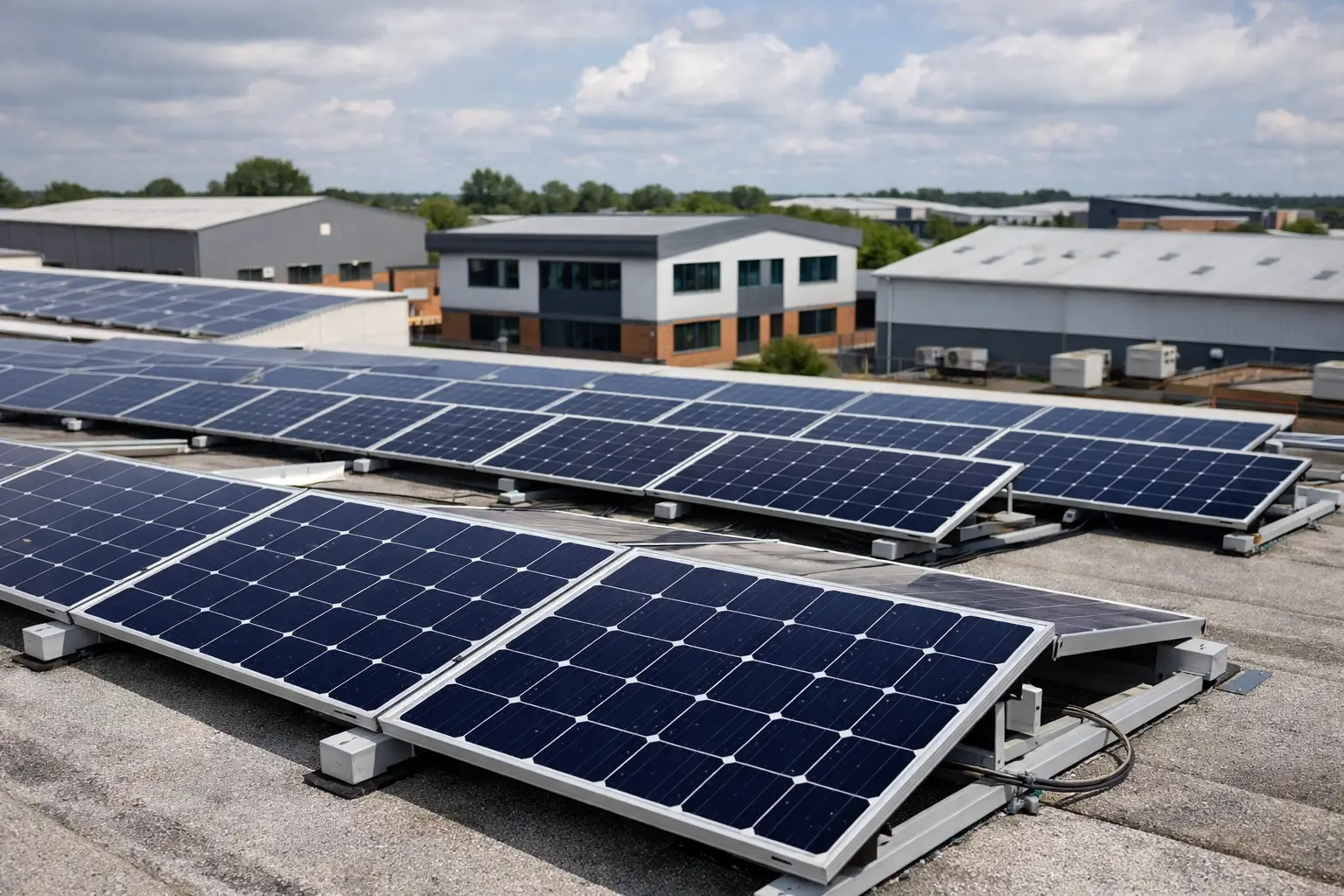
For flat owners, the best solar panels for flats are not simply the panels with the highest efficiency rating. The right choice must work with the building’s roof, your lease or ownership arrangement, your electricity use and the approvals required to install safely. A well-designed system can reduce reliance on grid electricity, support cleaner energy use and, with battery storage, retain more of the power generated during the day for use after sunset.
Solar is increasingly practical for top-floor flats, converted properties and residential blocks, but the route to installation differs from that of a detached house. The first task is to establish who controls the roof and how the generated electricity will be used. Once that is clear, panel choice becomes a much more useful conversation.
What makes the best solar panels for flats?
The best panel is the one that produces the most worthwhile energy from the space available while fitting the building and budget. On a flat roof, this often means high-efficiency monocrystalline panels installed on a carefully engineered mounting system. On a pitched roof above a top-floor flat, the roof orientation, shading and usable area may matter more than the headline wattage of each panel.
A panel’s power rating tells you how much electricity it can produce under standard test conditions, but it does not guarantee annual output. Two similarly rated panels can perform differently once roof angle, temperature, shadows from neighbouring buildings and inverter design are considered. In dense parts of London, even a small shadow from a chimney, parapet or adjacent block can affect performance if the system is not designed around it.
It is also worth looking beyond the panel itself. Product warranties, performance warranties, manufacturer reputation and compatibility with the proposed inverter all affect the long-term value of a system. A lower-cost panel is not always the economical option if it compromises generation, reliability or future maintenance.
Begin with roof rights and building approvals
For most flat owners, permission is the deciding factor. If you own the freehold of a converted building, the process may be relatively straightforward. Leaseholders will usually need to review their lease and seek written consent from the freeholder or managing agent before works begin. The roof is commonly a shared or retained part of the building, even where one flat has exclusive access to it.
In a purpose-built block, a shared solar project may be more appropriate than an installation serving one home. The freeholder, residents’ management company or block manager will need to consider roof ownership, service-charge arrangements, insurance, maintenance access and how savings are allocated. These discussions take time, but they can create a larger, better-value scheme that benefits common areas or multiple residents.
Planning permission is not always required for rooftop solar, but permitted development rules have conditions and can be restricted in conservation areas, listed buildings or by local requirements. Building control, electrical safety, structural suitability and fire-safety considerations also need proper attention. An experienced installer should assess these points before recommending equipment rather than treating them as an afterthought.
Choose panel technology for the available space
High-efficiency monocrystalline panels
Monocrystalline panels are usually the strongest option for flats where roof space is limited. They offer high output for their size and are widely used across residential and commercial installations. Their higher efficiency can be particularly valuable on compact roofs, where every usable square metre counts.
Many homeowners prefer all-black panels where they will be visible from the street or neighbouring properties. Appearance should not override performance and safety, but modern black-frame and full-black options can provide a neat finish without sacrificing the benefits of a well-specified system.
Standard panels where space is generous
If a residential block has a large, unobstructed flat roof, standard high-quality panels may deliver better overall value than paying a premium for the very highest efficiency model. More space gives the designer greater flexibility to reach the required system size. The most sensible specification depends on the expected output per pound spent, not simply the most expensive product available.
Avoid treating portable or balcony panels as a replacement
Small plug-in or balcony solar products can be useful for limited generation in suitable circumstances, but they are not a substitute for a professionally designed rooftop PV system. They may raise questions around fixing methods, electrical safety, permissions and building insurance. For meaningful savings and a system that can be monitored, maintained and expanded, fixed solar panels with the correct electrical design are usually the better route.
Flat roofs need more than good panels
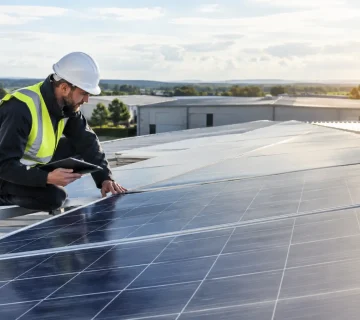
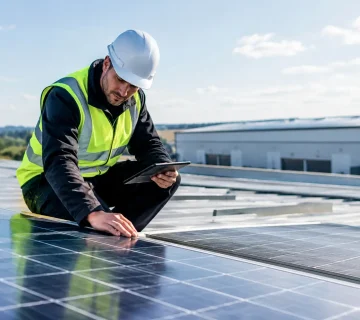
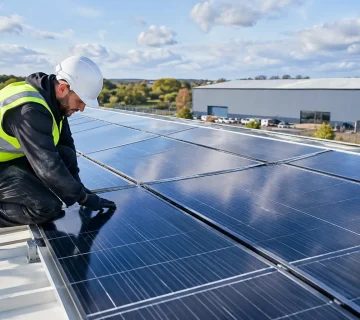
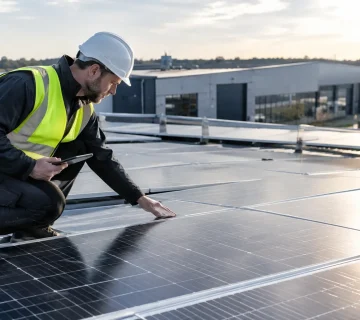
A flat roof creates opportunities, as panels can be set at an appropriate angle and orientation using a ballast-mounted frame. However, the system must account for wind loading, roof condition, drainage routes, access paths and the weight the structure can safely carry. Panels cannot simply be placed across every clear section of roof.
Rows may need spacing to prevent one row shading another, especially during lower winter sun. Parapets, roof plant and lift over-runs can create further shade. This means the usable area is often smaller than it first appears. A site survey and production estimate should reflect real-world conditions, rather than assuming the entire roof can be covered.
For pitched roofs, the installer should inspect the roof covering, rafters, access arrangements and likely working areas. If a roof is nearing the end of its life, replacing or repairing it before solar installation can avoid the cost and disruption of removing panels later.
Pair the panels with the right inverter and battery
Solar panels generate direct current electricity, while your flat uses alternating current. The inverter converts that power for use in the property. Its design has a major bearing on performance, particularly where there is uneven shading or panels face more than one direction.
A conventional string inverter can be an effective, cost-conscious choice for an unshaded, simple roof layout. Where shade is likely or the roof has several orientations, optimisers or microinverters may help reduce the effect of one underperforming panel on the rest of the array. There is a trade-off: more advanced equipment can raise the initial cost, so it should solve a genuine site-specific problem.
Battery storage is often a strong addition for flats with regular evening electricity demand. Instead of exporting all surplus daytime generation, a battery can store some energy for cooking, lighting and appliances later in the day. The best battery size depends on your generation profile and consumption. An oversized battery may take longer to justify, while a modest unit may deliver more practical day-to-day value.
A qualified installer should also consider grid connection requirements and notify the relevant distribution network operator where required. This is particularly important for larger systems and shared-building installations.
Individual flat systems and shared block systems
An individual system can suit a top-floor owner with clear roof rights and a direct route for cabling to their consumer unit. It gives the household clear control over generation, battery use and savings. The physical route for cables, inverter location and access for future servicing still need to be agreed with the building owner.
For blocks, solar can instead support communal electricity loads such as hallway lighting, lifts, ventilation or shared heating equipment. This can reduce common-area energy bills and help a building meet wider sustainability goals. Supplying several individual flats from one shared array is possible in some arrangements, but metering, legal structure and billing need careful design from the outset.
Developers and managing agents should consider solar early in refurbishment or new-build plans. Designing roof access, plant locations, cable routes and meter arrangements before construction is complete is simpler and usually more cost-effective than retrofitting around finished spaces.
Questions to ask before approving a quote
A useful quotation should explain the proposed panel model, total system size, estimated annual generation and any assumptions about shading. It should also set out the inverter and battery specification, mounting method, electrical works, monitoring arrangements, warranties and expected installation timescale.
Ask how the roof structure and condition will be assessed, who will manage permissions and grid paperwork, and what aftercare is available once the system is commissioned. For flats, also ask exactly who is responsible for maintaining the roof beneath the panels and how access will be managed if future repairs are needed.
The cheapest quote can leave important work outside the price. A complete proposal should make clear what is included, what requires third-party approval and what may change after the survey.
When solar may not be the right first step
Solar may need to wait if roof rights are unclear, the roof requires major repairs, or severe shading makes output poor. In these cases, improving insulation, upgrading lighting and appliances, or reviewing communal energy use may produce more immediate savings while the building prepares for a future solar scheme.
For a flat with the right roof access and permissions, solar is a practical way to generate and store more of your own electricity. A detailed property survey turns the question from which panel is best on paper into which complete system will perform reliably for your home and building for years to come.