An electric vehicle can become one of the largest electrical loads at a home or business. A properly planned solar EV charger connection helps turn that demand into an opportunity: use more of the electricity produced on site, reduce reliance on grid power and make every sunny period work harder for your property.
The best arrangement is rarely just a case of fitting solar panels and adding a charger afterwards. Panel output, driving habits, your incoming electrical supply, battery storage and the type of charger all affect the result. Getting the design right before installation gives you a safer system and a better chance of meaningful savings over its lifetime.
What a solar EV charger connection actually does
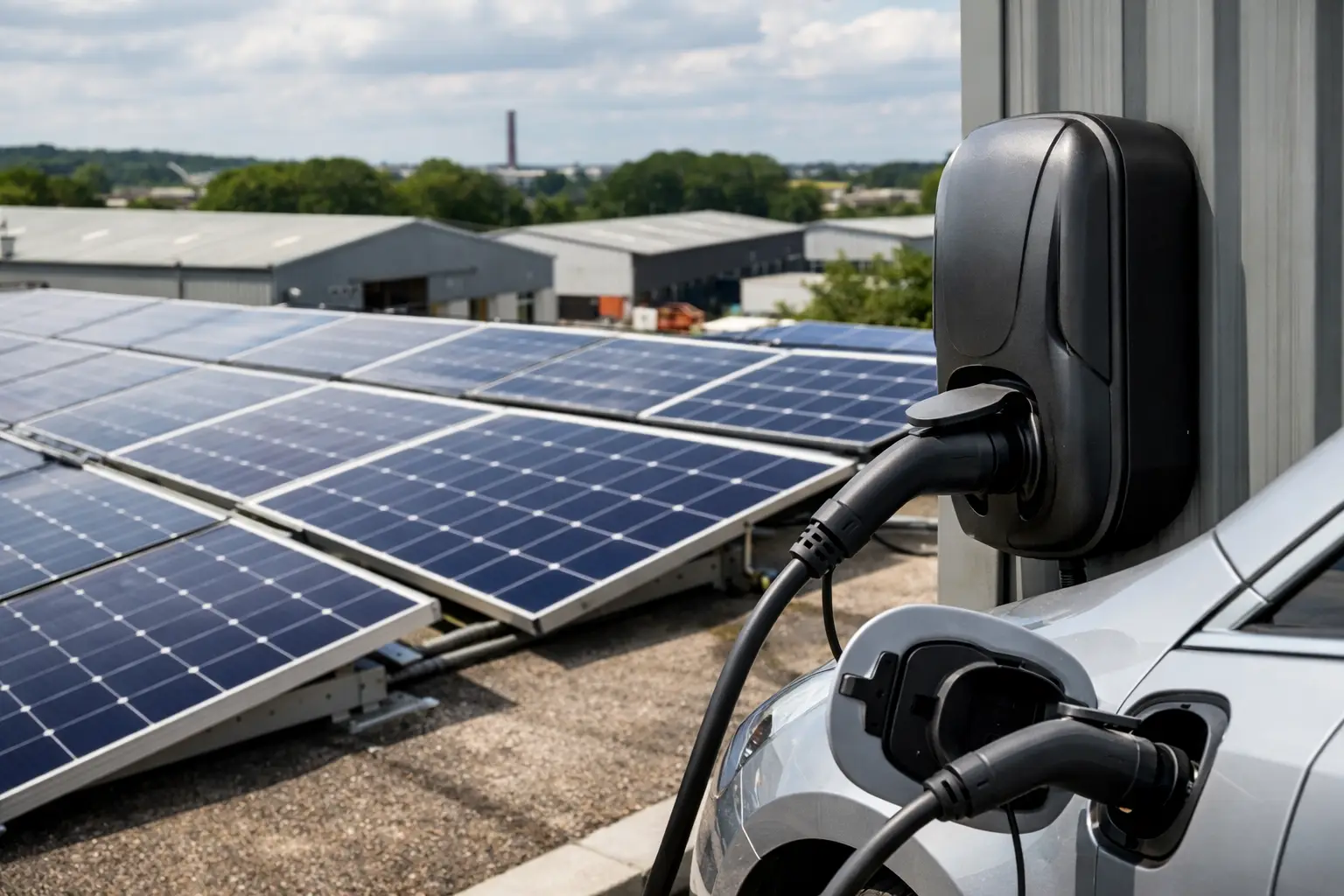
Solar panels generate electricity during daylight hours, while an EV charger supplies power to your vehicle when it is plugged in. The connection between them is managed through your property’s electrical system rather than by running a direct cable from a panel to a car.
In a typical setup, solar electricity passes through an inverter and feeds the building’s consumer unit or distribution board. Your property uses that power first. If generation exceeds demand, the surplus can charge a battery, be exported to the grid or be directed to an EV charger. A smart charger measures what is available and adjusts charging accordingly.
This matters because a standard home charger can draw up to 7 kW. A domestic solar array may produce less than that for much of the day, particularly in winter or under cloud cover. Smart controls allow the charger to use solar surplus when it is available, then slow down, pause or draw from the grid when necessary. It is a more practical approach than expecting solar alone to provide a full-speed charge every time.
Start with your charging pattern, not the charger
The right design begins with how and when the vehicle is used. A homeowner who works from home and parks their car on the drive throughout the day may be able to use a large share of solar generation directly. Someone commuting daily may arrive home after sunset, when a battery or off-peak grid tariff could be more useful.
For commercial properties, the pattern can be even more valuable. Workplace charging during office hours can align naturally with solar production, while fleets may need scheduled charging overnight or between shifts. Retail, hospitality and residential-block sites often need several chargers, making load management essential to avoid costly upgrades to the electrical supply.
It also helps to be realistic about mileage. A vehicle covering modest daily distances may need only a few hours of charging each week. In that case, a solar-led charging mode could cover a substantial proportion of use during brighter months. Higher-mileage drivers may prioritise a charger that can switch intelligently between solar, battery power and the grid to make sure the vehicle is ready when needed.
The equipment behind a reliable connection
A solar EV charger connection needs more than compatible products. It needs an electrical design that considers the whole property.
Your installer will assess the existing consumer unit, main fuse rating, cable routes, earthing arrangement and the capacity of the incoming supply. The charger should be installed on a dedicated circuit with the appropriate protection. At commercial sites, the assessment may include the distribution board, three-phase supply, maximum demand and the impact of other equipment such as refrigeration, heat pumps or machinery.
The solar inverter and EV charger do not always need to be from the same manufacturer. However, equipment that can communicate effectively often makes energy management easier. Some smart chargers use a current transformer clamp to monitor import and export at the property. This enables solar-surplus charging, ensuring the charger responds to live household or business demand instead of assuming every watt from the panels is spare.
Solar-only, solar-priority and scheduled charging
Most smart chargers offer different charging modes. Solar-only charging uses surplus generation and may pause when cloud cover reduces output. It is ideal when time is flexible and maximising self-consumption is the priority.
Solar-priority charging uses available solar first, then takes additional electricity from the grid when a minimum charging rate is needed. This gives more dependable charging without abandoning the benefit of on-site generation.
Scheduled charging is often the sensible choice overnight, especially where an off-peak electricity tariff is available. It may cost less than daytime grid electricity, even if the car is not using solar at that moment. Good energy planning is not about insisting every mile must be solar-powered. It is about choosing the cleanest and most cost-effective source for the way the property operates.
Where battery storage fits in
Battery storage can improve the flexibility of a solar and EV setup, but it is not automatically essential. A battery stores surplus daytime generation for use later, helping households cover evening demand and allowing businesses to reduce purchases during higher-cost periods.
The trade-off is that your vehicle and battery may compete for the same solar surplus. If both begin charging at once, the system needs clear priorities. You may prefer to charge the home battery first to cover evening household use, or send surplus directly to the car during the day if it needs to travel later. At a business, the priority might be maintaining battery reserve for critical loads rather than charging vehicles.
A well-configured system can set these rules around your needs. For example, it could preserve a minimum battery reserve, charge an EV from surplus solar above that level and use low-cost grid electricity for the remaining vehicle charge overnight. The most suitable approach depends on your usage, tariff, battery capacity and the value you place on backup power.
Electrical capacity and connection requirements
Before installing a charger, an electrician should confirm that the property can support the additional load safely. This is particularly important in older homes, flats, converted buildings and busy commercial premises where the existing electrical infrastructure may already be close to its limit.
Load balancing can make a significant difference. Rather than allowing every charger to run at full output simultaneously, a load-managed system shares the available capacity between them. This can avoid unnecessary supply upgrades and help maintain normal operation of the building.
Your project may also require notification to the electricity network operator, particularly where solar generation, batteries or changes to the connection affect export capacity. Requirements vary by system design and local network area. A full-service installer can manage the technical information and paperwork as part of the wider project, rather than leaving you to coordinate separate solar, electrical and EV suppliers.
Design details that make everyday use easier
The location of the charger deserves careful thought. It should suit where the vehicle is normally parked, allow safe cable use and avoid creating trip hazards across paths or access routes. For commercial sites, clear bay markings, signage and access arrangements can prevent confusion once drivers begin using the chargers.
Cable length is another practical consideration. A charger placed close to the parking position may reduce installation complexity and keep the area tidier, but the best route must also protect the cable and comply with electrical requirements. For a property undergoing renovation or new build work, planning the charger route early is usually simpler and less disruptive than retrofitting later.
Monitoring is equally useful after commissioning. A good platform can show solar production, grid import, battery status and EV charging in one place. Over time, this helps you see whether charging habits are matching your original aims. You might find that moving a regular charge from 6 pm to lunchtime increases solar use, or that a revised battery setting improves evening savings.
Planning solar and EV charging together
Adding an EV charger at the same time as solar installation gives the design team a clearer view of the property from the start. It allows cable routes, consumer-unit work, inverter capacity, battery options and charging controls to be considered as one system. That can reduce repeat visits and avoid decisions that limit future expansion.
It is still entirely possible to add a charger to an existing solar installation. The key is to review what is already in place, including inverter output, monitoring compatibility and available electrical capacity. A site survey should identify whether upgrades are needed and explain the expected benefit in straightforward terms.
For landlords, developers and commercial decision-makers, it is worth considering future demand as well as immediate use. Installing infrastructure for additional chargers can be more economical during wider electrical works, even if only a smaller number of charge points are activated initially.
A solar EV charger connection should make cleaner driving easier, not add another complicated system to manage. With a clear survey, intelligent controls and professional electrical installation, your property can generate, store and use more of its own power in a way that fits real journeys and real energy demands. Shard Solar can help turn that plan into a system designed around your building, your vehicle use and the savings you want to achieve.