A business can use less electricity overall and still face high energy costs if its consumption rises sharply at the wrong time. Commercial demand reduction is the practical process of cutting, shifting or managing that high-demand usage, particularly during expensive peak periods. For retailers, hotels, manufacturers and multi-occupancy buildings, it can turn energy from a fixed overhead into something far more controllable.
The aim is not to compromise comfort, production or service. It is to understand when and where power is being used, then design a site-wide approach that protects day-to-day operations while reducing avoidable demand from the grid.
What commercial demand reduction means in practice
Commercial demand reduction is often confused with general energy efficiency. Efficiency matters, but demand reduction has a more specific focus: reducing the amount of electricity a site draws at key times, as well as reducing unnecessary consumption across the day.
A hotel, for example, may have relatively steady lighting and heating requirements but see a major evening rise in demand from kitchens, laundry, guest-room use and air conditioning. A food manufacturer may experience sharp peaks when refrigeration, processing equipment and cleaning systems run together. A shop may draw more power when lighting, cooling and EV charging overlap.
Those peaks can be costly. Depending on the tariff and supply arrangement, they may increase the price paid for electricity at that moment or influence capacity and network-related charges. They also place greater pressure on a building’s electrical infrastructure and on the wider grid.
The right approach starts with a detailed view of half-hourly consumption, operating hours and the equipment responsible for the largest loads. The question is not simply, “How can we use less energy?” It is, “Which demand is essential, which can move, and which can be supplied differently?”
Why peak demand deserves attention
Electricity demand is rarely flat. Most commercial sites have predictable periods when several high-load systems operate at once. That may be early morning in a hospitality venue, lunchtime in a retail unit, or a production shift change in a factory.
Reducing these peaks can improve cost control, but the benefits reach further. A lower and more predictable demand profile can support better resilience, make future electrification easier to plan, and reduce reliance on power bought when grid electricity is most carbon intensive.
For businesses with sustainability targets, this is also a more meaningful conversation than simply quoting annual kilowatt-hours. A well-managed energy profile shows how a building responds to real operational pressure. It can support reporting, help identify waste and provide evidence for wider environmental commitments.
There is no single target that suits every property. A site with a high, stable daytime load may benefit most from solar generation. A site with short but severe peaks may see more value from battery storage and controls. Many buildings need a combination of measures.
Start with the energy profile, not the equipment
Solar panels and batteries are powerful tools, but they work best when selected around the way a business actually operates. Installing equipment before understanding the load profile can lead to a system that generates clean power without delivering the strongest possible financial benefit.
A proper assessment should look at electricity bills, interval data where available, opening or production hours, seasonal variations, and planned changes to the site. New refrigeration, additional tenants, heat pumps, EV chargers or extended opening hours can all alter the picture.
It is equally useful to identify what cannot be interrupted. Critical refrigeration, safety systems, IT equipment and essential production machinery should be protected. Other loads may be flexible. Water heating, some charging, ventilation schedules and non-urgent processes can sometimes be moved away from peak periods with little effect on the business.
This distinction is where commercially useful decisions are made. Demand reduction should not become a burden for staff or a risk to customer experience. It should make sensible use of automation, scheduling and on-site energy assets so that the building works harder in the background.
Quick wins can reduce waste first
Many sites have immediate opportunities before larger energy projects are considered. LED lighting with appropriate controls, better time schedules, maintained refrigeration, efficient motors and sensible heating and cooling settings can all reduce avoidable demand.
The savings from individual changes may appear modest, but their value increases when several measures reduce demand at the same time. A poorly timed plant schedule can create a peak every day. Correcting it can be more valuable than chasing a small reduction in consumption elsewhere.
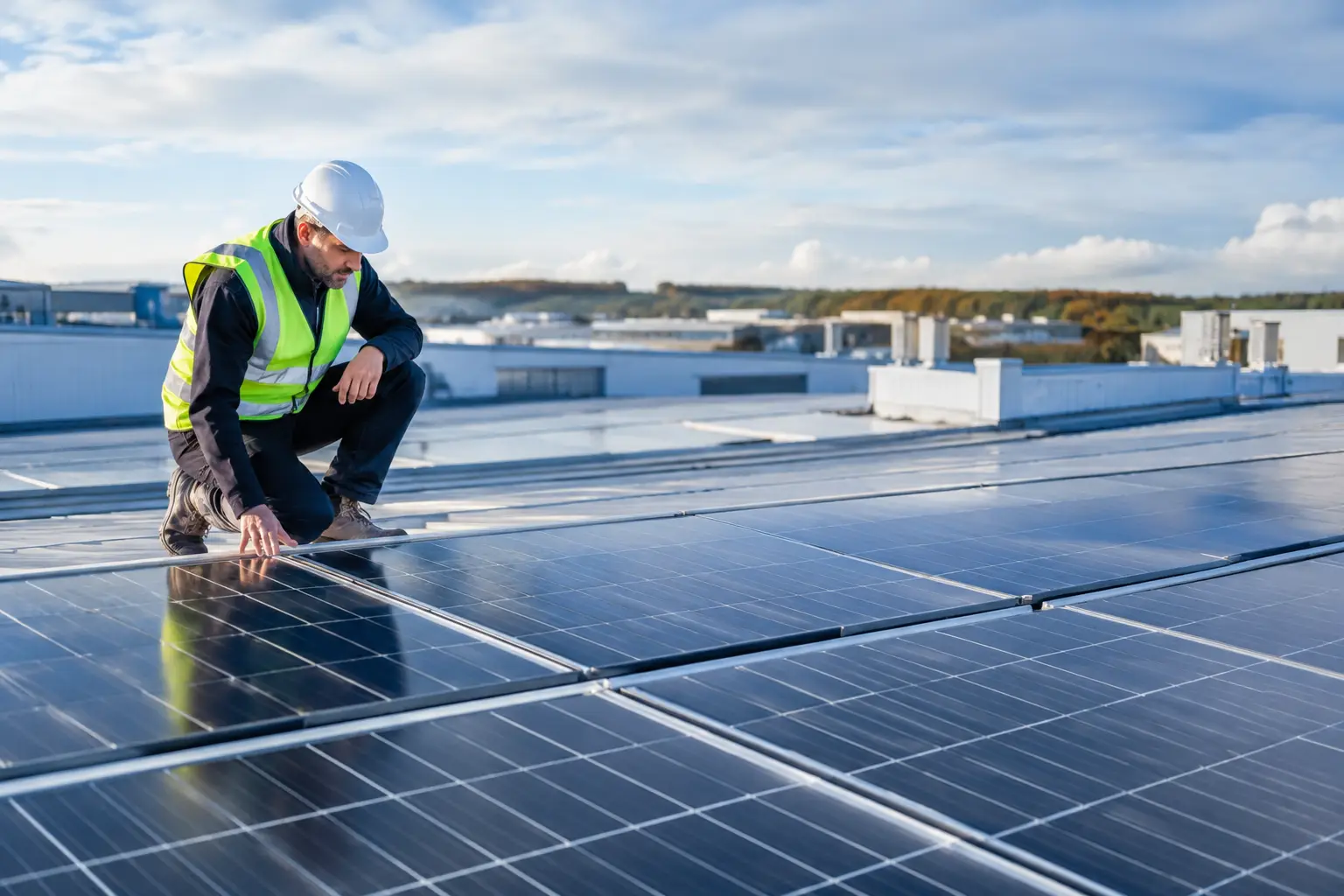
Regular maintenance matters here. Dirty panels, poorly calibrated controls, ageing electrical components and equipment left running outside operational hours all undermine performance. Monitoring gives facilities teams the information needed to spot these issues before they become a long-running cost.
Solar power reduces daytime grid reliance
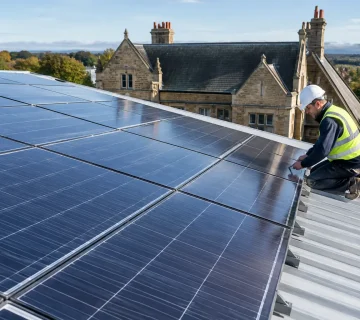
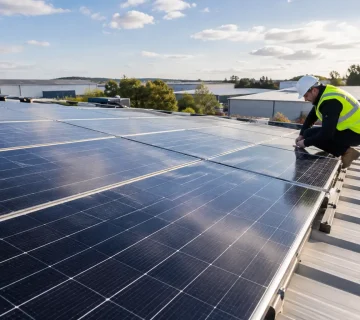
For many commercial premises, solar PV is a direct route to lower daytime grid demand. Panels generate electricity on site, allowing the building to use its own clean power while the sun is producing.
This is particularly effective where a property has consistent daytime consumption, such as offices, retail spaces, warehouses, schools, hospitality venues and food-production facilities. Instead of importing every unit of electricity required for lighting, cooling, machinery or general operations, the site can meet part of that requirement from its own roof.
The value depends on the match between generation and demand. A building that uses power throughout the day will often make strong use of solar output. If a site is mostly active in the evening, solar alone may not address its most expensive periods. That does not make solar unsuitable, but it may change the case for adding storage or adjusting when flexible loads run.
System design is therefore more than choosing the maximum number of panels a roof can hold. Roof condition, orientation, shading, structural considerations, export arrangements, electrical capacity and future energy plans all need to be considered. A well-engineered system is designed around the property and its purpose.
Battery storage can shave the highest peaks
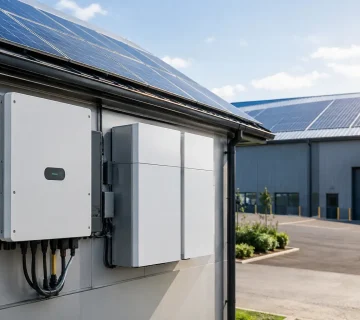
Battery storage allows a business to retain surplus solar generation or charge at selected times, then use that stored electricity when demand rises. In commercial demand reduction, this is often called peak shaving.
Imagine a building whose usual load is manageable until several systems start together for 30 minutes. Rather than taking all of that additional power from the grid, a battery can supply part of the increase. The grid connection sees a lower peak, while operations continue as normal.
Batteries can also extend the useful hours of a solar system. Electricity generated during the day can support evening loads, rather than being exported immediately. For a restaurant, hotel or retail premises with late trading, this can improve on-site use of solar energy.
However, a battery is not automatically the right answer for every site. Its capacity, power rating and control strategy must reflect the size and duration of the peaks it is expected to manage. A battery that is too small may have little effect; one that is oversized can add cost without proportionate benefit. Usage patterns, tariff structure, available space and resilience requirements all affect the decision.
Controls make the strategy work day after day
The strongest demand-reduction plans do not depend on someone remembering to switch equipment on or off at the right time. Smart monitoring and control systems can track generation, storage, imports and building loads, then respond to changing conditions.
Controls may prioritise solar power for on-site use, charge a battery from excess generation, limit EV charging at peak times or stagger flexible equipment. They can also provide alerts when consumption falls outside its expected pattern, helping managers investigate faults or waste quickly.
The goal is not to over-automate every process. It is to give the business visibility and control without adding unnecessary complexity. The best setup is one that the facilities team can understand, review and rely on.
For organisations with several properties, consistent reporting is especially valuable. It helps compare sites, identify the strongest opportunities and show whether investment is delivering the expected results over time.
Build a plan that fits your property
A practical commercial energy strategy usually progresses in stages. First, measure the building’s demand and identify avoidable waste. Next, improve efficiency and operating schedules. Then assess solar PV, battery storage and electrical upgrades against the remaining load profile.
This staged approach avoids treating technology as a shortcut. It also helps businesses plan investment around budgets, lease arrangements, roof works and future expansion. A landlord may need a different model from an owner-occupier; a manufacturer with continuous operations will have different priorities from a retail site with a clear daily opening pattern.
For London and UK businesses facing variable energy costs, greater control over on-site power is becoming a practical advantage. Shard Solar can assess the property, design the right solar and storage solution, manage installation and support ongoing performance monitoring, so the system continues to serve the way the business operates.
The most useful first step is simply to look closely at the moments when your building asks the most from the grid. Those peaks often reveal the clearest opportunity to save money, use cleaner power and make future energy decisions with confidence.