Shard Solar expanded this Ilford home’s solar PV system by installing additional panels on the rear outbuilding and creating a professionally protected cable connection between the two arrays.
Every property presents different opportunities and technical challenges. This recently completed solar panel installation in Ilford demonstrates how careful planning can help a homeowner increase solar generation even when the available space on the main house is limited.
The customer wanted to add more solar panels to the existing system. After assessing the complete property, our team recommended making use of the flat roof on the rear outbuilding.
This provided valuable additional roof space, but it also introduced an important engineering challenge: the new solar array needed to be safely and professionally connected to the other section of the system located on the main property.
Rather than choosing the easiest cable route, we designed a permanent solution involving a dedicated trench and a protected cable connection between the two buildings.
Project overview
Location: Ilford, London
Property type: Residential
Project: Extension of an existing solar PV system
Customer objective: Increase the number of solar panels and potential electricity generation
Our solution: Install an additional solar array on the rear outbuilding
Main challenge: Connect two separate solar panel arrays across the property
Additional work: Excavation, cable protection, route planning, installation, testing and completion
Making better use of the available roof space
When customers ask whether more panels can be added to a property, it is important to consider more than just the main roof.
Garages, extensions and rear outbuildings may also offer suitable space for solar panels, provided that the structure, roof condition, orientation, shading and electrical design have been properly assessed.
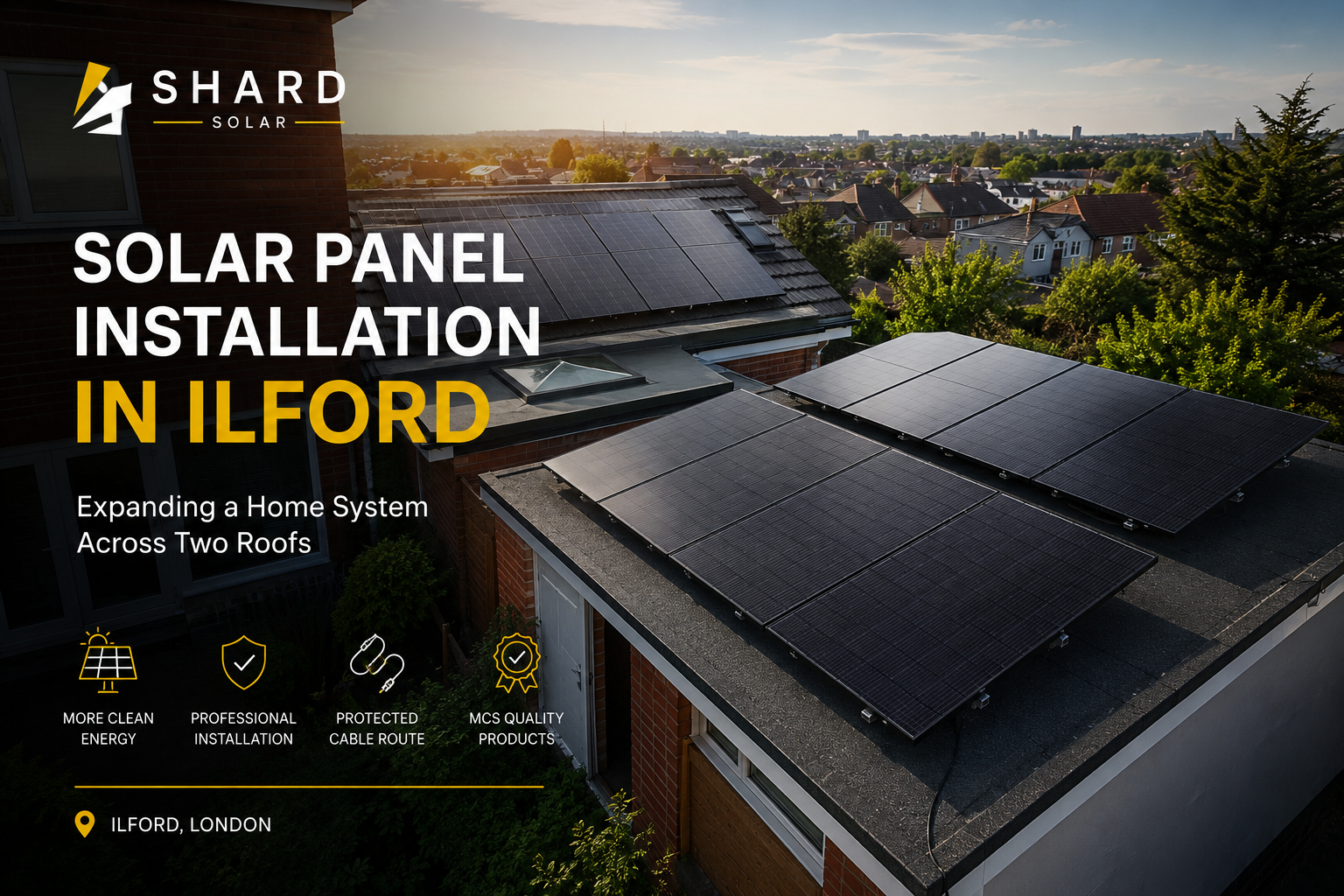
For this Ilford property, the rear outbuilding offered a practical location for the additional panels. Our team designed a neat two-row layout that used the available flat-roof area efficiently while maintaining an organised and professional appearance.
The final layout sits discreetly on the outbuilding and allows the homeowner to benefit from roof space that may otherwise have remained unused.
The main challenge: connecting two separate solar arrays
Installing the panels was only one part of this project.
The original system and the new outbuilding array were positioned on separate structures, with a garden area and narrow side passage between them. The cable route therefore required careful planning.
Leaving electrical cabling exposed across the garden or loosely fixed along an unsuitable route would not have provided the standard of durability, protection or appearance that we expect from our installations.
Our team excavated a dedicated trench through the required section of the property. The connecting cable was then installed within suitable protective containment before the route was completed and reinstated.
This solution created a permanent and protected connection between the two sections of the solar PV system.
Why the cable route matters
A professionally designed solar installation includes much more than the panels visible on the roof.
The cable route must also be considered in relation to:
- Protection from accidental damage
- Long-term exposure to weather
- Accessibility for future inspection
- Electrical performance
- Property appearance
- Existing paths, gardens and structures
- Future maintenance requirements
By planning this route before completing the installation, we were able to connect the two arrays without leaving an untidy or vulnerable surface cable across the property.
A clean flat-roof solar installation
The photographs from the completed project show the additional panels positioned in two carefully aligned rows on the rear outbuilding.
The layout was designed around the usable roof area and the physical restrictions of the building. Every panel, mounting component and cable route formed part of one coordinated installation rather than being treated as separate items.
This attention to layout is important for both performance and appearance. Even when solar panels are installed on a roof that is not normally visible from ground level, we believe the workmanship should remain clean, consistent and properly finished.
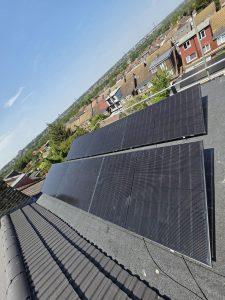
The additional solar panels were carefully positioned in two aligned rows to maximise the usable flat-roof space while achieving a clean and professional finish.
Quality products selected with MCS requirements in mind
The quality of a solar installation depends on more than the headline specification of the panels.
Mounting components, electrical equipment, cabling, connectors, protection and installation materials must all be suitable for their intended purpose and compatible with the overall system.
For this project, we selected high-quality products and materials intended to support a safe, durable installation and the relevant MCS certification requirements.
MCS standards place importance on the design, installation, commissioning and documentation of solar PV systems, as well as the use of appropriately certified or listed products.
Choosing suitable equipment from the beginning helps protect the homeowner’s investment and reduces the risk of compatibility, certification or maintenance problems later.
No shortcuts for smaller residential projects
At Shard Solar, the size of a project does not determine the level of attention it receives.
A residential solar extension in Ilford deserves the same structured approach that we apply to major commercial and corporate solar installations.
That approach includes:
- Assessing the property and the customer’s energy objectives
- Reviewing all usable roof areas
- Designing an appropriate panel layout
- Planning safe and practical cable routes
- Selecting compatible, high-quality components
- Completing the installation professionally
- Testing and commissioning the system
- Providing a clear handover and ongoing support
Smaller residential projects are not treated as secondary work. The customer is still making a significant investment in their property, and the system must continue operating safely and reliably for many years.
The same technical discipline, quality control and professional responsibility should apply whether we are adding panels to a family home or delivering a large corporate solar energy project.
The completed result
The completed solar panel installation in Ilford allows the customer to make better use of the available space across the property.
The project delivered:
- Additional solar panels on the rear outbuilding
- A carefully arranged flat-roof solar array
- A protected connection between the two panel locations
- A dedicated underground cable route
- High-quality, compatible installation materials
- Professional testing and completion
- A neat result with minimal visual disruption
Most importantly, the homeowner was not restricted by the available space on one roof. By considering the complete property, we identified a practical way to expand the system.
Can solar panels be installed on an outbuilding?
In many cases, yes.
Outbuildings, garages and extensions can provide useful additional space for solar panels. However, each structure must be assessed individually.
The review may include the roof condition, structural suitability, available space, shading, panel orientation, distance from the main electrical equipment and the route required for cabling.
The correct solution will therefore depend on the individual property rather than simply the size of the roof.
Planning a solar panel installation in Ilford?
Whether you are considering your first solar PV system or want to add more panels to an existing installation, Shard Solar can assess the entire property and recommend a practical solution.
We provide professional solar panel installation services for residential, commercial and corporate customers across London and surrounding areas.
Our team applies the same level of care to every project, from initial survey and system design through to installation, commissioning and handover.
Contact Shard Solar to request a property survey and discuss the options available for your home or business.
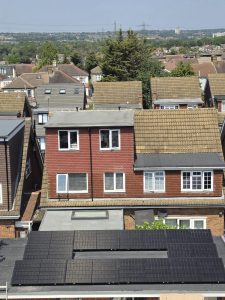
Shard Solar expanded this Ilford home’s solar PV system by installing additional panels on the rear outbuilding and creating a professionally protected connection between the two solar arrays.
Frequently asked questions
Can additional panels be added to an existing solar system?
Additional panels can often be installed, but the existing inverter, electrical design, cabling, roof space and grid connection arrangements must first be reviewed. In some cases, system equipment may also need to be upgraded.
Can solar panels be installed on a garage or rear outbuilding?
Yes, subject to a suitable survey. The structure, roof condition, available area, shading and cable route must all be considered before the system is designed.
Why was a trench needed for this Ilford installation?
The new array was located on a separate outbuilding. A trench allowed the connecting cable to be routed between the two sections of the system within suitable protective containment instead of being left exposed across the property.
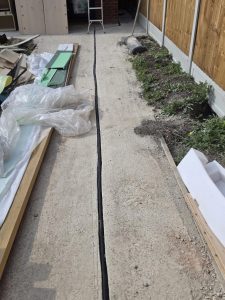
The cable route was carefully planned through the narrow side access between the main property and rear outbuilding.
Are underground solar cables protected?
The cable and containment must be selected and installed for the conditions in which they will operate. The route should also be planned to reduce the risk of accidental damage and allow the installation to remain safe and durable.
Can an extended system receive MCS certification?
This depends on the installer, system design, products used and compliance of the completed work. Certification requirements should be considered before additional panels or equipment are installed.
Does Shard Solar undertake small residential projects?
Yes. Residential installations receive the same professional survey, design, product selection, installation, testing and handover process used for larger commercial projects.