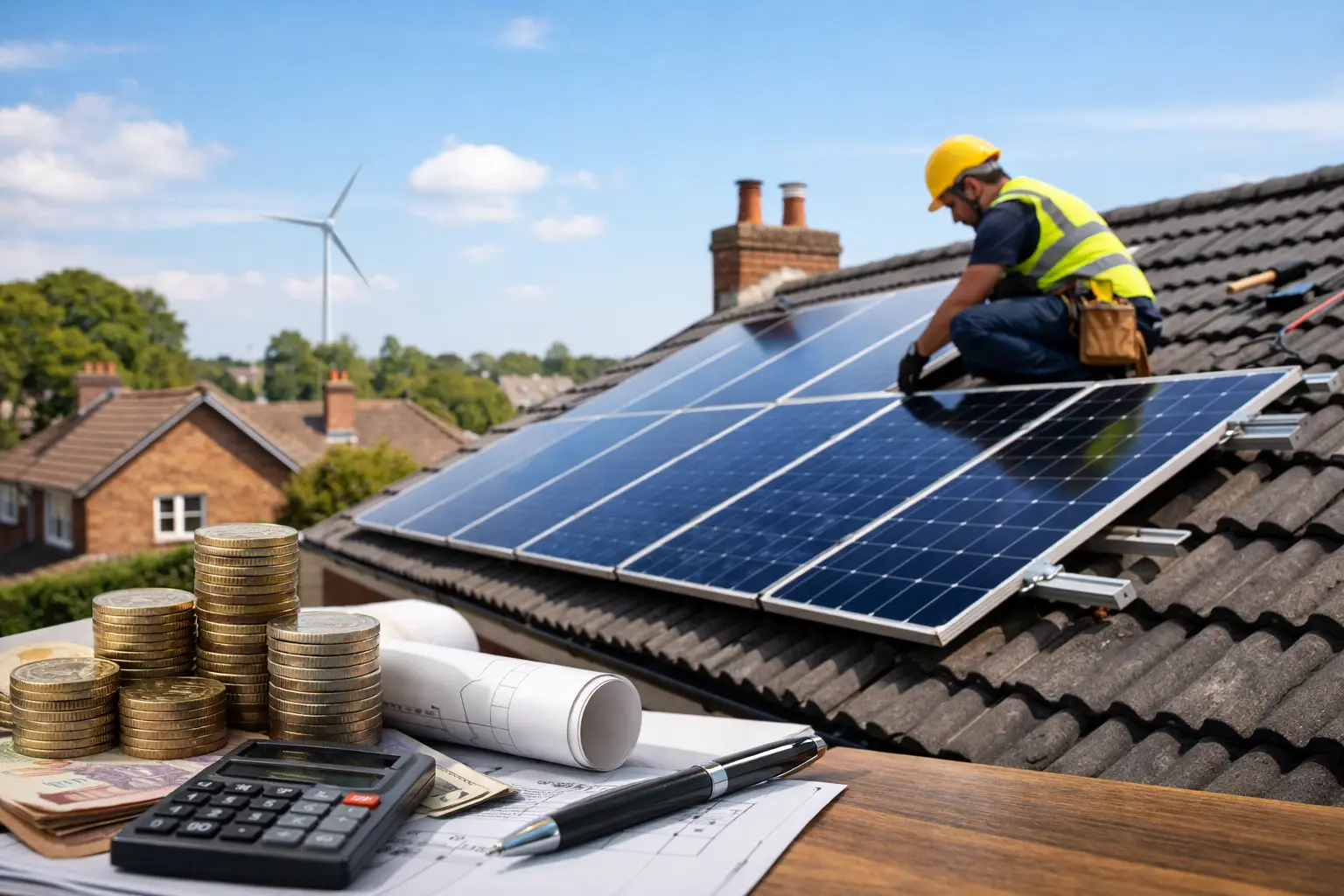
A solar quote should tell you more than the number of panels on the roof. For a household that uses most of its electricity in the morning and evening, a lower-priced system without storage may deliver less value than a carefully sized system with a battery. Understanding residential solar panel installation cost means looking at the design, your electricity habits and the standard of installation – not simply choosing the cheapest headline figure.
For most UK homes, a professionally installed solar PV system typically costs between £5,000 and £10,000. Adding battery storage can take the overall investment to roughly £9,000 to £18,000 or more, depending on capacity, equipment and the electrical work required. These are useful starting points, but a property survey is the only reliable way to price a system properly.
What does residential solar panel installation cost?
The cost of residential solar panel installation is driven principally by system size. Solar panels are commonly measured in kilowatt-peak, or kWp, which describes their potential output under standard test conditions. A typical three-bedroom home might install a 3.5kWp to 5kWp system, while a larger home with an electric vehicle, heat pump or high daytime demand may benefit from a bigger array.
As a broad guide, a straightforward roof-mounted system without a battery may sit in the following ranges:
- A smaller 2kWp to 3kWp system: around £4,500 to £7,000.
- A typical 3.5kWp to 5kWp system: around £5,500 to £9,000.
- A larger 5kWp to 8kWp system: around £8,000 to £13,000.
- Battery storage added to a solar system: commonly £4,000 to £9,000+, depending on usable capacity and specification.
These figures should include more than panels. A complete installation generally covers the panels and mounting equipment, inverter, wiring, electrical protection, scaffolding, labour, testing, commissioning and the paperwork needed to connect the system safely. A quotation that looks unusually cheap can sometimes exclude elements that are essential to a finished, compliant installation.
Why two similar homes can receive very different quotes
Two houses on the same street may need very different solar designs. Roof condition is one reason. If tiles are damaged, the roof needs repair before installation, or access requires specialist scaffolding, the project cost will rise. This is not unnecessary work: solar panels are expected to operate for decades, so the roof beneath them needs to be ready for the same long-term commitment.
Roof shape and orientation matter too. A simple, south-facing roof with little shading is usually the most economical place to install an array. East and west-facing roofs can still work extremely well, particularly where electricity use is spread across the day. Their production profile may better match breakfast and evening consumption, although more panels or a different design may be needed to achieve a particular annual output.
Shading deserves careful attention. Chimneys, dormers, neighbouring buildings and mature trees can reduce production at certain times of day. Modern systems can use optimisers or microinverters to manage panels individually where appropriate, but these add equipment and installation cost. The right answer depends on the pattern and severity of the shade, rather than a one-size-fits-all specification.
The existing electrical installation also affects the final figure. Some properties need consumer-unit upgrades, new circuits, cable routes through difficult spaces or additional safety equipment. Older homes and larger properties can involve more electrical work than initially expected. A competent survey identifies these requirements before installation, helping to avoid surprises later.
Panel, inverter and mounting choices
Not all solar equipment is equivalent. Higher-output panels can help where roof space is limited, while a well-matched inverter is crucial to converting generated electricity efficiently and monitoring system performance. Mounting systems must suit the roof type and local weather exposure, not merely hold panels in place.
Premium equipment may increase the upfront cost, but it can be sensible where space is tight, shading is a concern or long warranty coverage is especially valuable. Conversely, paying extra for capacity that a household is unlikely to use may not be the best investment. Good design starts with the property and its energy needs.
The cost and value of adding a solar battery
Battery storage is often the largest optional addition to a home solar project. It stores surplus daytime generation for use after sunset, when many households cook, run appliances and use lighting. It can also help a household use more of the electricity it generates rather than exporting it to the grid.
A battery is not automatically right for every household. Someone who is home during the day and can use solar power as it is produced may see good results from panels alone. A household with high evening use, an EV charger, a time-of-use electricity tariff or plans for a heat pump may find storage more compelling.
Battery size should match usable surplus and overnight demand. Installing the largest available battery is not always the most cost-effective choice. If a battery rarely fills in winter or frequently sits partly unused, some of its capacity is delivering limited value. A clear quotation should explain the proposed usable capacity, expected charging behaviour, warranty terms and whether backup power is included. Many batteries do not provide whole-home power during a grid outage unless they are specifically designed and wired to do so.
Savings are about self-consumption, not just generation
A solar system generates electricity when daylight is available. The financial benefit comes from using that electricity in place of electricity bought from the grid, alongside any payment received for exported power. Because import and export rates vary by tariff, savings cannot be calculated responsibly from panel output alone.
A household that can shift flexible loads into sunny hours can improve its return without buying more hardware. Running a dishwasher, washing machine or EV charger when solar production is high can increase self-consumption. Smart controls can make this easier, but they should support everyday routines rather than create a complicated new set of chores.
Annual production will also vary with weather, roof direction, shading and system size. A sensible proposal distinguishes between estimated generation and guaranteed savings. It should show the assumptions used for electricity prices, export income and household consumption, so you can judge whether they reflect your circumstances.
Costs that should be clear in your quotation
A detailed quote should make it easy to see what is included from survey through to commissioning. Ask whether the price covers scaffolding, roof mounting, electrical upgrades, monitoring, grid connection notifications, system testing and handover documents. Also establish who will handle permissions or distribution network operator requirements if they apply.
Most domestic solar installations are permitted development, but exceptions exist. Listed buildings, conservation areas, unusual roof structures and ground-mounted arrays can need additional consideration. It is better to identify this during the survey than after equipment has been ordered.
VAT treatment and available export arrangements can also affect the overall economics, so confirm the position relevant to your property and installation date. Avoid making a decision solely on an advertised payback period. Payback estimates are useful comparisons, but they depend on future electricity prices, household behaviour and how much solar power you use yourself.
How to get a solar quote you can trust
The strongest quotes are based on evidence, not assumptions. Before a survey, gather a year of electricity bills if possible and think about planned changes: an electric car, home extension, heat pump, new occupants or a shift to working from home. These can materially change the right system size.
During the survey, expect questions about roof access, shading, your consumer unit and when electricity is used. You should then receive a design that explains the proposed array, expected output, battery recommendation where relevant, equipment warranties and the work required. There should be room to ask why a particular option has been chosen and what a smaller or larger alternative would mean.
Shard Solar takes this managed approach from property survey and design through installation, commissioning and aftercare, with a detailed quotation provided within 48 hours. That matters because solar is not a boxed product. It is a small power system built around your home.
The best residential solar panel installation cost is therefore not the lowest figure on a comparison page. It is the cost of a safe, well-sized system that fits your roof, gives you visibility of performance and helps you generate and store more of your own clean power for years to come.