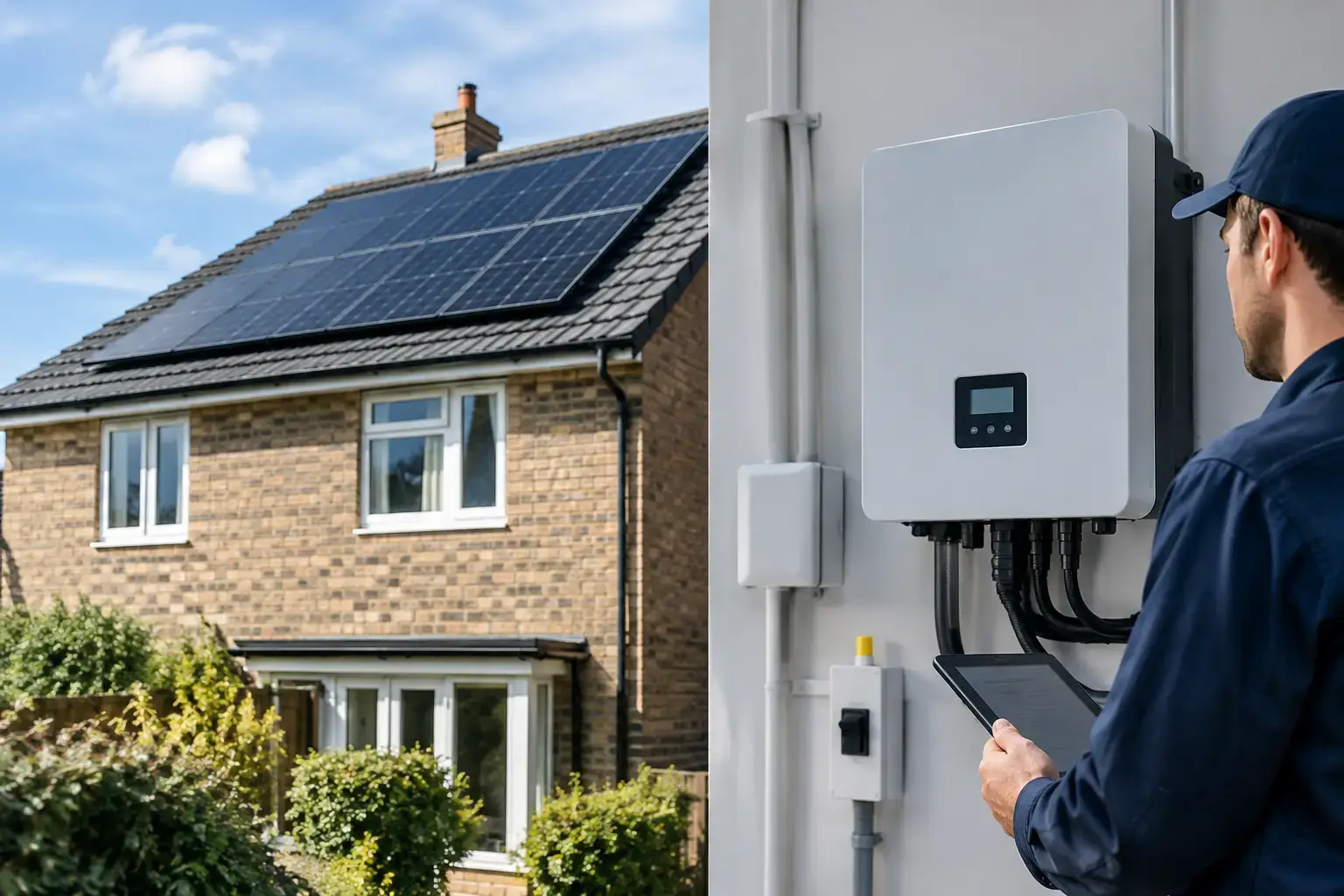
Your solar panels may be the visible part of the system, but the inverter does much of the day-to-day work. It turns the direct current electricity produced by your panels into the alternating current your property can use. Knowing when to replace a solar inverter can prevent a small performance issue becoming weeks of lost generation, missed savings and unnecessary disruption.
For most homes and businesses, an inverter will not need attention every year. But it is not designed to last forever. Monitoring your system, responding to faults promptly and planning for replacement at the right time will help you get more value from the solar array already on your roof.
How long does a solar inverter last?
A typical string solar inverter has an expected working life of around 10 to 15 years. Some last longer, particularly where they have been installed in a cool, well-ventilated location and have received appropriate maintenance. Others may need replacement sooner because of heat exposure, water ingress, electrical faults or heavy daily use.
This differs from solar panels, which commonly carry performance warranties of 25 years or more. A solar installation should therefore be viewed as a long-term system with components that have different replacement cycles. The inverter is often the first major item to require renewal.
Microinverters, fitted beneath individual panels, can have longer warranties and may last longer than a conventional string inverter. However, if one fails, access to the roof may be required. The right choice depends on the design of the system, roof layout, shading and future energy plans.
Signs it may be time to replace your solar inverter
A clear fault message on the inverter display or monitoring app is the most obvious warning sign, but it is not the only one. A system can still appear to be operating while producing less electricity than it should.
Your generation has dropped without a clear reason
Solar output naturally changes with the seasons, weather and daylight hours. However, a sustained drop compared with similar periods in previous years deserves investigation. If panels are clean, unshaded and undamaged, the inverter or its connections may be the cause.
For commercial sites, this can be especially significant. A fault that reduces output by even a modest amount may have a noticeable effect on operating costs over several months.
The inverter repeatedly switches off
An occasional temporary shutdown can occur during grid disturbances or unusual weather conditions. Repeated trips, restarts or extended periods offline are different. They may point to an internal component failure, overheating, an insulation fault or an issue with the AC or DC cabling.
Do not keep resetting an inverter that continues to display an error. The fault should be assessed by a qualified solar and electrical professional.
You can see error codes or warning lights
Modern inverters are designed to report faults. Error codes can relate to the grid supply, internal electronics, low insulation resistance, earth faults or communication problems. Some issues are simple to resolve, while others indicate that replacement is more economical than repair.
Make a note of the code, the time it appeared and whether generation has stopped. This gives an engineer a better starting point and can speed up diagnosis.
The unit is noisy, hot or physically damaged
A mild operating sound may be normal for some inverter models, especially during high generation. New buzzing, clicking, fan noise or a burning smell is not. Likewise, cracked casing, corrosion, signs of water, discolouration or damage around cables should be treated seriously.
Inverters generate heat while converting electricity. If ventilation has been blocked by stored items, or if the unit is in a particularly hot loft or plant room, thermal stress can shorten its life.
Monitoring data has gone missing
A lost Wi-Fi connection does not automatically mean the inverter has failed. It could simply be a router change, weak signal or communication setting. But if monitoring is unavailable alongside low generation or repeated error messages, a wider system check is sensible.
Monitoring is valuable because it identifies underperformance early. It turns replacement decisions from guesswork into an assessment based on how the system is actually performing.
Repair or replacement: what makes sense?
Not every inverter problem means a new unit is needed. Loose connections, configuration errors, failed fans and communication faults can sometimes be repaired. If the inverter is relatively new and covered by its manufacturer warranty, repair or a warranty replacement is usually the sensible route.
Replacement becomes more attractive when the inverter is approaching the end of its expected life, suffers recurring faults, has obsolete parts or no longer has meaningful warranty cover. Paying for repeated call-outs to keep an ageing inverter running can cost more than fitting a modern replacement with a fresh warranty.
Compatibility matters too. The replacement must be correctly sized for the panel array and compatible with the existing electrical installation. It should also comply with current UK grid connection requirements. A like-for-like swap is not always the best answer if your household or business energy use has changed since the original installation.
When to replace a solar inverter for an upgrade
Sometimes the best time to replace an inverter is not after a failure. It may be when you are adding a battery, expanding the solar array, installing an EV charger or changing how the property uses electricity.
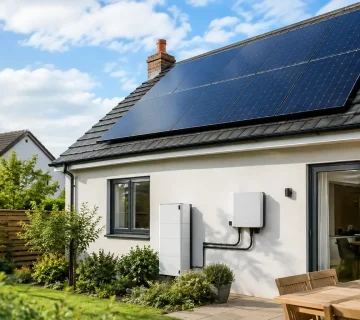
A hybrid inverter can manage both solar generation and battery storage. For a homeowner aiming to use more of their own low-cost daytime generation in the evening, moving to a battery-ready or hybrid setup may be worthwhile. For commercial premises, an upgraded inverter may support a revised system design that better matches daytime loads and peak demand.
There are trade-offs. Replacing a working inverter early has an upfront cost, and the expected savings should justify it. In some cases, an AC-coupled battery can be added without replacing the existing solar inverter. A site survey and consumption review will show which approach makes practical and financial sense.
What happens during an inverter replacement?
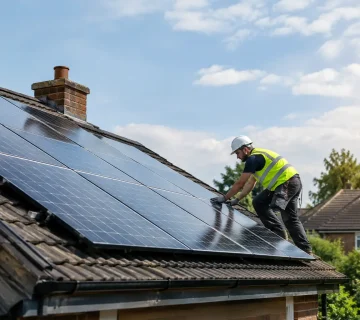
A professional replacement begins with checking the panel array, cabling, isolators, earthing and consumer unit connection. The installer will confirm the source of the fault rather than assuming the inverter is solely responsible. This step matters because a replacement inverter can also be damaged if an underlying electrical issue is left unresolved.
The system is then safely isolated before the old unit is removed. The new inverter is fitted, configured and commissioned, with grid settings and monitoring set up correctly. Generation should be tested before the work is signed off.
For most straightforward residential replacements, the on-site work can often be completed within a day. Larger commercial systems, difficult access, multiple inverters or related electrical upgrades may need more planning. In either setting, good documentation is essential. Keep records of the model, serial number, commissioning date, warranty and any monitoring login details.
How to make your next inverter last longer
You cannot eliminate component ageing, but you can reduce avoidable strain. Keep the inverter area clear and ventilated, avoid storing items against it and arrange inspections when output falls unexpectedly. If your property has experienced water leaks, electrical work or significant building alterations, have the solar system checked as part of the wider work.
It also helps to review monitoring data regularly rather than waiting for an electricity bill to reveal a problem. A short monthly check can show whether the system is producing in line with expectations and whether an issue needs attention before peak summer generation is lost.
For landlords and commercial property managers, clear responsibility for checking alerts is particularly useful. A system that nobody is actively watching can remain offline for far longer than necessary.
Plan replacement before generation stops
An inverter reaching 10 years old does not automatically need replacing. If it is operating reliably, producing as expected and showing no faults, continued monitoring may be all that is needed. But it is wise to budget and plan ahead rather than wait for a complete failure.
A qualified inspection can establish the health of the inverter and the wider system, explain whether repair is viable and identify opportunities to improve battery integration or energy use. Shard Solar can assess existing domestic and commercial systems with the same practical focus used in new installations: safe operation, reliable performance and savings that continue long after commissioning.
The best replacement decision is rarely based on age alone. It comes from combining the inverter’s condition, its performance data, warranty position and your plans for how the property will use energy next.