A commercial solar array can look perfectly healthy from the ground while a minor fault quietly reduces generation on a whole section of the roof. A tripped string, inverter warning or persistent build-up of dirt may not stop production altogether, but it can steadily erode the savings the system was designed to deliver. Knowing how to maintain commercial panels means treating the system as a working energy asset, not simply a roof installation.
For businesses, landlords and building operators, good maintenance protects more than panel output. It supports electrical safety, helps meet sustainability targets, extends equipment life and gives decision-makers reliable information about energy use. The right plan is usually straightforward: monitor performance regularly, inspect safely, clean when conditions justify it, and bring in qualified engineers when an issue needs diagnosis or electrical work.
Start with monitoring, not a ladder
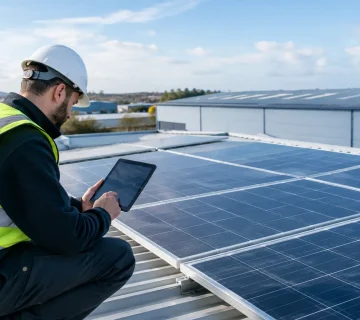
The most useful maintenance tool is often the system monitoring platform. Commercial PV systems should provide live or near-live visibility of generation, inverter status and historic performance. A site team does not need to become a solar engineer, but someone should review the dashboard at regular intervals and know what a normal day, week and season looks like.
Look for sudden drops in output, repeated alerts, an inverter that has gone offline, or one array producing noticeably less than a similar array on the same site. Output naturally changes with weather, daylight hours and temperature, so a lower figure on an overcast winter day is not automatically a fault. The concern is a pattern that does not match the conditions or the system’s usual performance.
A simple monthly review is sufficient for many sites, while large systems or energy-intensive operations may benefit from more frequent checks and professional performance reporting. It is also worth recording any changes around the building: new plant equipment, rooftop works, nearby construction or tree growth can all affect generation.
How to maintain commercial panels safely
Solar panels contain no moving parts, but a commercial PV system includes live electrical equipment, cabling, mounting hardware and often high roof access. That makes safety the first rule of maintenance. Facilities teams should avoid walking on panels, opening electrical enclosures or attempting repairs unless they are trained and authorised to do so.
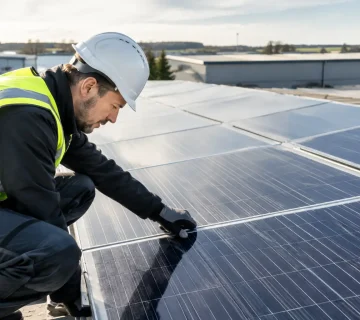
Visual checks from a safe access point can identify obvious concerns. These include cracked glass, loose-looking fixings, bird nesting, damaged cable containment, standing water around roof penetrations, or shade from vegetation and newly installed equipment. Report what you see with photographs and the location of the affected area, rather than trying to correct it yourself.
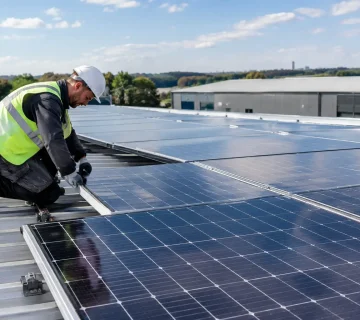
Roof access must also be considered carefully. A cleaning task that looks simple can become a working-at-height risk, especially on older roofs, busy retail premises or sites with limited safe access. A competent solar maintenance provider will assess access, roof condition, fall protection and the required electrical isolation process before work begins.
Keep records that make faults easier to solve
A maintenance log makes recurring issues visible and gives engineers useful context if an investigation is needed. Record the date of inspections, cleaning visits, monitoring alerts, weather-related incidents, shutdowns and any work carried out on the roof or electrical supply.
Keep commissioning documents, inverter details, warranties, single-line diagrams and contact information together. For multi-site landlords or organisations with several commercial properties, a consistent record format makes it much easier to compare system performance and plan maintenance budgets.
Clean panels when the site needs it
Rain does remove some loose dust, but it is not a maintenance strategy. Dirt, pollen, soot, bird droppings and residues from nearby roads or industrial activity can create uneven soiling across an array. This is especially relevant on low-pitch roofs, in urban locations, near food production facilities, or where gulls regularly roost.
The correct cleaning frequency depends on the site. Some arrays need little more than an annual inspection because rainfall and roof angle keep the surface reasonably clear. Others may justify scheduled cleaning once or twice a year where soiling is visibly affecting output. Monitoring data should inform that decision. Cleaning for its own sake can add cost without a worthwhile gain, while leaving persistent deposits in place can restrict generation and, in certain cases, contribute to localised heating.
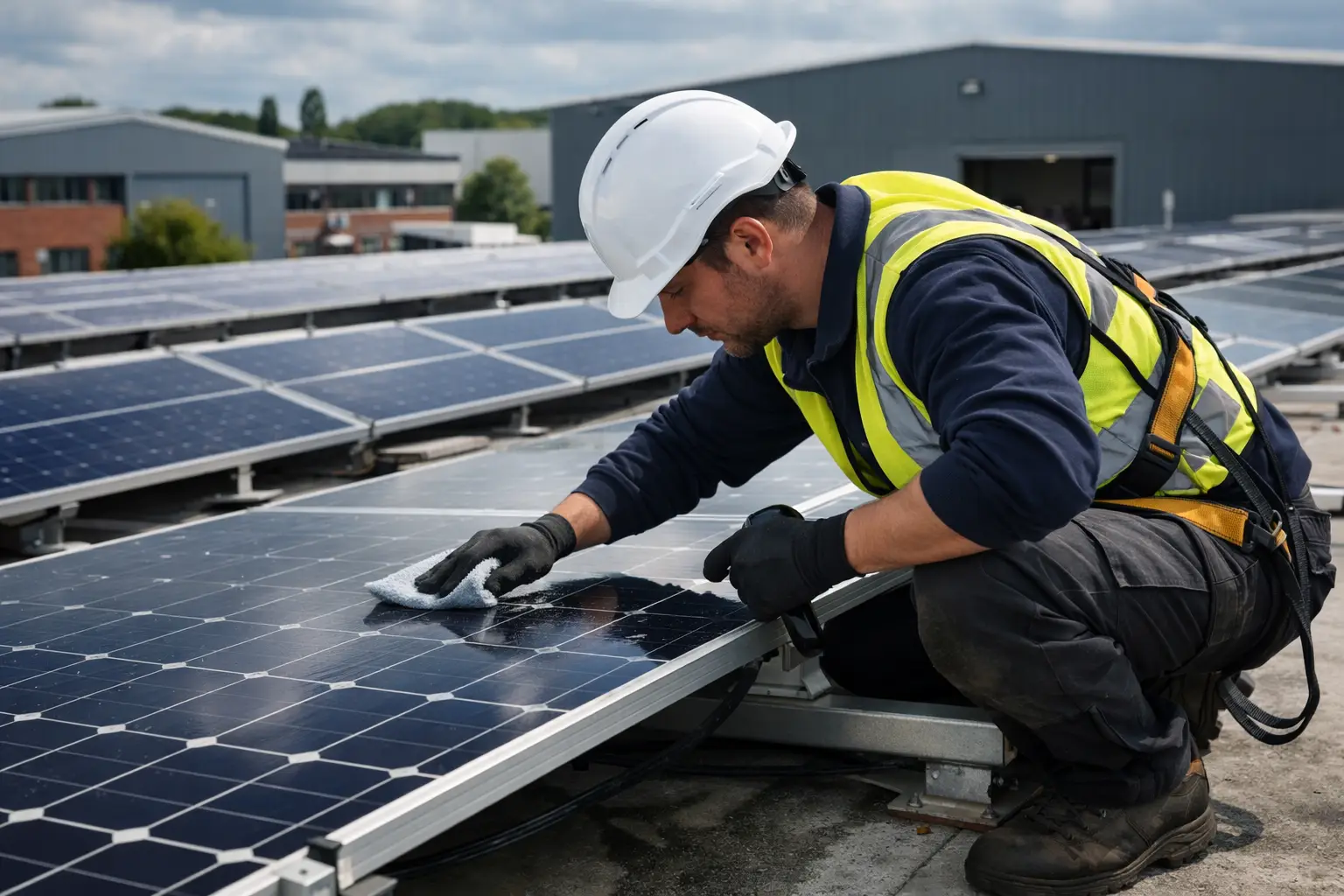
Use clean water and equipment designed for solar panels. Abrasive pads, strong chemicals and household glass cleaners can scratch the glass, leave a film behind or affect seals and frames. High-pressure washing is also best avoided, as forceful water can damage components or drive water into vulnerable areas. Cleaning should take place in cooler conditions where possible, not under intense sun when thermal shock and rapid drying are more likely.
Inspect the equipment around the panels
Panels are only one part of a commercial solar system. Inverters convert the panels’ direct current into usable alternating current, while isolators, protection devices, cabling and meter equipment keep the installation operating safely. A fault in any of these components can reduce or stop generation.
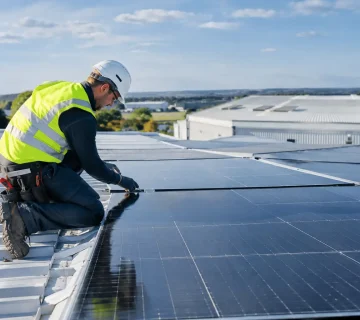
Professional servicing should include checks on inverter operation, fault histories, ventilation and signs of overheating. Engineers may test electrical connections, inspect cable routes and supports, check earthing arrangements, review isolators and examine the mounting system for corrosion or movement. The exact scope depends on the system design, age, roof type and any manufacturer requirements.
If your site has battery storage, include it in the same maintenance plan. Battery performance, software settings and charging behaviour influence how much solar energy the business uses on site rather than exporting to the grid. The system should be reviewed alongside tariff arrangements and the building’s changing demand profile, particularly where new machinery, EV chargers or heat pumps have been added.
Do not ignore inverter alerts
An inverter message may clear itself after a grid interruption, but recurring alerts deserve attention. Messages relating to insulation resistance, grid voltage, temperature or communication faults can point to problems that need qualified diagnosis. Switching equipment on and off repeatedly without understanding the cause can delay the proper repair and may affect warranty support.
Arrange an inspection promptly if the inverter remains offline, output falls unexpectedly for several days, physical damage is visible, or there has been a fire, flood, severe storm or roof leak near the array. Early action is normally less disruptive and less costly than waiting for a minor issue to become a prolonged outage.
Manage shade and changes to the building
Shade is one of the most overlooked reasons for falling commercial solar output. A tree that was below roof level at installation can grow significantly within a few years. New air-conditioning equipment, extract systems, signage, lift over-runs or neighbouring developments can also cast shade across part of an array.
Where vegetation is the cause, planned pruning may restore performance, subject to permissions and nesting-season considerations. Where new rooftop plant is proposed, consult a solar professional before its location is finalised. Moving a unit by a few metres may avoid shading, preserve access routes and prevent unnecessary changes to the PV design.
Any roof work needs the same care. Contractors installing telecommunications equipment, repairing membrane roofs or servicing plant should understand where PV cables and mounting points are located. Unplanned work around a live solar installation can damage components, compromise waterproofing or create a safety risk.
Set a maintenance schedule that fits the site
A practical commercial plan combines routine observation with periodic professional support. Site staff can review the monitoring platform and complete safe visual checks each month. A professional inspection is commonly arranged annually, though higher-risk or heavily soiled sites may need more frequent visits. Cleaning should be based on visible condition, local environment and measured performance rather than an arbitrary calendar date.
For larger portfolios, planned maintenance is often more cost-effective than responding to faults one at a time. It allows inspections, cleaning, electrical checks and reporting to be coordinated around trading hours, tenant needs or manufacturing schedules. That matters for hotels, retailers and food manufacturers where access and operational continuity are central to the job.
Protect the return from your solar investment
Commercial solar is built for long service, but long service depends on attention. Monitoring catches underperformance early. Careful cleaning removes avoidable losses. Professional inspections protect the electrical and structural parts of the system that are not visible in everyday use.
A capable maintenance partner can turn those activities into clear, useful information: what the system is generating, where performance can improve and what action, if any, is worth taking. With planned aftercare, your panels can continue producing clean on-site electricity while supporting lower energy costs and greater control over how your business uses power.