A solar proposal can look impressive on paper and still be wrong for your home. The best residential solar panel installers do more than offer a panel count and an estimated saving. They assess how your household uses electricity, design around the roof and your future plans, complete the electrical work properly, and remain available once the system is generating.
For homeowners, landlords and developers, that difference matters. A well-designed system can help reduce grid reliance, put more of your daytime generation to work and support battery storage or an EV charger later. A poorly specified one may produce less than expected, leave useful roof space underused or create uncertainty when a fault needs attention.
Start with the property, not the package
Every home has a different solar opportunity. Roof orientation, pitch, usable area, shading from chimneys or nearby trees, existing electrical equipment and household demand all affect the right system. A south-facing roof can be productive, but east-west arrays can also make excellent sense where a household uses power across the morning and late afternoon.
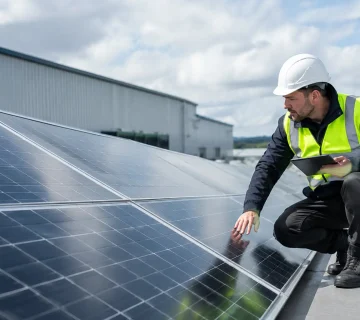
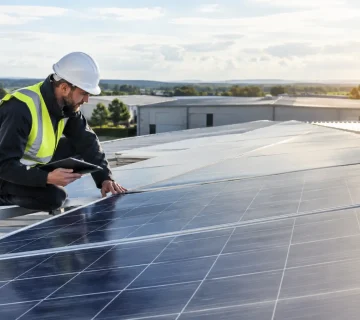
A credible installer should arrange a property survey before finalising the design. This is where they verify measurements, inspect roof condition, consider safe access and assess the consumer unit, cable routes and earthing arrangements. Remote imagery can be useful at an early stage, but it is not a substitute for checking the building in person.
Ask how the proposed system has been sized. The answer should refer to your actual or expected electricity use, not simply the maximum number of panels that will fit. If you work from home, run a heat pump, charge an electric vehicle or expect to add a battery, those details should influence the design. Equally, a smaller system may be the sensible choice if roof space is limited or daytime consumption is modest.
What the best residential solar panel installers do differently
The best residential solar panel installers manage the full journey with clear responsibility at each stage. That includes survey, design, quotation, permissions where required, installation, commissioning and aftercare. When those elements are split between several parties, it can become difficult to establish who is responsible if plans change or performance needs reviewing.
Look for an installer that explains the equipment selection in plain English. You do not need a lecture on every technical specification, but you should understand why a particular panel, inverter and mounting system suit your roof. The proposal should state the system size in kilowatts peak, anticipated annual generation, panel layout, inverter model, battery capacity if included, and any assumptions used for shading and energy use.
Professional standards also matter. Check relevant certification, insurance and electrical competence, then ask who will carry out the work. Some firms sell projects and pass every part of delivery to subcontractors. That model is not automatically a problem, but you should know who will be on site, who will supervise the installation and who will answer the phone after commissioning.
For homes in London and the wider UK, planning and network requirements can vary by property and system design. Conservation areas, listed buildings, unusual roofs and larger installations may need additional consideration. A capable installer will identify these questions early rather than treating them as a surprise once work is scheduled.
Read the quotation beyond the headline price
The cheapest quote is not always the lowest-cost system over its working life. Two proposals with a similar panel count may differ in output assumptions, roof mounting quality, inverter capability, warranty terms, electrical upgrades and the level of support included.
A useful quotation is specific. It should set out what is included in the price, what could create an extra charge, the expected installation timetable and how long the estimate remains valid. It should also distinguish between projected generation and projected financial savings. Generation can be modelled from the site and design; savings depend on how much solar electricity you use in the home, export arrangements and future energy tariffs.
Be wary of claims that imply solar will eliminate electricity bills in every season. Panels generally generate most when daylight is strongest, while many homes need more energy in darker, colder months. Solar remains a practical long-term investment, but honest advice accounts for seasonal variation rather than promising constant output.
If a battery is part of the quote, ask what role it will play. Battery storage can retain surplus daytime solar for evening use and may help households use more of what they generate. Its value depends on your consumption pattern, tariff and system controls. A battery is not automatically the right choice for every property, and standard battery storage does not necessarily provide power during a grid outage unless the system has been specifically designed with backup capability.
Ask about installation day and the work behind the panels
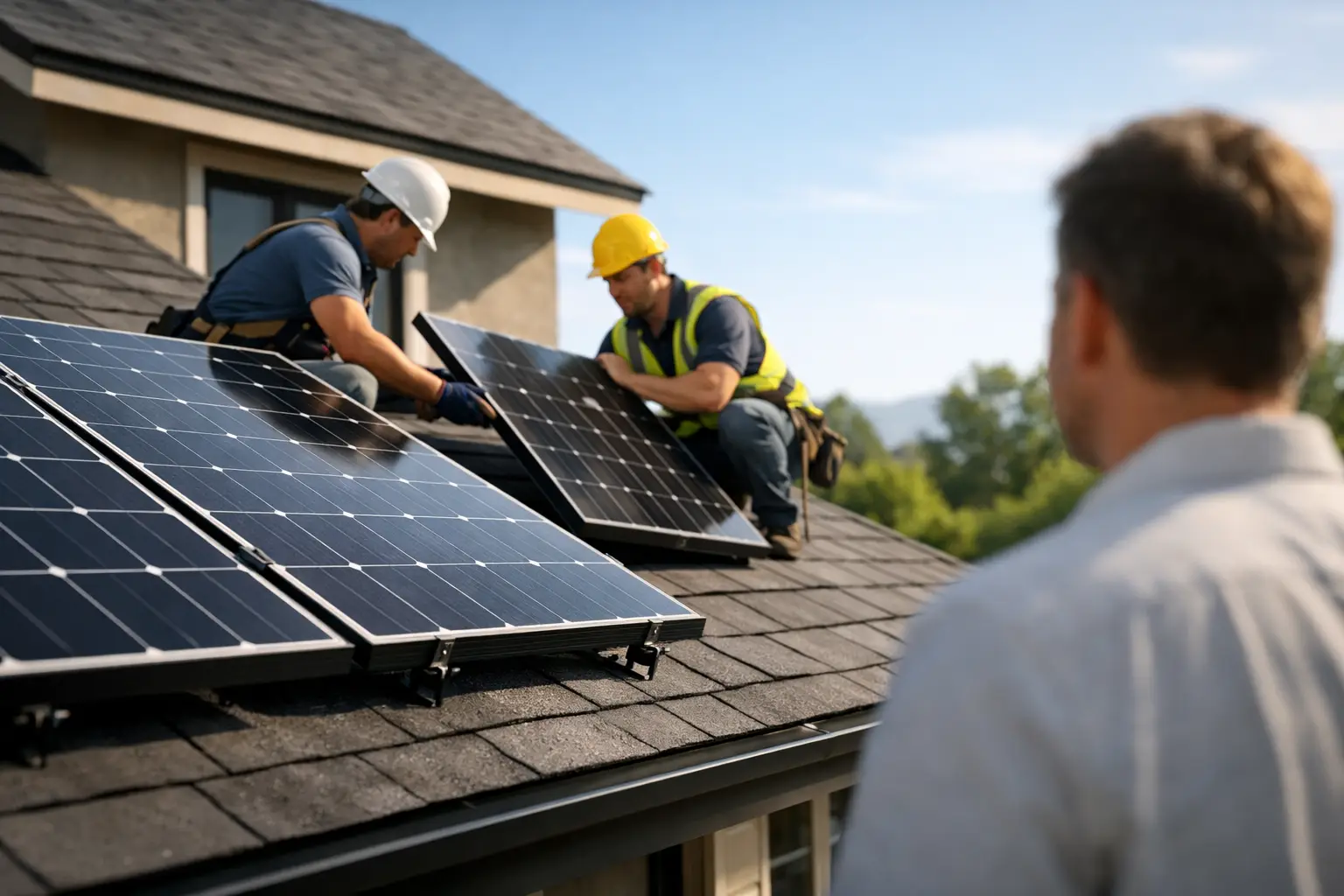
A neat roof array is only one part of a safe solar installation. The work also involves mounting hardware, waterproof roof fixings, DC cabling, inverter positioning, AC connection, isolation equipment, labelling, testing and system commissioning. If a battery is fitted, there are further considerations around location, ventilation and safe electrical integration.
Before accepting a proposal, ask how the installer will protect the property during the work and what disruption to expect. Most domestic installations are completed efficiently, but access requirements, scaffolding, roof complexity and consumer-unit upgrades can affect the programme. Clear communication is especially valuable where a household is occupied throughout the installation.
It is also worth asking what happens if the survey reveals an issue such as ageing roof tiles, restricted cable routes or insufficient space around the consumer unit. A good contractor will explain the options, costs and consequences before proceeding. They should not pressure you into accepting an improvised solution on the day.
Choose monitoring and aftercare that you will actually use
Once the system is live, monitoring turns solar from a rooftop asset into something you can understand. A clear app or portal can show generation, household use, grid import and export, and battery charge where relevant. This helps you move flexible activities, such as laundry or EV charging, into sunnier periods when practical.
Monitoring is also useful for identifying faults or unexpected underperformance. Ask whether the installer offers performance reporting, maintenance, inspections, panel cleaning and repairs. Panels are generally low-maintenance, but low-maintenance does not mean no-maintenance. Leaves, heavy dirt, bird debris, damaged cabling or an inverter alert can all deserve attention.
Warranty paperwork should be provided in a form that is easy to keep. There may be separate warranties for panels, inverters, batteries, mounting equipment and workmanship, each with different durations and conditions. Ask who handles a warranty claim and whether there is a direct route back to the installation team. Long product warranties are reassuring, but responsive support is what makes them useful.
Compare like for like before deciding
Obtain more than one quote, then compare the systems rather than just the totals. If one proposal has a lower price, establish whether it includes fewer panels, a smaller inverter, different electrical work or less aftercare. If one predicts significantly higher output, ask how it has accounted for shade and roof orientation.
Use the same information with each installer: recent electricity consumption, future appliances, preferred battery approach and any restrictions you know about the property. This gives you a fairer comparison and makes gaps in the advice easier to spot.
The right installer should leave you feeling informed, not hurried. At Shard Solar, that means beginning with a free property survey, providing a detailed quotation promptly, and supporting customers through installation, commissioning and ongoing system care. Your solar system should be designed for the way you live now, with enough thought built in for the way your energy needs may change next.