A south-facing roof is useful, but it is not the whole story. The real value of a home solar system comes from matching generation, household use and storage so that more of the electricity your panels produce is used in your property. So, how does residential solar work? Solar panels turn daylight into direct-current electricity, an inverter makes that power suitable for your home, and a battery can hold surplus energy for later.
For homeowners, the practical aim is straightforward: buy less electricity from the grid, use more clean power on site and gain better visibility of where energy is going. The right design depends on your roof, shading, daily electricity demand and plans for equipment such as an electric vehicle charger or heat pump.
How does residential solar work from roof to socket?
Photovoltaic, or PV, panels are made from solar cells. When daylight reaches those cells, it creates an electrical current. They do not need bright, cloudless sunshine to generate power, which is why solar works well across the UK. Output is higher in clear summer conditions, but panels continue to produce electricity on overcast days.
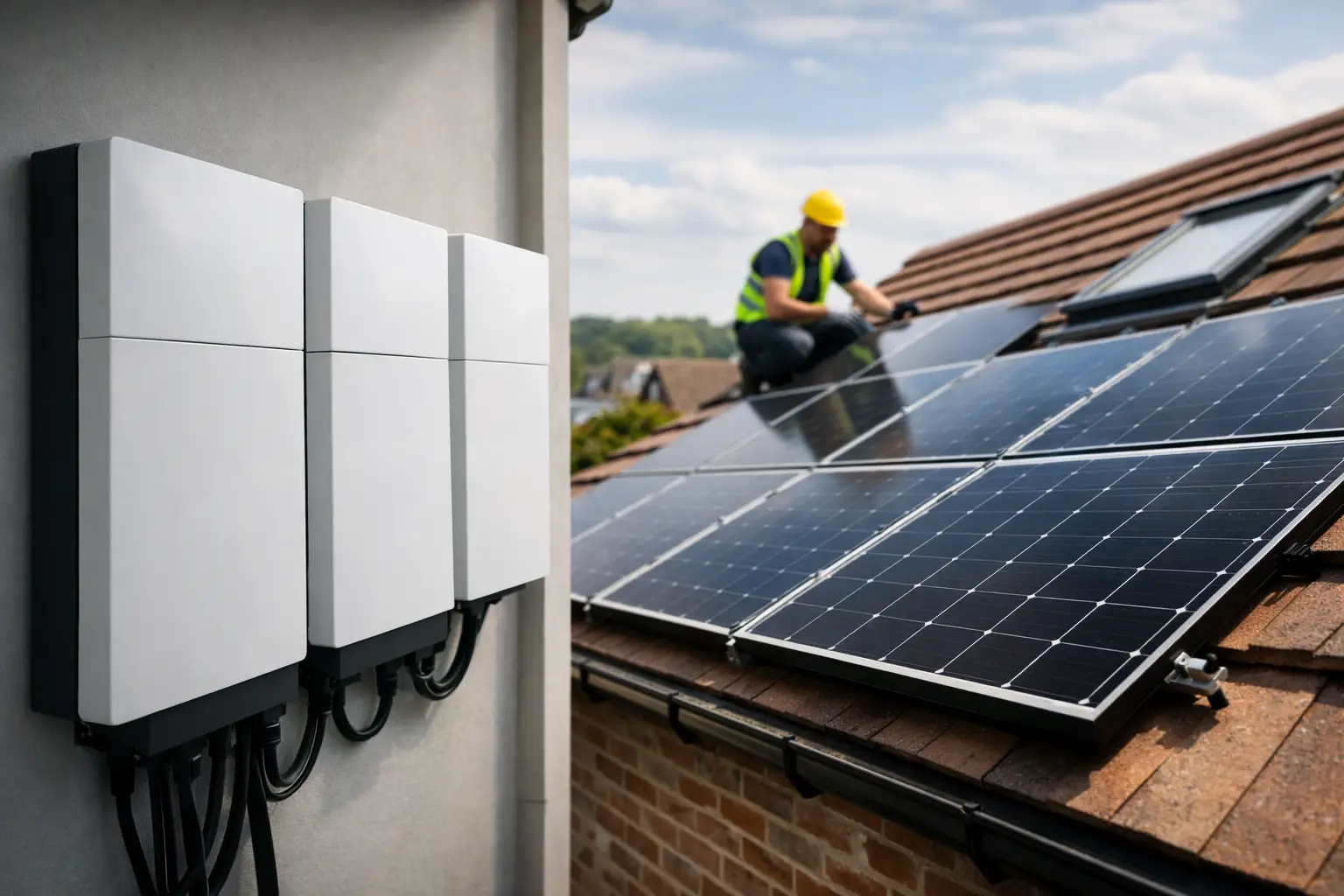
The electricity leaving the panels is direct current, known as DC. Homes use alternating current, or AC, so the system sends that power to an inverter. This is the component that converts the electricity into a form your lights, appliances and sockets can use safely.
Once the inverter is operating, the system prioritises your home’s live demand. If the washing machine, fridge, computer and other appliances are using electricity while the panels are generating, solar power supplies as much of that demand as it can. Any shortfall is still taken from the grid automatically. There is no need to switch appliances manually or change how you use your home.
When production is greater than household use, the spare electricity has somewhere to go. With no battery installed, it is usually exported to the grid. With battery storage, it can be charged into the battery first, depending on the system settings and your tariff.
What happens after solar panels generate more than you need?
A battery stores surplus solar electricity for use later in the day. This is particularly helpful because a typical home may generate strongly around midday but use more energy in the morning and evening, when people are cooking, heating water, charging devices or returning from work.
For example, panels may charge a battery while the property is quiet during the day. Later, the battery can discharge to cover part of the evening demand before you need to import electricity from the grid. This increases self-consumption, meaning you use a greater share of the power generated on your own roof.
Battery storage is not automatically the best choice for every household. It adds upfront cost, and the right capacity should reflect your actual consumption rather than simply being the largest available. A household that is mostly empty in daylight, has high evening usage and pays a high electricity rate may see strong value from storage. A property with consistent daytime use may benefit substantially from solar panels alone, especially if it receives a worthwhile export payment.
Some batteries can also charge from the grid during lower-priced off-peak periods, then supply the home when electricity costs more. That can improve the economics of a time-of-use tariff, though it should be planned around battery capacity, tariff rules and expected solar production.
Is a solar battery backup during a power cut?
Not always. A standard grid-connected solar and battery system commonly shuts down during a grid outage as a safety measure. This protects network workers who may be repairing lines.
If backup power is important, the system needs to be designed with the appropriate backup or emergency supply capability. Even then, there may be limits on which circuits are supported. Essential loads such as lighting, refrigeration, broadband and selected sockets are often prioritised over high-demand equipment like electric showers, ovens or whole-home heating.
This is a worthwhile conversation at the design stage. Backup can add resilience, but it requires suitable equipment and clear expectations about what the system will power.
The grid still plays an important role
Residential solar does not normally mean coming off grid. The grid provides electricity when demand exceeds solar and battery output, particularly overnight in winter. It also receives exported electricity when the home has more generation than it can use or store.
A smart meter records imported and exported electricity separately. Your supplier may offer an export tariff, paying you for eligible electricity sent to the network. Rates, terms and eligibility vary, so export income should be considered alongside, rather than instead of, the value of using solar electricity yourself.
Before installation, the system must be assessed for connection to the local electricity network. Smaller domestic systems are often notified under the relevant connection process after installation, while larger or more complex systems may need approval before work begins. A professional installer handles this technical and administrative side as part of a properly managed project.
What determines how much electricity a system produces?
Panel capacity is measured in kilowatts peak, written as kWp. This describes the panels’ output under standard test conditions, not a guaranteed hourly output. A 4 kWp system will not generate 4 kW continuously, because real output changes with light levels, temperature, orientation and shading.
Roof direction and pitch matter, but a roof does not have to face due south to be worthwhile. East- and west-facing arrays can produce more electricity earlier and later in the day, which may better match a household’s pattern of use. A split roof can therefore be a sensible option rather than a compromise.
Shading deserves careful attention. Chimneys, neighbouring buildings, trees and dormers can affect output, especially when shade falls across part of an array. Good design uses a detailed survey to understand this effect and may use optimisers or a different panel layout where appropriate. These measures are useful in certain situations, not a substitute for accurate assessment.
Seasonality also matters. UK solar generation is typically strongest from late spring through summer and lower during short winter days. A system should be judged on annual production, self-consumption and long-term household needs, rather than a single exceptional summer day.
How a residential solar system is designed
A sound proposal starts with the property, not a standard panel count. The survey considers roof dimensions and condition, orientation, shading, electrical infrastructure and safe access. It should also look at electricity bills or smart-meter data to understand when the household uses power.
This information helps determine array size, inverter specification and whether battery storage is suitable. It is also the point to account for future demand. An electric vehicle, heat pump, loft conversion or growing household can alter electricity use significantly. Designing with these changes in mind can avoid a system that is undersized soon after installation.
Planning requirements vary. Many domestic installations fall within permitted development rules, but listed buildings, conservation areas, unusual roof structures and certain ground-mounted systems can require additional consideration. Electrical and structural requirements must also be addressed before work begins.
At Shard Solar, this process is managed from the property survey and detailed quotation through engineering, installation, commissioning and aftercare. That joined-up approach matters because a solar system is not just panels on a roof. It is an electrical system that should perform safely, visibly and reliably for years.
Monitoring, maintenance and everyday use
Most modern systems include an app or online portal showing generation, battery charge, household consumption and grid import or export. Monitoring helps owners see how changing habits can improve solar use. Running a dishwasher, washing machine or EV charge during daylight, when practical, can reduce grid purchases.
Solar panels are generally low maintenance because they have no moving parts. Rain often removes ordinary dust, although panels may need cleaning if there is persistent soiling, bird mess or debris that is clearly affecting output. Periodic inspections, monitoring checks and prompt attention to faults help protect performance and warranties.
The most useful result is not simply seeing a high generation figure on an app. It is building a home energy system around how you live: generating clean electricity in daylight, storing it where appropriate and drawing from the grid only when needed. With a carefully surveyed and professionally commissioned system, residential solar becomes a practical step towards lower bills, greater energy independence and a more sustainable home.