Your electricity bill shows how much power your site buys. It rarely shows the full picture of when that power is needed, which equipment causes peaks, or how much of that demand solar could realistically cover. A commercial solar load assessment answers those questions before system design begins, helping businesses invest in solar and battery storage with clearer expectations around savings, performance and payback.
For a retail unit, hotel, manufacturing site or residential block, the right system is not simply the largest array that fits on the roof. It is the system that matches the building’s consumption profile, electrical capacity, operating hours and future plans. That is how on-site generation becomes a practical business asset rather than a generic sustainability upgrade.
What a commercial solar load assessment examines
A load assessment is a detailed review of how a property consumes electricity over time. Annual consumption matters, but it is only one part of the calculation. A business using 200,000 kWh per year mainly between 9am and 5pm has a very different solar opportunity from a business using the same amount overnight or across a 24-hour operation.
The assessment starts with half-hourly electricity data where it is available. This reveals base load, daily peaks, seasonal changes and periods when consumption rises sharply. For smaller sites without detailed interval data, electricity bills, meter readings and an understanding of site operations can still provide a useful starting point.
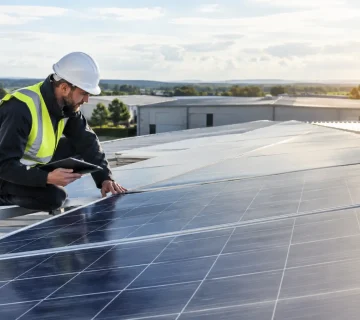
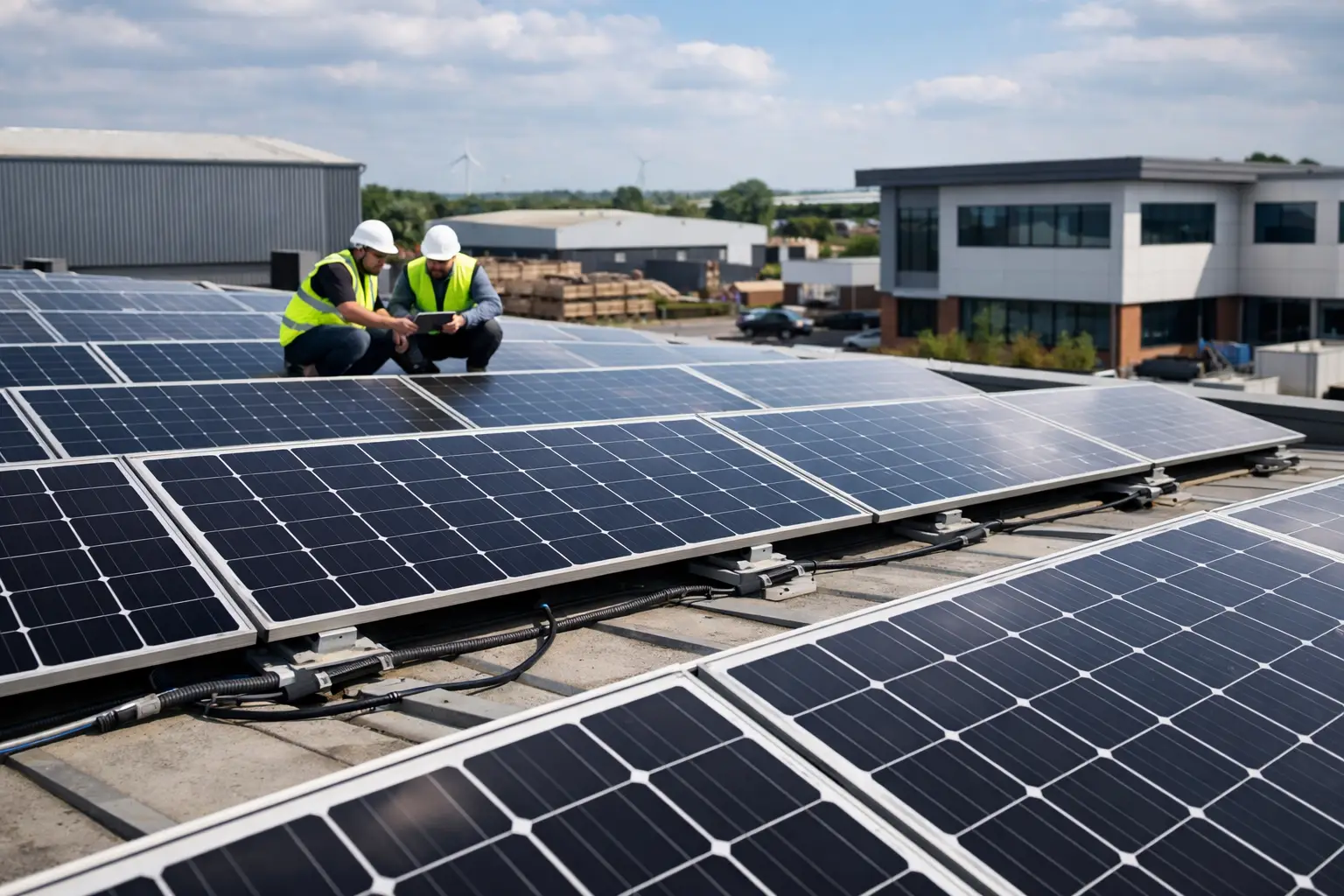
A survey also considers the building itself. Roof area, orientation, shading, roof condition and structural suitability affect the available solar generation. The electrical infrastructure is equally important. Existing distribution boards, incoming supply capacity, meter arrangements and the proposed inverter connection all need to be checked before a design can be confirmed.
This process brings together two sides of the project: what the building can generate and what the business can use. The strongest commercial solar systems are designed around both.
Why timing matters as much as total consumption
Solar panels generate most of their electricity during daylight hours, with output changing through the day and across the seasons. A business that runs equipment, lighting, cooling or charging during the day can use a high proportion of its own solar generation directly. This reduces electricity imported from the grid at the point it is needed.
If a site’s demand is concentrated in the evening, overnight or early morning, solar alone may offset less imported electricity. That does not mean solar is unsuitable. It may mean that battery storage, load shifting or a different array size should be considered.
For example, a food manufacturer may have refrigeration creating a steady day-and-night base load, while production lines cause more pronounced peaks. A carefully sized solar array can support daytime refrigeration and production demand, while a battery may store surplus generation for later use or help reduce short periods of high import. A hotel may see demand rise in the morning and evening, so its operating pattern and battery case will look different again.
The aim is not to force a building into a standard design. It is to understand where solar will deliver the most value and where other measures may be needed.
Base load, peak load and load profile
Three terms often shape the conversation. Base load is the continuous level of electricity a site uses, even at quieter times. This might include refrigeration, servers, security systems, ventilation or essential plant. A strong daytime base load is often favourable for solar because much of the generation can be used on site.
Peak load is the highest level of demand over a defined period. It can be driven by multiple pieces of equipment starting together, kitchen activity, manufacturing processes or EV charging. Solar may help reduce daytime grid import during these periods, but its contribution depends on weather, season and the time of the peak.
The load profile is the pattern between those two points. It shows whether demand is predictable, seasonal, shift-based or irregular. This is why one annual bill alone cannot reliably determine the ideal solar capacity.
The information that improves a solar design
A good assessment benefits from operational context as well as meter data. Site managers and business owners often know exactly when a building changes behaviour: a production line starts earlier in summer, a busy retail period begins in November, or air conditioning becomes a major load during warmer weather.
Useful information usually includes recent electricity bills, half-hourly consumption data, operating hours, details of major electrical equipment and plans for the next few years. Planned additions matter. New EV chargers, heat pumps, expanded production capacity, extra refrigeration or an extension can alter the long-term energy profile significantly.
It is also worth identifying equipment that can run flexibly. Some loads can be scheduled to coincide with solar production without affecting normal operations. This could include water heating, selected charging, pumping, pre-cooling or non-critical processing. The opportunity depends on the site, but sensible load management can increase the amount of solar energy used directly.
A professional survey will then verify the physical and electrical conditions on site. Desk-based estimates can be useful, but they cannot confirm every practical detail. Roof access, cable routes, safety requirements, fire considerations and connection points should all be understood before installation planning.
Deciding whether battery storage makes sense
Battery storage is often valuable where a business has surplus solar generation during the day and useful demand later on. It can increase self-consumption by holding electricity that would otherwise be exported, then releasing it when solar output falls.
However, a battery is not automatically the best answer for every commercial site. Its value depends on the gap between generation and demand, the tariff structure, the site’s import peaks and the business’s operational priorities. A site with high, steady daytime demand may gain more from maximising direct solar use than from adding a large battery. Another site with evening demand, variable tariffs or a requirement for greater energy resilience may have a stronger battery case.
The assessment should also separate everyday energy savings from backup expectations. Not every battery system is designed to keep the whole premises running during a power cut. If continuity of supply is a key requirement, essential circuits, backup duration and changeover arrangements need to be designed specifically for that purpose.
Common mistakes that lead to poor outcomes
The most common mistake is sizing a system solely from annual usage or available roof area. A large roof can support a large array, but if the site cannot use or economically export much of the generation, bigger is not always better.
Another mistake is relying on a short, unrepresentative period of data. A month of low activity, a temporary closure or an unusually hot spell can distort the picture. Reviewing at least 12 months of consumption is generally preferable because it captures seasonal behaviour.
Businesses can also overlook future electrical demand. Installing solar before adding heat pumps or EV charging may still be sensible, but the system should be designed with expansion in mind where practical. Allowing for inverter capacity, cable routes, switchgear and roof space can make future upgrades more straightforward.
Finally, do not treat maintenance and monitoring as an afterthought. Performance reporting helps identify whether generation is meeting expectations, whether consumption patterns have changed and whether a system needs attention. This is particularly useful for multi-site operators and businesses with significant energy spend.
From assessment to an investable project
Once the load assessment, site survey and generation modelling are complete, the design can be developed around clear priorities. These may include reducing daytime electricity costs, improving resilience, supporting carbon targets, accommodating future electrification or making better use of a suitable roof.
A detailed proposal should explain the proposed system size, expected annual generation, likely on-site use, assumptions behind savings estimates and any battery-storage recommendation. It should also account for planning, grid connection requirements, electrical works, programme constraints and how installation can be scheduled with minimal disruption to the business.
For commercial properties in London and across the UK, this joined-up approach is particularly useful where buildings have complex operating patterns, limited downtime or landlord and tenant considerations. Shard Solar combines property surveys, engineering, installation and aftercare so those details remain connected from the first assessment through to commissioning.
The best next step is simple: gather your recent electricity information, outline how the site operates and identify what may change over the next few years. With a clear commercial solar load assessment, you can make decisions based on how your business actually uses power – and start building a more independent, lower-carbon energy supply.