
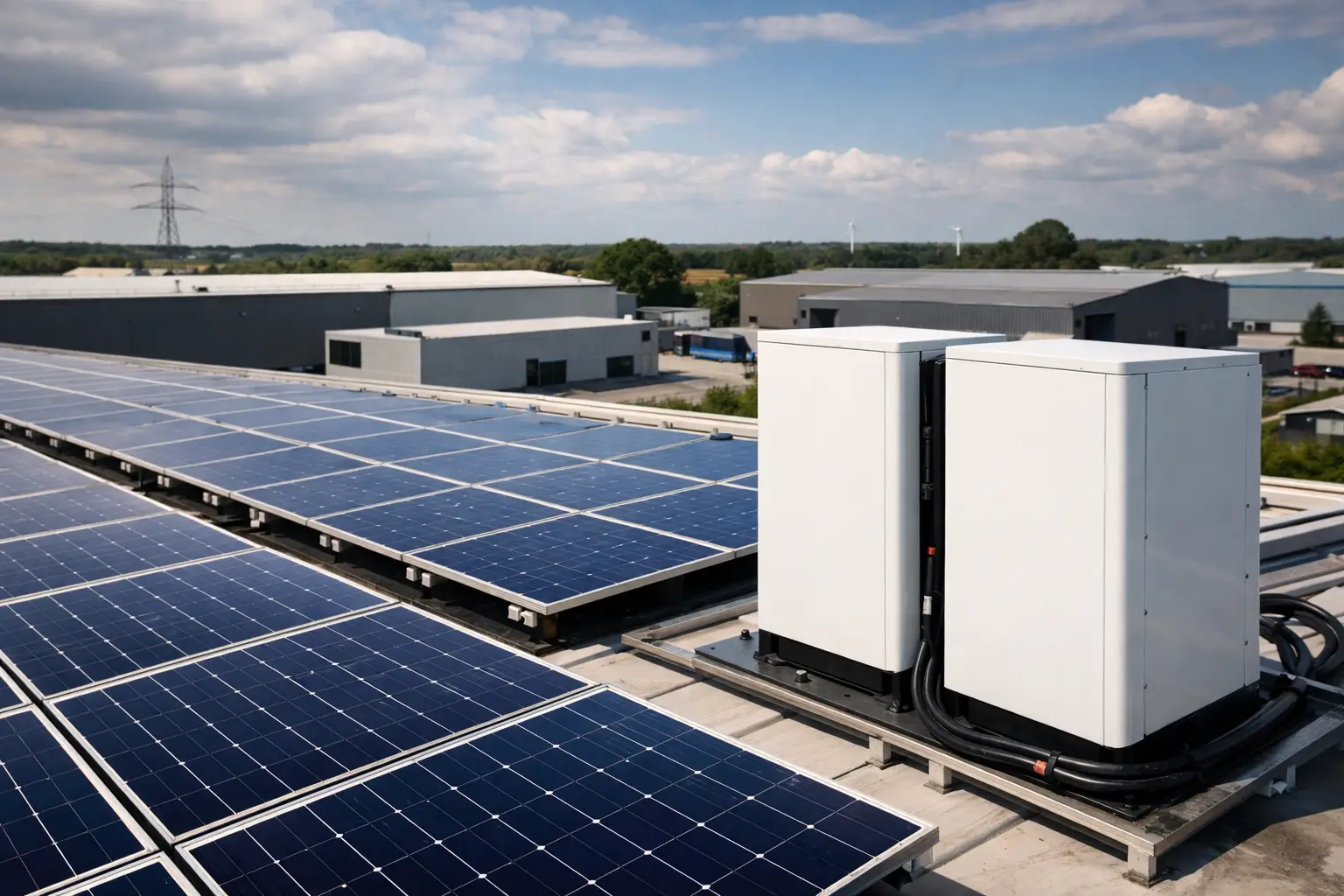
A solar system can produce plenty of electricity at midday, just when many homes are quiet and businesses may not need all of it. Without a battery, surplus generation is usually exported to the grid. With one, it can be stored for use after sunset. So, is solar battery storage worth it? For many UK property owners, the answer is yes – but only when the battery is correctly sized around real energy use, tariff choices and the level of backup required.
A battery is not simply an add-on that makes every solar installation pay back faster. It changes when you use your own electricity. That distinction matters, particularly where daytime generation is strong but evening demand is high.
What solar battery storage changes
Solar panels generate electricity when daylight is available, with output generally peaking around the middle of the day. A battery stores excess solar power that would otherwise be exported, then releases it when your property needs it later. For a household, that may mean covering cooking, lighting, appliances and entertainment in the evening. For a business, it may support later operating hours, overnight loads or periods of high electricity demand.
This increases self-consumption: the share of your solar generation used on site. As imported electricity commonly costs more than the rate paid for exported power, using more of your own generation can improve the financial value of a solar installation.
A battery can also charge from the grid when electricity is cheaper on a time-of-use tariff, then discharge when prices are higher. That opportunity can be valuable in its own right, although it needs sensible programming and an electricity tariff that suits the building’s consumption pattern.
Is solar battery storage worth it for your property?
The strongest case for a battery is usually a property that has meaningful solar surplus during the day and substantial electricity use in the evening or early morning. Homes where people are out during working hours, then return to cook, charge devices and run appliances after sunset, are a familiar example.
It can also make sense for landlords and residential-block operators seeking to improve the performance of communal energy systems, and for commercial sites with regular, predictable loads. Retail premises, hospitality venues and food-production businesses can all have very different consumption profiles, which is why a proper design should start with energy data rather than a standard battery size.
A battery may be less compelling where most solar electricity is already used immediately during daylight hours. A business operating mainly from morning to late afternoon, for example, may benefit more from additional solar capacity, energy-efficiency improvements or load management before investing in storage. Equally, a small household with low annual consumption may not need a large battery simply because roof space allows a large solar array.
The question is not whether batteries are universally worthwhile. It is whether stored electricity has a valuable job to do at your property.
The financial case: look beyond the battery price
Battery value comes from the difference between what it costs to charge and what it saves when discharged. Charging with surplus solar can avoid buying electricity later from the grid. Charging overnight on a lower-priced tariff may also reduce the cost of electricity used at higher-priced times.
However, batteries are not 100 per cent efficient. Some energy is lost as it moves into and out of storage. They also have a finite usable capacity and a warranty measured by years, throughput or both. A realistic assessment should account for these factors rather than assuming every kilowatt-hour generated will be available later.
Export payments matter too. If your export tariff is attractive, there is an opportunity cost to storing solar electricity instead of selling it. In many cases, it will still be more valuable to use stored solar power in the evening than to export it at midday and import power later, but the difference should be calculated using your actual tariff rates.
For commercial properties, the calculation can be broader. Storage may help reduce expensive peak-period imports and improve control over site energy use. Where demand charges, operational patterns or larger electrical loads are involved, system design should consider interval data, future expansion and equipment such as EV chargers, heat pumps or refrigeration.
Battery size matters more than most people expect
An oversized battery can leave capacity unused for much of the year. An undersized one may fill early and export solar anyway, then run out before the evening is over. The right size depends on the solar system’s output, your hourly consumption, seasonal variation and the purpose of the battery.
A home aiming to shift a proportion of daytime generation into the evening will need a different design from a property that wants to charge an EV overnight or a business looking to manage peak demand. Winter also needs honest consideration. Solar generation is lower during shorter, cloudier days, so a battery cannot create energy that the panels have not produced. It may instead be charged strategically from the grid during low-cost periods.
A detailed survey should examine roof orientation, shading, existing electrical infrastructure and consumption patterns. Smart monitoring is equally useful after installation, showing generation, battery state of charge, imports, exports and how the system is performing over time.
Backup power is valuable, but it is not automatic
Many people assume a battery will keep the entire property running during a power cut. That is not always the case. Standard solar systems are designed to disconnect during a grid outage for safety, and not every battery installation includes backup capability.
If resilience is a priority, it should be specified from the outset. Backup arrangements can be designed to support selected essential circuits, such as lighting, refrigeration, internet equipment and sockets, or a wider range of loads where system capacity allows. The practical limits depend on battery output, stored energy, solar conditions and the starting demand of appliances.
For a home, protecting key circuits may be a sensible balance between cost and reassurance. For a commercial site, continuity planning may identify specific equipment that must remain powered. A clear discussion before installation prevents the disappointment of discovering that a battery cannot support a heat pump, electric shower, commercial kitchen or whole building in the way expected.
Solar battery storage can be fitted later
If you already have solar panels, adding a battery may still be possible. The best approach depends on the existing inverter, system age, available space and electrical arrangement. Some installations can use an AC-coupled battery, while others may benefit from a hybrid inverter approach as part of a wider upgrade.
A retrofit is an opportunity to review the system as a whole. Has electricity demand changed since the panels were installed? Has an EV, heat pump, extension or new business equipment altered the load profile? Are panels performing as expected? These answers help determine whether storage alone is the right next step.
For new installations, designing solar and storage together is often the cleanest route. It allows the array, inverter, battery and electrical work to be planned as one system, with room for future changes where appropriate.
A practical way to decide
Before choosing a battery, gather at least several months of electricity bills and, where available, half-hourly usage data. Consider when the building uses the most power, how much solar generation is likely to be exported, and whether you are willing to use a time-of-use tariff. Then decide what matters most: lower imports, better use of solar, backup for essential circuits, peak management or charging flexibility.
Avoid choosing by battery capacity alone. The most useful proposal will explain the expected operating pattern, likely savings assumptions, export position, warranty, monitoring and any limits on backup power. It should also set out the electrical work required and how the system will be commissioned and supported.
For London homes and businesses facing high electricity costs and variable demand, a well-designed solar battery can offer more control over when energy is used, not just where it comes from. A property survey and clear quotation turn that possibility into a decision based on your roof, your usage and your priorities – rather than a one-size-fits-all promise.